How Social Media Is Misleading Reporters — & What to Do About
By Alexander Russo
The world is full of fakes. There are fake studies that get published in academic journals. There are fake Twitter handles impersonating real people (remember @mayorrahm, anyone?). A NYT article about faked news goes back to 2013. There’s even fake education news.
In recent days, there’s been a big surge of concern in recent days about fake news created to mislead the public, much of it distributed and shared unknowingly via social media through sites meant to look like legitimate news outlets. The fear is that fake news can both erode trust in legitimate news sites and result in a wildly misinformed public.
But fake news isn’t as troubling as the much-discussed “filter bubble” (aka echo chamber) of narrowed-down, ideologically-consistent updates we get via Facebook and other social media algorithms. Like privilege and class, the filter bubble creates and perpetuates blind spots that can shape reporters’ sense of what the big issues are in ways that they are not even aware of.
You’re being fooled on social media, to be sure — just not the way you think you are. The good news is that, while somewhat unpleasant, becoming aware of your social media bubble isn’t all that hard to do.
__
YES, THERE’S FAKE EDUCATION NEWS
Fake news about education doesn’t seem to be as popular or problematic an issue as fake news about politics and other hot-button topics. But it does exist and we should all watch out for it in our own consumption of social media and when it’s raised by readers or community members.
For the purposes of this column, fake news is defined as coverage that’s not based on established facts but rather fabricated to fool readers into believing and/or sharing information and doesn’t come from established news outlets.
Following are some recent examples from Snopes, the well-known site for checking out rumors and hoaxes that get passed around:
- Charlotte, North Carolina, Schools ‘Eliminate Gender Entirely’
- After School Satan Clubs
- Washington School District Bans Pork Due to Muslim Outcry
- Michelle Obama Wants YOU to Monitor Your Own Family Members
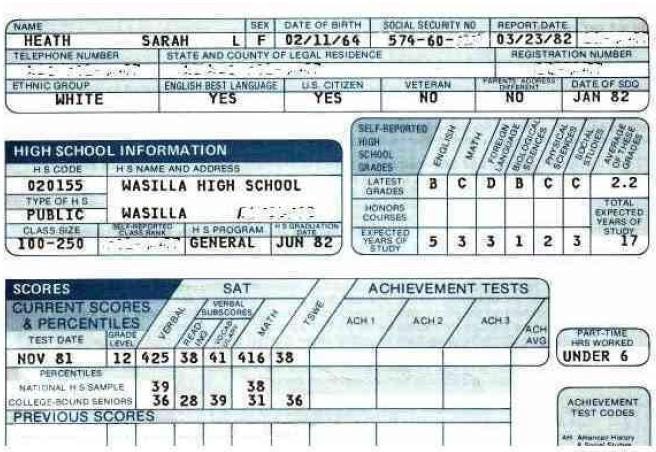
The first fake news story I can recall was the 2008 Sarah Palin SAT score story, complete with a realistic-looking scan (see above). I’m sure there are earlier examples.
__
IT MAY ALREADY HAVE HAPPENED TO YOU
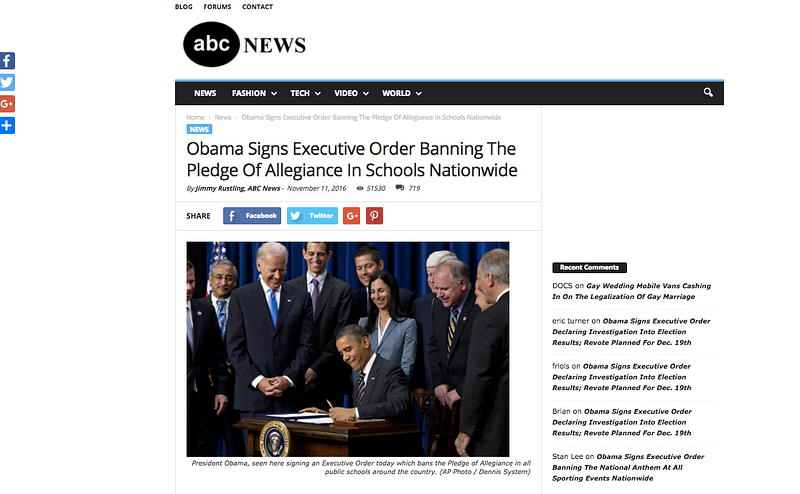
Perhaps I’m the only one, but there’s at least one recent instance I know of in which I have been fooled and passed along a seemingly true story that turned out to be a hoax — about President Obama signing an executive order related to the Pledge of Allegiance.
Though quickly informed that I’d been duped, it seemed to me at the time like an amusing mistake and I ignored readers who urged me to delete it. Looking back, the thought of having contributed to the misinformation flying around seems troubling.
I’m also guilty of having intentionally passed along fake news over the years, without any conscious malicious intent but perhaps without having thought about the possible impacts with sufficient care. I’ve also generated my fair share of “made-up” news over the years, attempting to amuse and/or enlighten — but also perhaps confusing readers. Some examples include Critics Claim TFA Candidates Not U.S. Citizens, Obama Flips Off Teachers Unions, Classroom Version of “Intervention” Premiers This Fall.
Checking out stories before “liking” or passing them along is always a good idea, no matter how elaborate your RT disclaimer may be. And taking them down afterwards if you realize they’re fake. (Don’t be like me!)
__
FILTER BUBBLE > FAKE NEWS
“In The Bubble, life continues for progressive Americans as if the election never happened.” (via SNL)
Between fake news and the filter bubble, however, the latter is a more serious problem for education journalists and readers.
Readers and reporters alike don’t commonly understand that the social media stream they experience throughout the day is not an organic or representative sample of what’s really going on in the world or what kinds of updates others are experiencing.
Your Facebook and Twitter feeds are the product of both your own choices (pages you’ve liked, folks you’ve decided to follow) and also the product of others actions (friends sharing news, advocates tweeting at you to get your attention) — sometimes in concerted ways — and algorithms pushing stories you might like based on information gathered about you.
What Should You Do?
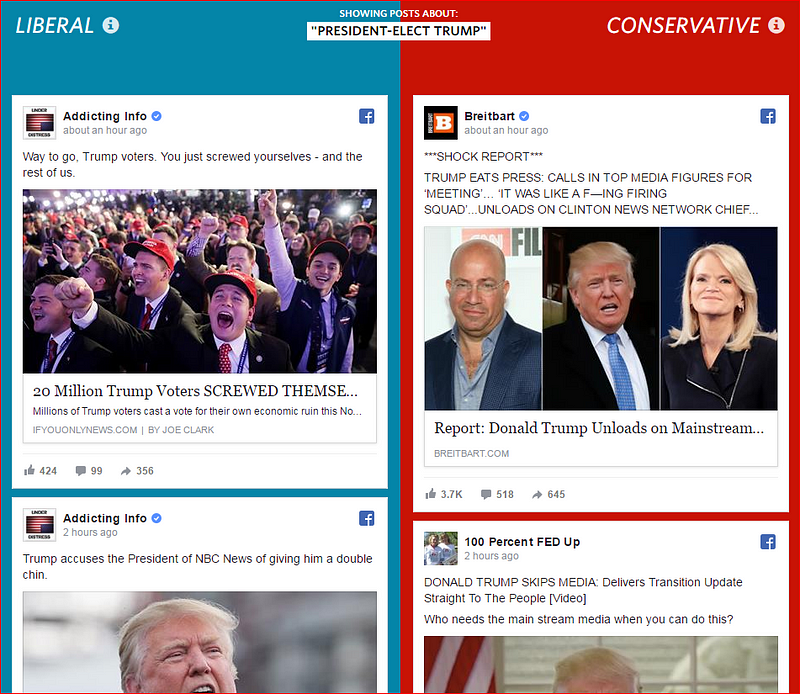
In a perfect world, someone would create an education version of the WSJ’s Blue Feed, Red Feed, which shows you what’s trending across the ideological divide.
Until then, you should probably do an informal audit and add to the mix of sites and feeds you follow so that you’re not getting a pleasing but skewed version of events.
For liberal-leaning reporters, it might be as simple as adding the Wall Street Journal, The Weekly Standard, RealClear Politics (and RCEducation). For conservative-leaning reporters, news sites like The Guardian or In These Times might work. Or, add some ideologically voices to your Twitter stream — Randi Weingarten and Diane Ravitch, or Mike Petrilli and Nina Rees — and see what news they pass on and react to. (It might also be a good time to start checking out newer outlets — Mic, Fusion, AJ+ — and voices of people of color like Deray McKesson, Karran Harper Royal, Melinda Anderson, etc..)
Diversifying your social media feed can be alarming. That’s why Facebook and Twitter make sure to give us only views and news that match our own versions of reality. But doing so might help ensure that the stories you produce come from a wider view of what’s important in schools, not a narrowed-down ideological and algorithmic slice of the world.