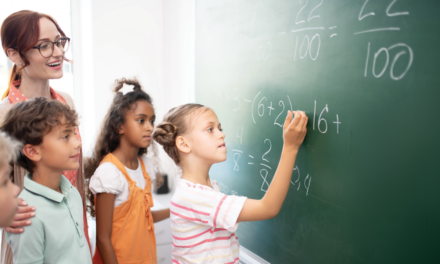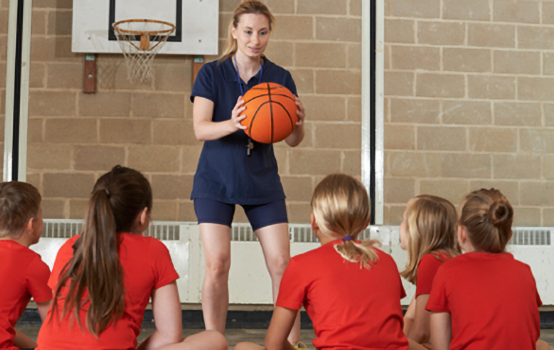
Sports participation can help students develop in many important ways — but that’s not automatic. Ensuring that student-athletes reap the many benefits of sports begins with choosing and supporting the right coaches.
When the subject of high school sports comes up, many people think of teams that perennially win championships that bring considerable notoriety to their schools and galvanize student and community support for the district.
Striving for competitive excellence is an important aspect of scholastic sports, but educational athletics must serve a broader function. Most high school student-athletes will never be on a championship team. In fact, educational athletics was never designed to produce champions. It was designed to promote the student’s physical well-being and academic achievement and to develop good citizens.
Sports became associated with the educational system in America in the early 1900s. There was a need for educators to rein in and control injuries and other abuses occurring in sports then run as unregulated student organized activities. Educators believed sports could teach lessons that could not be taught in the classroom (Pruter, 2013). The justification for high school sports, then, has been and remains tied to the holistic development of the student-athlete.
Research also shows that, when done right, educational athletics teaches lessons that cannot be taught in the classroom. Student-athletes report learning important life skills such as self-control, the ability to communicate, and stress-coping strategies (Camiré, Trudel, & Forneris, 2009; Kendellen & Camiré, 2015). Sports participation also has been associated with academic success; greater interest, connection and aspirations relative to education; enhanced competence and confidence; initiative; teamwork, and social skills (see Gould, Cowburn, & Shields, 2014 for a review). However, when not carried out correctly, scholastic sport can lead to negative outcomes such as stress, burnout, lost motivation, increased alcohol use, negative peer interactions, and lower morality (Eccles & Barber, 1999; Gould, Cowburn, & Shields, 2014). Scholastic sport, then, is a double-edged sword that can have positive or negative effects (Martens, 1978). Whether those effects are positive or negative depends on those who wield that sword — chiefly the school’s sports coaches.
Effective coaches have well thought-out coaching philosophies that align with educational, athletic, and school goals.
The importance of coaches
The scholastic sport coach plays an important role in determining the outcomes of participation for a number of reasons:
- Coaches spend a great deal of time with the student-athletes — two hours a day at practices and attending numerous competitions;
- Participants are highly motivated to participate in sport;
- Sport is an activity where student actions have real meaning because it is so highly valued in the community; and
- Research shows coaches have important influences on young athletes’ motivation, emotional development, moral development, and educational and career aspirations.
What good coaching looks like
So what does good coaching involve? Research indicates that effective coaching has several clear and discernible attributes (Becker, 2010; Gilbert & Cote, 2010; Gould & Wright, 2012).
#1. Effective coaches have well-thought-out coaching philosophies that align with educational, athletic, and school goals.
They may place some importance on winning and competitive success, but that does not come at the expense of physical, educational, personal, and social-emotional development of their athletes. Having students adhere to educational and behavioral standards always supersedes athletic success, and coaches work hard to help student-athletes learn important life lessons from their sport experiences.
#2. Effective coaches share decision making with their student-athletes and provide rationales for their coaching actions.
The idea of the militaristic drill sergeant approach to coaching is inappropriate. The latest research shows that effective coaches create positive motivational climates in which their athletes train and compete (Mallett, 2005). They do this by meeting athletes’ fundamental needs for autonomy, competence, and relatedness. Specifically, they allow student-athletes to have a say in their participation and to make appropriate but meaningful decisions. Effective coaches also are influential at helping student-athletes improve their skills, which then helps the athletes feel competent. Finally, effective coaches create an atmosphere that helps student-athletes feel like they belong.
#3. Effective coaches build strong coach-athlete relationships and create caring and supportive emotional climates (Fry, 2010).
Student-athletes respond better when they participate in programs where caring and supportive climates are created, i.e., coaches work hard to know each student-athlete as an individual, make each feel welcomed by acknowledging them, and implement rules and standards that signal that bullying or belittling others is not tolerated on or off the field.
#4. Effective coaches are knowledgeable and good teachers.
They are positive in their orientation while simultaneously holding their student-athletes accountable to standards of behavior and performance. Research reveals that coaches who give positive versus degrading and punitive feedback or no feedback at all have athletes who are more motivated, feel better about themselves, and achieve more positive developmental outcomes from sports participation (Smoll & Smith, 2002).
#5. Effective coaches are intentional in implementing their coaching philosophies by having definitive strategies for fostering positive youth development (Gould et al., 2007).
This is important because when asked about the beneficial effects of sports participation, many scholastic coaches will list a series of character assets that they feel they instill in their athletes such as leadership, teamwork, and work ethic. Coakley (2011) has warned, however, that too often this is mere rhetoric as coaches have been socialized to believe in the “sport is character building” evangel myth. This myth holds that youth somehow develop positive benefits from merely participating in sports. While youth may acquire some benefits from mere participation, the latest research shows that coaches who have the greatest effect are very intentional in implementing strategies for achieving their program goals. For example, if a coach lists teamwork as a major program objective, she may lead discussions with her athletes about what teamwork involves and what makes a good teammate. The bottom line is that scholastic athletes do not automatically catch the benefits of sport from merely participating on a team. These benefits are taught directly and indirectly by knowledgeable and caring coaches who are very intentional in their actions and in how they structure the sport environment to enhance positive student-athlete development (see Table 1).
Strategies to ensure good coaching
Knowing what good scholastic coaching involves does not mean that good coaching will occur. Administrative practices and policies must ensure that good scholastic coaching takes place. Some of these are:
Coach selection and selection criteria
- Athletic administrators, in conjunction with other educators, should develop a school’s or district’s philosophy of scholastic sports and communicate it regularly to coaches, parents, and other interested parties. Regularly and consistently communicating the program philosophy, primary goals, and key values on a seasonal basis is important; research has shown that even when such statements exist, coaches are typically unaware of them.
- Criminal background checks should be mandatory for all coaches, including assistant coaches and volunteers. Administrators also should consider requiring safe sport training to ensure coaches understand how to protect athletes from sexual predators and what good safe sport coaching practices involve (USOC, 2012).
- Applicants for all coaching positions should be made aware of the educational athletics program philosophy. Only coaches who align with the major tenets of that philosophy should be allowed to coach in the program.
- Favor applicants with coaching education. In addition, provide coaching educational training for all program coaches.
- Provide coaches with clear behavioral guidelines and hold them accountable for adhering to those guidelines. Although coaches work in a different and often very public environment compared to classroom teachers, they should be held to the same behavioral standards regarding issues such as ethics, civility, and the treatment of students.
Coach and parent education
Scholastic coaches are held to higher coaching and performance standards today than at any other time in history. Legal mandates require that coaches be able to recognize potentially concussed athletes and know when it is safe for them to play or return to play. Simultaneously, coaches in the most visible scholastic sports are expected to produce winning teams. Finally, today’s coach must deal with parents, some who do not understand educational athletics and some who are consumed with their child’s success and pursuit of athletic scholarships for college.
While contemporary coaches are asked to do more than ever, schools and communities place few educational expectations on them. Thirty years ago, almost all coaches were certified teachers, many physical educators. Today, many work in other professions and come in from the community to coach. Most districts also don’t require any coaching education. In fact, in many schools the only requirement seems to be a hat and a whistle.
The solution is for districts and schools to require coaching education. A number of good coach education programs are available to districts, many online and relatively inexpensive.
Not just coaches need education. Coaches and/or athletic administrators need to conduct sport parent education, as the need for sport parent education has grown in recent years. Sport parents need to understand the expectations of educational athletics and the holistic values of high school sport participation. Moreover the expectations and standards for parental behavior must be established (e.g., respecting officials, no belittling players on either team) as well as practical information about when and how to approach athletic staff about player concerns. Sport parent education is of utmost importance as many of today’s coaches are starting to view parents as enemies rather than allies. Overzealous sport parents are driving coaches out of the profession.
Feedback and evaluation
Feedback and evaluation comprise one way to ensure a successful scholastic sport program and to determine if coaches are meeting the program’s goals. Feedback also can help identify potential areas of concern. Coaches grow when they receive feedback via athletic director evaluations and parent and player surveys. Some programs routinely survey athletes and parents after the season. Other coaches hold discussions with graduating seniors to solicit feedback about their experiences on the team (e.g., what they liked and disliked, what the coach should have done or continues to do). One organization, the National Wrestling Coaches Association, recommends that coaches collect 360-degree coaching feedback on their coaching where the coach not only rates himself or herself, but the supervising athletic director, peers (assistant coaches, athletic trainers who regularly see the coach work), and student-athletes rate the coach on key coaching characteristics and actions like those contained in Table 1. This technique is especially helpful in seeing patterns across sources of coaching feedback.
Finally, the latest research shows that coaches learn most from reflecting on their coaching experiences (Trudel & Gilbert, 2006). Thus the recommendation that communities of coaching practice be established that give coaches the opportunity to interact and share their experiences and to learn from each other on a regular basis. This might involve a monthly breakfast, lunch, or social hour where coaches can confidentially discuss the issues they face. Setting up members-only online discussion groups and web sites for exchanging information is a viable option, especially for younger coaches who are very comfortable with technology.
Challenges to good coaching
While overcoming challenges to good coaching will not be easy, a good place to start is naming, learning about, and focusing on such challenges:
Professionalization and commercialization of youth sports
American youth sports have become increasingly professionalized and commercialized with a focus on competitive results and fan entertainment, spending millions on lavish facilities, ever-increasing equipment and stadium costs, and 24-hour multichannel nonstop media play (Farrey, 2008; Gould, 2009; Roberts, 2007). The professionalized model of sports, originally the sole purview of professional sports, has become dominant in the U.S. and is influencing sport at all levels. It has affected most major colleges where sport has increasingly become a big business and less focused on its original educational mission. It also has begun to influence scholastic sport with a greater emphasis placed on competitive outcomes, national championships, helping gifted players earn athletic scholarships at the expense of players of average ability, paying less attention to holistic player development, and less attention to roster size and educational benefits. These developments also are playing out in the increasing professionalization and commercialization of both club and scholastic sports.
Because of this, today’s coaches must understand educational athletics and how it differs from the professional model. Coaches also need to discuss and reflect on changes in scholastic sports, which include pay to play — where students’ families pay a fee (e.g., $150) for their child to participate, the need to raise funds via booster clubs, and pressures to produce winning teams at almost any cost. The challenge is for coaches to deal with these changes in a realistic fashion, which might include adapting to the need to raise funds to support one’s program while at the same time taking steps to ensure the educational athletics approach is not eroded. There are no easy answers, but coaches must have a strong understanding of educational athletics and well-thought-out coaching philosophies to deal with these issues.
School funding issues
School funding issues present another set of challenges to providing good scholastic sport coaching, especially in underserved and economically challenged districts.
For example, baby boomer generation athletic directors often retire only to be replaced by part-time athletic administrators. As public funding for schools has declined over the past two decades, many schools have struggled to field teams, maintain facilities, and pay staff. Today’s coaches must understand the importance of raising funds to support their programs but how to do so in an appropriate manner.
Administrator apathy
With so much attention placed on the importance of student test results in academics, principals and superintendents can easily push extracurricular activities to the back burner and not pay attention to the importance of quality coaching. Ironically, strong extracurricular activity programs have been shown to help youth stay connected to school and perform better academically. Finally, some administrators just do not understand the educational role that athletics can play. Their attitude is “after all, it’s just sports. Fun and games. It has no real educational value.” Holding such an attitude often results in poor programming.
With so much attention placed on the importance of student test results in academics, principals and superintendents can easily push extracurricular activities to the back burner and not pay attention to the importance of quality coaching.
Lack of coaching education
The single most important way to ensure coaching quality in scholastic sport is to better educate coaches. Yet, most programs require little training for the adults taking on coaching roles. It is ironic that school sports administrators need to be reminded of the importance of educating their staff. A number of coaching education programs are available for districts to adopt. Moreover, administrators should consider regular opportunities for coaches to interact and discuss their coaching and ways to improve it.
Conclusion
Scholastic sport can make a real difference in students’ lives and help supplement broader educational objectives. However, this will only occur if quality coaching is provided. We all must remember that quality coaching counts and should not be left to chance.
TABLE 1.
A checklist for effective scholastic coaching
- The coach has a well-thought-out and articulated coaching philosophy.
- The coach is familiar with the district/school mission and goals and aligns his or her philosophy with those goals.
- The coach’s philosophy places primary importance on holistic athlete development and not just winning.
- The coach focuses on working with all athletes on the team not just those who are highly gifted.
- The coach not only thinks about his or her own team but the total athletic and school experience. He or she encourages multisport and other extracurricular activity participation in an effort to help students have a range of developmental experiences.
- When and where appropriate, the coach shares decision making with athletes.
- The coach creates a positive climate for the team.
- The coach is knowledgeable and competent relative to conditioning and fitness, sport-specific tactics and strategies, sport safety, and positive youth development principles.
- The coach works to meet athletes’ autonomy, competence, and relatedness needs.
- Strong coach-athlete relationships are created.
- The coach makes consistent efforts to know student-athletes as individuals.
- The coach provides program direction by holding athletes accountable for behavioral and performance standards. In doing so, sanctions for inappropriate actions are carried out in accordance with school policy equitably and fairly, regardless of an athlete’s athletic ability, status, or importance to the team.
- The coach models those assets he or she hopes to develop in his or her student-athletes.
- Student-athlete bullying or belittling of others on or off the field is not tolerated.
- The coach always places student-athletes’ physical and mental health above winning.
- The coach regularly provides positive feedback; belligerent or extreme criticism is minimized.
- Coaches are intentional in implementing specific strategies for fostering positive student-athlete development.
Major U.S. coaching education providers
American Sport Education Program — Provides comprehensive educational programs for youth, scholastic, and college coaches, and administrators. Provides publications, online materials, and a coach education center where Wade Gilbert provides free webinars and articles on key coaching issues. info@hkusa.com and www.asep.com
National Federation of State High School Associations — Writes rules and policies that its state members can use to govern high school sports. Provides comprehensive online coaching education courses through its learning center. www.nfhs.org
Innovative CEUs — Offers youth and secondary coaching educational programs plus a series of one-hour, online courses on a variety of sports medicine (e.g., injury prevention) and coaching (psychological skills training) topics. www.innovativeceus.com/
Positive Coaching Alliance — Promotes providing youth and high school athletes with a positive character-building sports experience. Provides useful tools via in-person and online courses and involves elite athletes in social media to reinforce their key messaging. www.positivecoach.org
References
Becker, A. (2010). Quality coaching behavior. In P. Potrac, W. Gilbert, & J. Denison (Eds.), Routledge handbook of sport coaching (pp. 184-195). London, UK: Routledge.
Camiré, M., Trudel, P., & Forneris, T. (2009). High school athletes’ perspectives on support, communication, negotiation, and life skill development. Qualitative Research in Sport and Exercise, 1 (1), 72-88.
Coakley, J. (2011). Youth sports: What counts as “positive development?” Journal of Sport & Social Issues, 35, 306-324.
Eccles, J.S. & Barber, B.L. (1999). Student council, volunteering, basketball, or marching band: What kind of extracurricular involvement matters? Journal of Adolescent Research, 14 (1), 10-43.
Farrey, T. (2008). Game on: The All-American race to make champions of our children. New York, NY: ESPN Books.
Fry, M. (2010). Creating a positive climate for young athletes from Day 1. Journal of Sport Psychology in Action, 1, 33-41.
Gilbert, W. & Cote, J. (2010). Defining coaching effectiveness: Focus on coaches’ knowledge. In P. Potrac, W. Gilbert, & J. Denison (Eds.), Routledge handbook of sport coaching (pp. 147-159). London, UK: Routledge.
Gould, D. (2009). The professionalization of youth sports: It’s time to act! Clinical Journal of Sports Medicine, 19, 81-82.
Gould, D., Collins, K., Lauer, L., & Chung, Y. (2007). Coaching life skills through football: A study of award-winning high school coaches. Journal of Applied Sport Psychology, 19 (1), 16-37.
Gould, D., Cowburn, I., & Shields, A. (2014). Sports for all: Summary of the evidence of psychological and social outcomes of participation. Elevate Health, Series 15 (3), 1-14.
Gould, D. & Wright, E.M. (2012). Psychology of coaching. In S. Murphy (Ed.), Handbook of sport and performance psychology (pp. 343-363). New York, NY: Oxford Library of Psychology.
Kendellen, K. & Camiré, M. (2015, June). Examining the life skill development and transfer experiences of former high school athletes. International Journal of Sport and Exercise Psychology, 1-14. http://bit.ly/1S8GueZ
Mallett, C.J. (2005). Self-determination theory: A case study of evidence-based coaching. Sport Psychologist, 19 (4), 417.
Martens, R. (1978). Joy and sadness in children’s sports. Champaign, IL: Human Kinetics.
Pruter, R. (2013). The rise of American high school sports and the search for control, 1880-1930. Syracuse, NY: Syracuse University Press.
Roberts, J. (2007, December). A sane island, surrounded. Phi Delta Kappan, 89 (4), 278-282.
Smoll, F.L. & Smith, R.E. (2002). Coaching behavior research and intervention in youth sports. In F.L. Smoll & R.E. Smith (Eds.), Children and youth in sport: A biopsychosocial perspective (2nd ed.) (pp. 211-233). Dubuque, IA: Kendall/Hunt.
Trudel. P. & Gilbert. W.D. (2006). Coaching and coach education. In D. Kirk, M. O’Sullivan, & D. McDonald (Eds.), Handbook of physical education (pp. 516-539). London, UK: Sage.
United States Olympic Committee (USOC). (2012). Safe sport handbook: Recognizing, reducing and responding to misconduct in sport. Colorado Springs, CO: Author. http://bit.ly/1TViwqU
Citation: Gould, D. (2016). Quality coaching counts. Phi Delta Kappan, 97 (8), 13-18.
ABOUT THE AUTHOR

Daniel Gould
DANIEL GOULD is a professor of kinesiology and director of the Institute for the Study of Youth Sports at Michigan State University, East Lansing, Mich.