|
|
| BEST OF THE WEEKThe week’s best education journalism, all in one place. |
|
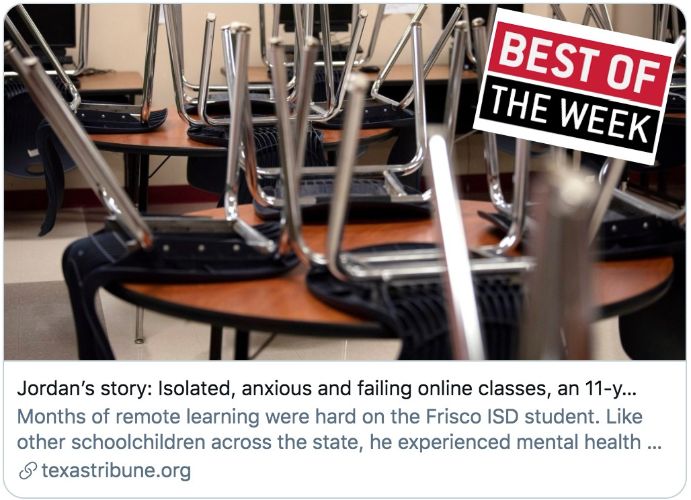
| 🏆 BEST: The best story of the week is Jordan’s story: Isolated, anxious and failing online classes, an 11-year-old Texas boy considered suicide by Aliyya Swaby in the Texas Tribune. There have been a lot of deep dives into how the pandemic is impacting vulnerable students, but there haven’t been many that focus this deeply on the mental health of students who are isolated in remote learning. This story is also a testament to Swaby’s excellent reporting during the pandemic. She first met the family in July and regularly checked in with them throughout the fall, only now asking them for permission to tell their difficult story.
🏆 RUNNER-UP: The latest installment in The 74’s series on the consequences of student disengagement is this week’s runner-up: ‘I Had No Other Option.’ Teens Balance Zoom Classes and Fast-Food Jobs to Support Struggling Families by Linda Jacobson. Jacobson shows just how hard it is for these high schoolers to balance work and school at the same time, describing one student in Texas who listens to his remote classes through one earbud while working at a fast-food restaurant. She details how these kids are working for money, certainly, but also for a sense of normalcy and to get out of the house. But their survival tactics may put them well behind some of their more well-off peers.
🏆 SPECIAL MENTION: EdWeek’s profile, Who Is Miguel Cardona? is this week’s special mention. While the EdSec nominee was not available to be interviewed, reporters Evie Blad and Andrew Ujifusa paint a complex portrait of the little-known Connecticut educator through interviews with those who know him best. |
|
BIG STORIES
Events and storylines that dominated the week’s news. |
|
| GETTING OUT OF THAT REMOTE LEARNING RUT |
|
| Feeling bored by the same old remote learning stories focusing on its many drawbacks? You’re not alone.
Contributor Colleen Connolly recommends using solutions journalism to liven up your coverage and tell the remote learning story better, featuring insights from The Seattle Times’ Joy Resmovits, The Boston Globe’s Naomi Martin, and Hechinger Report contributor Amadou Diallo.
The solutions approach is being adopted by different education reporters in different ways, but they all ask the same questions: What are people doing to address the problem? Where else are they having success?
Bonus: What can we learn by comparing the current New York City school shutdown to the 1968 citywide teachers strike? Lots, as it turns out. Back then, the sides were much clearer. The Black community was much more unified. The union role was much more public. And the city’s role was much weaker. I interviewed the duo behind the “School Colors” series to learn more. |
|
 |
| MEDIA TIDBITS
Thought-provoking commentary on the latest coverage. |
|
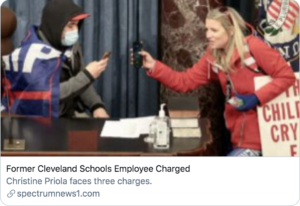
| 📰 EDUCATORS AND THE INSURRECTION: The number of educators who participated in the mob that attacked Capitol Hill may have been small, but there was an initial reluctance among education reporters and outlets to address the uncomfortable topic of right-wing thought among educators. I did see a couple of pieces that eventually came out from Education Week. “School district leaders are discovering that some of their own employees and school board members were among those supporting, attending, and even participating in the insurrection,” reported Mark Lieberman. Recognizing racism and radicalization among educators is going to be a key issue for education journalism going forward. “The racists among us don’t live in their mom’s basement,” noted journalist Wendi C. Thomas. “They are teachers, principals, loan officers, doctors, nurses, cops and military. They act on their bigotry on the job in ways we can’t see.”
📰 CHICAGO REOPENING COVERAGE: When the Chicago teachers went on strike not too long ago, I and others thought that media coverage wasn’t as strong as it could have been. So I was curious about how this week’s reopening story would get covered. The answer? Not as well as I would have liked. Chicago teachers opposed to the reopening process have won an inordinate amount of attention with antics like teaching outside in the cold and refusing to show up for work. The reopening effort has received less attention, from what I’ve seen, though there have been some notable exceptions such as this Sun-Times story about the first day of school: Coats, hats and masks: First CPS students return to new version of school, under protest by teachers. Kate Taylor’s NYT story about the reopening debate included some helpful interviews with parents who are caught in the middle. The highlight so far might be a new Chalkbeat story featuring real people with a variety of perspectives and experiences of the reopening.
📰 CONTROVERSIAL SEGMENT FROM ON THE MEDIA: I can think of a lot of other education reporters I would have preferred for a recent On The Media segment on the school reopening debate. And I would have loved it if the segment had featured a closer examination of the reopening coverage, featuring specific pieces of journalism. I disagree pretty much 100 percent with the notion that national media coverage of reopening risks has been overly reassuring. But I was happy that OTM gave the coverage debate some attention, and I did appreciate this observation from freelancer Rachel Cohen, who has written about school reopening data: “For much of this pandemic, nobody really wanted to say that the risks to educators, to school workers, to community members, to parents…is outweighed by the benefits to in-person learning.”
Missed some previous editions? You can see the archive of past newsletters here. |
|
 |
PEOPLE, AWARDS
Who’s going where & doing what? |
|
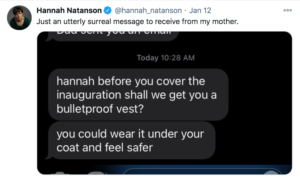
| Above: This tweet from WaPo’s Hannah Natanson shows the sad reality for all journalists right now, not just those who regularly cover politics.
🔥 Comings and goings: New York Times national education reporter Dana Goldstein’s maternity leave ends soon. The San Antonio Express-News has a new education reporter: Danya Pérez previously covered education at The Monitor in McAllen, Texas, and most recently worked at the Houston Chronicle as a newsletter producer. Austin American-Statesman’s Julie Chang, a former education reporter, is moving on. Matt Thompson, who led the creation of the Code Switch and NPR Ed teams, is now editor of Headway, the New York Times’ new foundation-funded newsgathering effort. Former KPCC/LAist education reporter Carla Javier is taking on a new role as a community engagement reporter. She tells us her audience is asking her a lot about schools and kids, so her beat reporting experience is coming in handy.
🔥 Asked about her latest doings, the Texas Tribune’s Aliyya Swaby told us that the pandemic has forced her to be “much more creative” about her sourcing. She says she’s proud of holding Texas accountable for not giving school districts time or resources to prepare for remote learning — and prioritizing student voices in the process. The Nevada Independent’s Jackie Valley told us that she “spent a lot of time tracking connectivity issues (in rural and urban areas) as well as internet quality problems.” She anticipates that financial issues like budget cuts and enrollment declines will be a big part of her early 2021 coverage.
🔥 Coming soon: Chalkbeat has launched a new newsroom called Votebeat about voting issues led by former education reporter Jessica Huseman. Boston Globe education editor Sarah Carr is working on her first written piece since 2017, which she tells us will publish next week. Chalkbeat NY and The City are teaming up to report on special education solutions. EdSource is expanding its coverage of immigration and education and postsecondary investigative reporting.
🔥 Books! Danielle Dreilinger’s new book is here and Greg Toppo is pretty excited. The Atlantic’s Adam Harris has his book coming out this summer. New York Times columnist Ron Lieber’s new book, “The Price You Pay for College,” will be out Jan. 26.
Did someone forward you this newsletter? You can sign up here. |
|
EVENTS
What just happened & what’s coming next? |
|
|
THE KICKER |
|
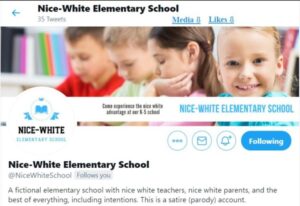
| I’m looking for great things in the future from @NiceWhiteSchool, a parody account riffing off the “Nice White Parents” phenomenon. |
|
| By Alexander Russo with additional writing from Michele Jacques and Colleen Connolly. |
|
| That’s all, folks. Thanks for reading! |
|
|
|
| Copyright © *2020* Alexander Russo’s The Grade, All rights reserved. |
|
|
|
|