|
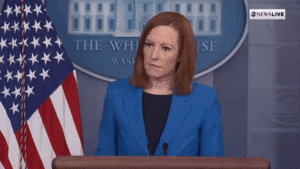
Above: Early in the week, ABC’s Karen Travers asked Biden press secretary Jen Psaki: “If the buildings are open, but the students are still learning remotely a significant portion of the time, does the president view that as a success?” Psaki’s response, in part: “We have every confidence we will be over 50% of schools open five days a week.”
📰 LACKLUSTER COVERAGE OF BIDEN’S SCHOOL REOPENING DEADLINE: Given Biden’s latest education proposals and the lack of definitive reopening data, perhaps it’s not a surprise that there wasn’t all that much coverage of whether the White House met its pledge to get more than half of all elementary schools open within 100 days. As far as we know, many millions of kids still aren’t back in schools, and many more are back only part time, receiving limited in-person instruction. The 74 gave Biden credit for meeting the goal, based on helpful but likely overstated Burbio numbers. The Associated Press gave Biden a grade of “partially met” for his reopening pledge. Politico did a pretty good job focusing on the racial gaps among returning kids, though I think that angle has been overplayed somewhat. (The Washington Post also focused on uneven progress.) In what might have been the strongest attempt to address the question, ABC News covered the White House press briefing where Jen Psaki ducked the question on whether the 100-day goal had been met. Media coverage of reopening risks has been a major problem. But education journalists seem to have moved on to other topics.
📰 UP NEXT: TRACKING DISTRICT SPENDING: One of the central tasks for education reporters over the next few months is going to be figuring out how to report on districts’ efforts to spend the new federal money they’ve been receiving — and any additional money that comes along. One part of the challenge is documenting how districts spent the CARES Act money they got during the first year of the pandemic. (According to Voice of San Diego, county schools spent a majority of its funding on employees.) Another part is documenting how the latest wave of federal relief funding is being spent. (Mainstreet Nashville has covered the district’s award of an $18M no-bid contract.) The coverage will succeed or fail based on how well reporters contextualize the numbers as part of overall district spending and how specific they can get in detailing the concrete effects of the spending and the people involved in making the improvements happen. One smart way to go: Compare and contrast your district’s progress against that of a demographically similar counterpart.
📰 REPORT FOR AMERICA IS EVERYWHERE (AGAIN): Congratulations to Rebecca Griesbach and Savannah Tryens-Fernandes on joining the Alabama Education Lab at AL.com in partnership with Report for America (RFA). They’ll join senior reporter Trish Crain and education editor Ruth Serven Smith in June. But they’re far from alone. Other education reporters in RFA’s newest cohort announced this week include A.V. Benford at CapRadio & Sacramento Observer, Anna Bryson at Henrico Citizen, Laura Onyeneho at the Houston Defender Network, Becca Savranskey at the Idaho Statesman, Madeline Thigpen at The Atlanta Voice, Rafael Garcia and Maria Benevento at The Beacon, Kyra Miles at WBHM, and Dustin Bleizeffer at WyoFile. And the total number of education reporters in RFA (including those staying on from last year) is now 21, according to Rachel Rohr, director of training and service at RFA. Over the past couple of years, RFA journalists have produced several strong pieces, including for the AP. Last fall, contributor Colleen Connolly wrote about how they have been filling in holes in education coverage across the country. Earlier this month, RFA reporter Becky Zosia Dernbach won EWA recognition for the Sahan Journal covering education being provided to Minnesota’s immigrant and refugee communities. |