In this week’s newsletter: The Newton teacher’s strike is a national story. One district’s enrollment turnaround story. School closings deserve more than horse race coverage. Another big award for the juggernaut “Sold a Story.” And I had the chance to return to Locke High School, the site of one of the nation’s most-watched school rescue efforts.
POST-PANDEMIC POLARIZATION
The big story of the week
The big education story of the week is the teachers strike in Newton, Massachusetts.
It’s the 11th day out of school for kids in this leafy Boston suburb whose renowned schools are highly sought after by families who can afford high real estate costs. Already, there have been fines levied, parental lawsuits, and insults hurled. There have been tears.
As of yesterday, the negotiators had whittled down the gap between the two sides to $4 million, and the district had decided to cancel February break in order to make up the days (WBUR, Globe, MassLive, Patch). However, an all-night bargaining session ended in rancor — and calls from the governor’s office for a speedy conclusion (Herald, Globe, MassLive).
What makes this the big story isn’t its specifics — a strike is a strike — but rather the emerging pattern of post-pandemic school shutdowns in Democratic-controlled communities. They represent polarization among Democrats and economic and class tensions between different groups of workers that’s important to understand.
By and large, the coverage has been abundant and diverse, covering overwhelmed parents, strike legality, state-level political activities, underpaid paraprofessionals, students with disabilities, striking teachers, and divided parents. Coverage from the Globe, Herald, WBUR, MassLive, and GBH has been supplemented by small and nontraditional sources like the Newton Beacon, Fig City News, and Contrarian Boston.
However, the coverage has struggled for depth and has not been universally admired.
Strikes interrupt student learning, divide communities, and put enormous pressure on school budgets just at a time when schools can arguably afford it the least. And yet teachers and the people who represent them feel the urgency and agency to call for them anyway.
I’m not editorializing for or against strikes here as much as pointing out the conflicting perspectives that generate them, the increasing polarization that can result even after kids go back to school — and the case for post-pandemic strikes as more than a local story. Tensions among parents and educators are an important, little-reported story. Noreen Malone’s How the school reopening debate is tearing Brookline apart. is a memorable exception.
In terms of the coverage, I’ve appreciated the amount and breadth but haven’t seen the depth and insight that I saw during the Portland strike (which, to be fair, affected lots more people and went on for much longer than the Newton strike has so far). I still don’t feel like I know what’s really going on behind the scenes: what fueled the decision to go out, what’s kept the strike going on so long as it has, and how strikes hit relatively affluent parents different from everyone else.
“It’s been intense covering the strike,” Newton Beacon editor Bryan McGonigle told us via email. He notes that the strike is the result of growing discontent with city and district officials there — combined with a work-from-home community (that makes a strike less of a problem for parents) and intense support for the school system. “It’s definitely a level of pro-schools culture I haven’t seen in other towns I’ve covered in the past 20 years.”
“Lots of stories, little insight,” complains Contrarian Boston’s Scott Van Voorhis in his Substack. To supplement what’s missing, Van Voorhis has been interviewing community leaders in other towns about their strike experiences — some of which have led to post-strike layoffs — and calling on news outlets to report the political dynamics fueling the strikes. These include an effort to make strikes legal and a bigger political campaign fueled by the state teachers union.
Other big stories of the week:
📰 HATE CRIME SURGE: According to newly released data from the FBI, hate crimes at elementary and high schools have more than doubled between 2018 and 2022 (K-12 Dive, USA Today, New York Times). Schools and university campuses were the third most common place where hate crimes were reported in that time, and Black, Jewish, and LGBT students were the most likely targets. We’ve seen lots of reporting lately on discrimination in schools, particularly around the Israel-Gaza conflict. In Oakland, where teachers held a controversial pro-Palestine teach-in in December, Jewish parents are pulling their kids out of the district, fearing for their safety (Mercury News).
📰 PANDEMIC RECOVERY — FOR SOME: A new study from Stanford and Harvard shows that students are making a surprising recovery from pandemic learning loss — but mostly for higher-income kids (Washington Post, New York Times, NBC News, EdNC). The gap in recovery rates between rich and poor communities is widening. On X, Oregonian education reporter Julia Silverman praised the New York Times’ Claire Cain Miller for her “consistent and empathetic focus on this topic” and lamented Oregon’s place in the data: “OR is an outlier in not seeing academic rebound post pandemic. Maybe getting called out (in) the paper of record will light some fires around here?”

ENROLLMENT TURNAROUND
The best education journalism of the week
The best education story of the week is Becky Dernbach’s Hmong, East African programs help St. Paul halt enrollment slide for Sahan Journal.
The piece opens with a colorful classroom scene, neatly explains linguistic subtleties that might be missed by English speakers, and helps readers understand the backstory behind surging interest among Hmong families for dual-language programs that has helped the district attract more parents who might otherwise send their kids to private or charter schools. (Many Hmong kids no longer speak the language at home, making parents more interested in dual-language offerings.)
It’s not just dual-language programs that the district has expanded, Dernbach notes. There’s also an East African magnet program, a newcomer high school, and Karen language classes for children of refugees from Myanmar. The piece gives numerical and historical context to the new programs that have led to the district’s success, suggesting an approach that other districts could — or should — consider.
If Dernbach’s name sounds familiar, we featured her in a 2020 story about Report for America, named her as a favorite reporter in 2021, and picked her work as the best of the week last winter.
See also this EdWeek story about a Texas district bucking the enrollment-decline trend thanks to economic changes making its suburb a more appealing place to raise children than nearby Houston.
Other great education stories this week — and why we liked them:
👏 Madeleine Parrish reports on a promising effort in Phoenix to re-enroll teenagers who dropped out of school due to full-time jobs, family deaths, or becoming parents. Her story underlines the effectiveness of relentless outreach from caring adults by focusing on students they managed to bring back (Arizona Republic).
👏 John Yang, Claire Mufson, and Lana Green let educators speak for themselves — and at length — in this television segment about both the challenges and rewards of working in special education, a field especially hard-hit by teacher shortages (PBS).
👏 A variety of teachers and administrators explain the team effort required to turn around a failing middle school in this radio feature from Becky Fogel, who includes both humorous and emotional quotes and manages levity without understating the consequences of a potential state takeover (KUT).
👏 Dominic Anthony Walsh’s piece about cuts to HISD’s homeless services team is powered by a few successful records requests and contains a detailed throughline showing the change’s impact on families without stable housing (Houston Public Media). The story sheds light on an aspect of the turnaround effort that deserves more follow up.

SCHOOL CLOSING COVERAGE
Our latest columns and commentary
Closings are coming. In a handful of places, they’ve already begun.
Can media coverage make the difficult process a little more comprehensible — or even sensible — or will it make things worse?
That’s the question raised in this week’s new commentary from EdNavigator’s Tim Daly, who writes about the need for more nuanced, skeptical coverage like that produced by the AP’s Collin Binkley, Illinois Answers’ Jewél Jackson, and Chalkbeat’s Melanie Asmar.
“Start reporting now,” urges Daly, who has several suggestions for how to ask tough questions of school closing plans and those who want to keep under-enrolled schools open.
PEOPLE, JOBS
Who’s going where and doing what
🔥 Career moves: Baltimore Sun higher ed reporter Caitlyn Freeman is moving to Seattle to cover breaking news for the Seattle Times. Boston Globe Great Divide reporter Niki Griswold is moving over to the politics beat, though she says she’ll still cover K-12 from a City Hall lens, which is awesome news.
🔥 Awards: The team behind “Sold a Story” won a duPont-Columbia Award. KVUE TV and the Austin American-Statesman also won an award for their reporting on police accountability in the Uvalde school shooting. Palm Beach Post education reporter Kati Kokal won a Florida Press Club award for in-depth reporting for her investigation into questions on sports registration forms concerning female athletes’ menstrual histories.
🔥 Sound off: Ed tech consultant Phil Hill, whose research was featured in Jill Barshay’s latest Proof Points column, told us in an email that education reporters could do a better job following the money: “Ed reporters are covering regulations but are not covering the role of billionaire-funded foundations in driving the regulatory agenda.” He shared a few of his blog posts as a primer on the subject. Disclosure: The Grade has received funding from some of the foundations Hill cites.
🔥 Kudos: Baltimore Banner enterprise reporter Lee Sanderlin dug into Baltimore Sun owner and Sinclair executive David Smith, who’s role in a lawsuit against the local school system had not been disclosed in local Sinclair station stories about it. Kudos to Sanderlin for pushing for transparency and accountability.
🔥 Jobs & deadlines: NOLA.com is hiring a reporter to cover K-12 schools and higher ed in New Orleans. “You’d be part of our new edu team covering a fascinating school system in a one-of-a-kind city,” says Patrick Wall. Apply here. Chalkbeat Detroit is looking for a reporter to cover district and charter schools. The Florida Phoenix is hiring an education reporter. MLK50 is hiring a juvenile justice and youth reporter. Apply by Feb. 15 for the Institute for Citizens and Scholars Higher Ed Media Fellowship, which offers $10,000 to report a long-form story or series on post-secondary career and technical education.

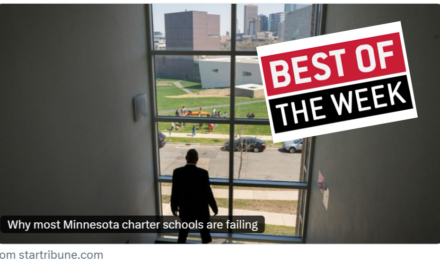
Above: This week’s trove of magazine features include Caitlin Moscatello’s New York Magazine piece on college consultants (above), Alec MacGillis’ look into Ohio’s dubious push to expand vouchers for ProPublica, and Jamie Thompson’s deep dive into whether it’s realistic to expect a school police officer to stop a shooting for The Atlantic.
APPEARANCES, EVENTS, & NEW RESOURCES
What’s happening and new research
⏰ Segments & documentaries: WBUR’s On Point spent nearly an hour on the chronic absenteeism crisis. NBC News ran a segment about the arrival of 40,000 migrants in Denver — among them 3,000 school-age children. And “There Goes The Neighborhood,” a new documentary, puts a spotlight on the impact of closing an elementary school in a historically Black neighborhood in Ann Arbor, Michigan.
⏰ Appearances: New York Times Magazine contributing writer Jordan Kisner discussed her story on one college’s mental health crisis on WNYC’s “All Of It.” Benjamin Herold was on the Daily Beast podcast “The New Abnormal” to promote his new book, “Disillusioned.” (He also had a conversation with author Bettina Love about how to build a better social contract, which you can watch here). And the Boston Globe’s Mandy McLaren made an appearance on Boston Globe Today talking about the Newton teacher’s strike and whether it will influence other districts to follow suit.
⏰ New ventures & collaborations: Chalkbeat NY and NY Focus have partnered to produce a two-part investigation into the misclassification of substitute teachers in NYC schools. Boston will soon have a new news outlet focused on serving communities of color, and the founders both have experience in the beat. The outlet 285 South — which covers immigrant communities in metro Atlanta, sometimes with a focus on education — received a grant from the Pivot Fund, allowing them to hire freelancers and one full-time reporter. A student newspaper in Iowa bought two local weekly papers, adding more than 100 student journalists at the disposal of their respective staffs of three and four.
⏰ Upcoming: The annual NICAR data journalism conference is coming up in early March in Baltimore, and I see a handful of panels on education. The Yale Education Summit is back, scheduled for April 19.
⏰ Research & reports: Federal data shows that police presence in schools has dropped by 11% since the 2019-2020 school year. CRPE published results of a new study on how six New England high schools — most with high numbers of low-income students and students of color — found success post-COVID, highlighting their move away from “college for all.” Education Week’s Stephen Sawchuk is walking readers through the outlet’s new report on reading comprehension. Education Next is looking at how districts have spent — or still plan to spend — ESSER funds as the deadline draws nearer. A report from the American Enterprise Institute predicts that schools won’t recover from the COVID-induced absenteeism crisis until at least 2030.
⏰ Resources: Learn how to ask better questions when covering school choice policies, thanks to Denise-Marie Ordway of The Journalist’s Resource.
THE KICKER

How great to be back at Locke High School and to find a handful of folks still there from the turnaround years. Fifteen years ago, I had the privilege to witness and write about the unusual, teacher-led effort to rescue the school. You can read an excerpt from the 2011 book in Chalkbeat.
That’s all, folks. Thanks for reading!
Reply to this email to send us questions, comments or tips. Know someone else who should be reading Best of the Week? Send them this link to sign up.
Using Feedly or FlipBoard or any other kind of news reader? You can subscribe to The Grade’s “feed” by plugging in this web address: http://www.kappanonline.org/category/the-grade/feed/.
Read more about The Grade here. You can read all the back issues of The Grade’s newsletter, Best of the Week, here.
By Alexander Russo with additional writing from Colleen Connolly and Will Callan.
ABOUT THE AUTHOR

The Grade
Launched in 2015, The Grade is a journalist-run effort to encourage high-quality coverage of K-12 education issues.