Reporters should be practicing journalism that’s centered on the experiences and needs of students and their families. Here are 8 ways to make coverage more student-centered
By Alexander Russo
When the New York Times’ Ben Smith recently critiqued New Yorker writer Ronan Farrow’s reporting about an alleged conspiracy between NBC News and Harvey Weinstein, he described Farrow as practicing “resistance journalism.”
According to Smith, reporters like Farrow “swim ably along with the tides of social media and produce damaging reporting about public figures most disliked by the loudest voices.” Along the way, Smith asserts, they lose focus on the need to document connections that they think are obvious.*
I see occasional glimpses of what might be described as resistance journalism in education, especially around coverage of philanthropy and technology. But it’s not a widespread problem in the field.
However, there is another kind of journalism that is more widespread in education journalism. It puts teachers at the center of the education story, focusing on their views and experiences as much or more than anyone else’s. Let’s call it teacher journalism.
Teachers are important. But from my perspective, education reporters should be practicing journalism that’s centered on the experiences and needs of students. The experiences of students (and their voices) should be at the core of education coverage.
In June and beyond, I hope education journalists will renew their efforts to make sure that student experiences and impacts are at or near the heart of all their stories, and that connections are being drawn to the effects on students for whatever education-related topic is being discussed.
In June and beyond, I hope education journalists will renew their efforts to make sure that student experiences and impacts are at or near the heart of all their stories.
With that in mind, here are some ideas for new kinds of stories that are all urgently needed, each of which features a strong connection to students’ experiences.
1: Accountability
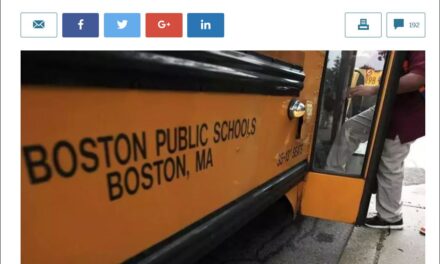
Remote learning has floundered publicly in places like Fairfax County, Virginia, and limped along with much less notice in places like Chicago and Boston and Montgomery County, Maryland. What’s being provided to students, and are they being engaged? What if any progress or improvements have been made from launch until now? What seems to have worked best for kids, in terms of device distribution and live versus on-demand instruction? And — most important — are these lessons being incorporated into school plans for summer and fall, or are they being ignored?
2: Comparisons
Some of the best COVID-19 coverage has compared how different states and regions responded to the crisis. New York and California are one example. Seattle and New York City are another. But there have been relatively few of these comparison stories focused on education, despite sharp contrasts in how states and school systems responded. Some school systems have been shut down much longer than others. Some provided much more instruction than others. Some provided much more live instruction. These decisions had massive, little-understood implications for kids. Pick a comparable district or state and go!
3: Devices and hot spots
As Laura Watters and others have noted, laptops and WiFi hot spots were the ventilators and test swabs of this spring’s remote learning programs. Kids couldn’t learn remotely without them. There weren’t nearly enough for the demand. However, school systems struggled to secure and distribute them where they were needed, forced to compete against each other for devices in states like New Jersey where governors left it up to individual districts. There’s been some coverage of what happened, but there’s need for more.
4: Student engagement
Millions of kids went without school in the immediate aftermath of the shutdown, for days and sometimes weeks, depending on where they lived. And it’s been clear from the start that not all kids were being reached or engaged by remote learning, even where systems could provide engagement numbers. Despite recent progress, there’s still been not nearly enough coverage depicting those children for whom school effectively ended in March — those who were never reached, those were unable to participate, and those whose return to school is especially uncertain. How could schools have reached them better? I’m not just talking about kids with disabilities or English learner subgroups. I’m talking about everyday neighborhood kids. No, you should not call them “dropouts.”
To learn more about how the media covers education, follow The Grade on Twitter and Facebook.
5: Parent and teacher preferences
Parents and teachers played an enormous if underreported role influencing when school systems shut down and shaping the remote learning programs that they provided subsequently. These two groups are playing a similar role in determining when schools will reopen and under what conditions. We need more coverage of these core dynamics — especially given that parents and teachers seem united against a premature reopening of schools. My only caution would be to take surveys, polls, and predictions with a grain of salt. Focus instead on immediate, reportable facts (such as teachers applying for retirement or handing in resignation papers). Give readers historical context about past instances with similar dynamics.
6: Childcare lessons
Along with looking to other countries’ school systems for lessons on how to re-open schools, or scrutinizing guidelines and research, reporters also should examine childcare programs for essential workers in the United States, which were kept open during the shutdown so medical and emergency workers could do their jobs. How did these essential worker childcare programs function without endangering childcare providers, parents, or children? What if any strategies did they employ that schools could adopt? There are lessons for K-12 schools right under our noses.
7: COVID safety spending
As in the frenzied aftermath of mass school shootings, school systems are going to be under enormous pressure to ensure student and teacher safety. As a result, they are going to be vulnerable to purchasing all sorts of expensive anti-COVID equipment like thermal scanners and social distancing alarm bracelets. However, these gizmos may not be effective or necessary. And they’re certainly going to be pricy. Journalists could perform a valuable service by reporting what’s actually needed and worthwhile to keep everyone safe — and by documenting questionable purchases that are being proposed or approved.
8: System performance
One extremely ambitious but extremely valuable story would be to report how the K-12 education system responded to the crisis compared with other major systems such as postsecondary education or health care. Sure, these are different systems with different substructures, different needs, and different populations being served. But did K-12 school systems respond quickly, make smart decisions about how to respond, and implement their plans effectively? How well or poorly were children treated by these different systems? What lessons can we learn from the differences? We need to know.
Sign up here for a free newsletter featuring the week’s best education news and newsroom comings and goings. It’s the most popular feature of The Grade.
It sounds simple, and perhaps a bit hokey, the idea of centering education journalism on students. But the implications are pretty deep.
Putting students at the center of your work doesn’t mean you have to write only stories that are directly about students.
Policy and politics stories can feature the likely impact and implications on students. Stories about teachers can do the same. The topics can be just as broad as you want.
It’s just that the connections would all go back to students.
*The original version of this piece mis-identified the Times’ Ben Smith.
ABOUT THE AUTHOR
Alexander Russo
Alexander Russo is founder and editor of The Grade, an award-winning effort to help improve media coverage of education issues. He’s also a Spencer Education Journalism Fellowship winner and a book author. You can reach him at @alexanderrusso.
Visit their website at: https://the-grade.org/