In this week’s newsletter: School choice measures fall flat at the ballot box. Election results show a sharp Latino shift to the right — driven in part by concerns about immigration. Canceling Amazon Prime misses the point. The San Francisco Chronicle follows up on a school closing story — with an unexpected result. The problem with voting stories, according to a former education reporter. And why are there so few days of instruction in November?
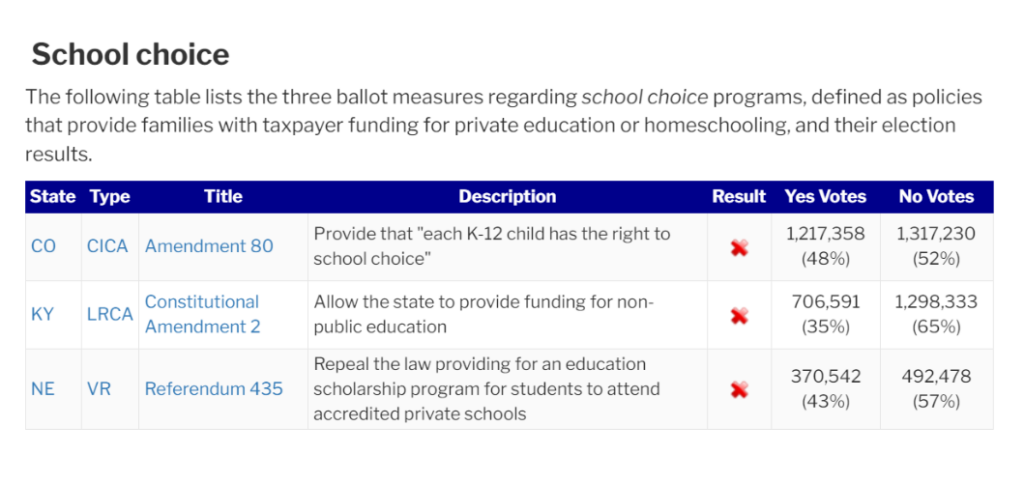
Above: Ballotpedia has the results on 12 different education-related state measures, including the three choice initiatives.
SCHOOL CHOICE FALLS FLAT
The big education story of the week
The big education story of the week is voters rejecting school choice measures in Colorado, Nebraska, and Kentucky — even in places where Trump won (New York Times, The Hill, USA Today, EdWeek).
In Kentucky, voters said no to state funding for private schools (WDRB, WSAZ). In Nebraska, voters repealed a school voucher program passed by the state legislature earlier this year (Nebraska Examiner). And in Colorado, voters rejected an amendment that would have made school choice a state constitutional right (CPR, Chalkbeat Colorado, Colorado Sun, Forbes).
In Texas, however, choice advocates’ efforts to unseat opposing lawmakers prevailed (Dallas Morning News, Texas Tribune, The 74). And, given recent enrollment trends and legislative results, it’s pretty clear that “people like school choice” (Eduwonk).
Other tidbits: Post-election analysis showed Latinos shifting towards the Republican party, in part due to concerns about unconstrained immigration — a dynamic education reporters need to address in their reporting (NPR, DocumentedNY, New York Times, Washington Post). On election night, NBC’s Chuck Todd noted a possible connection between Republican gains with Latino voters and school choice (NBC News).
Other big education stories this week include Massachusetts voters ending the state’s long-standing graduation test requirement, the results of Chicago’s first school board election in decades, mixed results on school bond measures, and Florida voters rejecting a measure to make school boards partisan. Check out @thegrade_ for more headlines Monday through Friday!
REVISITING SCHOOL CLOSURE
The best education journalism of the week
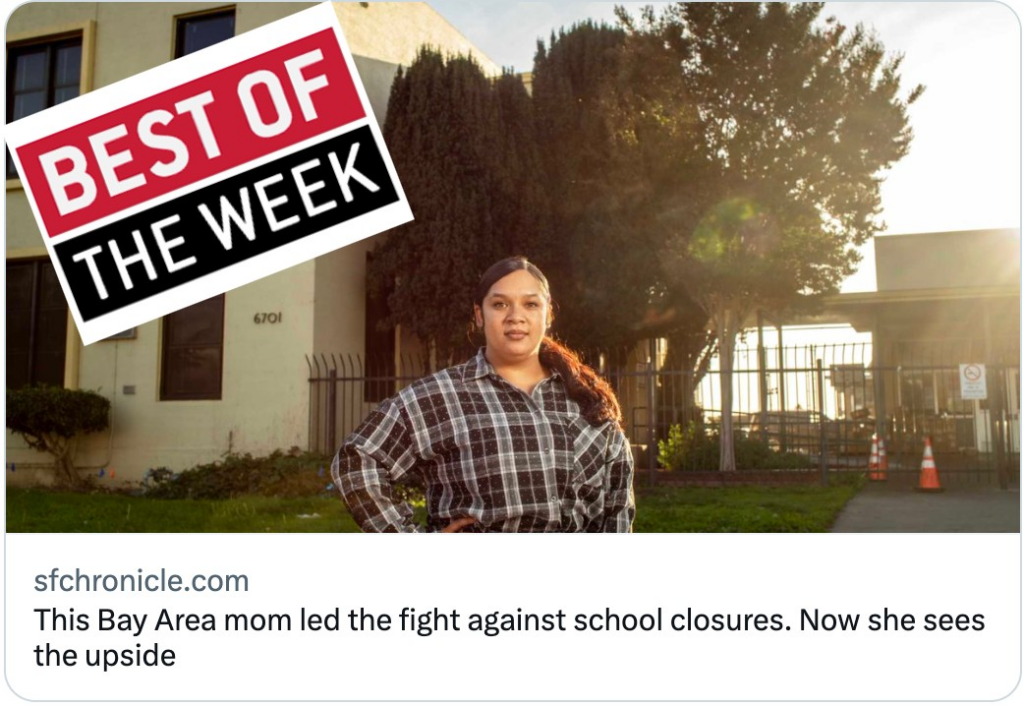
The best education journalism of the week is This Bay Area mom led the fight against school closures. Now she sees the upside by Jill Tucker of the San Francisco Chronicle.
What makes this story so good is that it follows up on a dramatic story, rather than abandoning it — and that it gives us an unexpected and little-depicted perspective on a parent’s evolving views.
In 2022, Oakland parent Azlinah Tambu went all in against the 2022 closure of a beloved school, leading a 130-day sit-in that ended only after officials agreed to convert the school into an adult education center.
More than two years later, Tucker tracks down Tambu and finds that her kids now attend larger district schools with more students and services — sports, ballet, internships, etc.
“We lost a lot from leaving Parker,” Tambu tells Tucker. “But what we gained, oh my god, Parker was so underfunded.”
Kudos to Tucker for seeking out Tambu and giving her space. This story suggests important ways for journalists to dig more deeply and tell a more nuanced story — however it might unfold over time.
Other big education stories this week include Massachusetts voters ending the state’s long-standing graduation test requirement, the results of Chicago’s first school board election in decades, mixed results on school bond measures, and Florida voters rejecting a measure to make school boards partisan. Check out @thegrade_ for more headlines Monday through Friday!
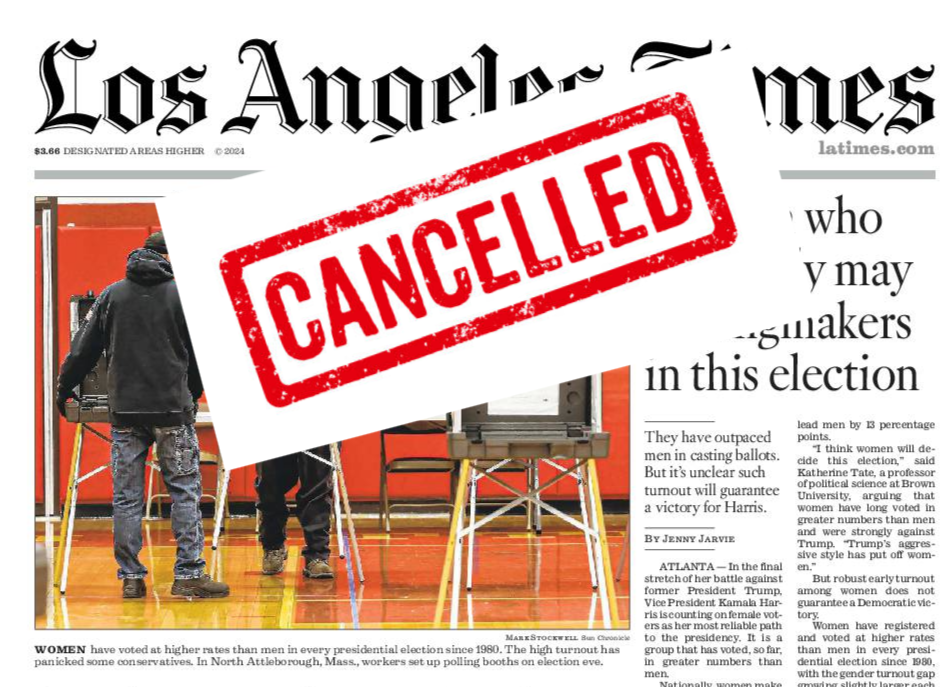
THE BLIND SPOT BEHIND CANCELING AMAZON
Our latest columns and commentary
What should journalists and readers do when billionaire newspaper owners of the LA Times and Washington Post trample the editorial independence that is such a core part of journalism?
In a new piece from The Grade, former public radio host Tanzina Vega argues that the journalist-led effort to discourage subscriber cancellations is both tone-deaf and ineffective.
And in another piece we were proud to have published this week, former Los Angeles Times editorialist Karin Klein explains why the suggestion that angry Washington Post readers cancel Amazon Prime instead of the paper reveals a privileged blind spot.
“Journalism is an important bulwark against despotism,” writes Klein. “But that doesn’t make it any more OK for blameless warehouse workers and drivers to lose their jobs.”
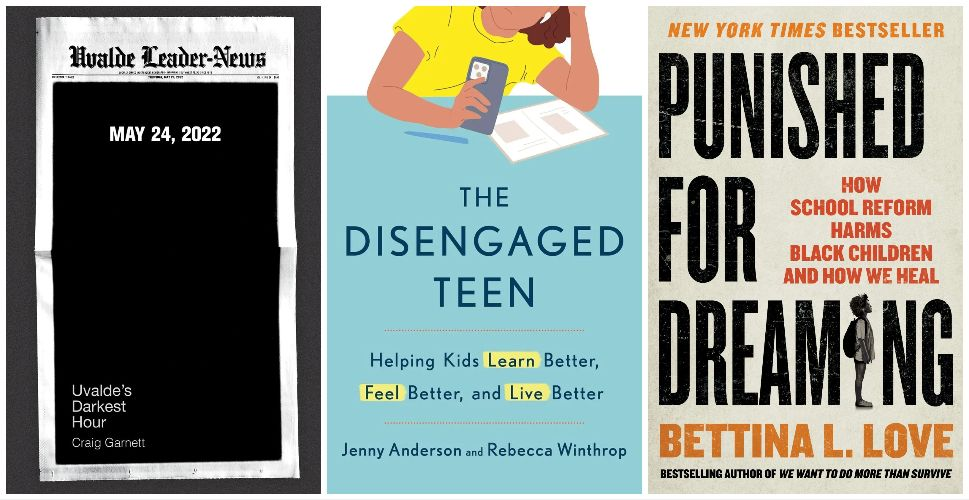
Above, left to right: Check out these notable titles, including Uvalde News-Leader publisher Craig Garnett’s new book featuring firsthand accounts from community members and staff, journalist Jenny Anderson’s forthcoming book on student disengagement, and Bettina Love’s award-winning 2023 book on how school reform harms Black children, a topic she spoke about this week on Connecticut Public Radio.
PEOPLE, JOBS, & EVENTS
Who’s going where and what’s happening
📰 Appearances, segments, & podcasts: PBS News featured a segment on the Harris and Trump education policy proposals as well as one on the teacher who created LGBTQ History Month. Chalkbeat’s Kalyn Belsha explained how Trump’s immigration policies could impact children and schools on WBUR’s “Here and Now.” Seattle Hall Pass posted a new podcast episode about Seattle Public Schools’ dire financial situation. And the Hechinger Report’s Jill Barshay was on “The Education Gadfly Show” to discuss math education.
📰 Research & reports: In a new journalism study out of Chile — with big implications for U.S. journalists and education reporters — news consumers named approachability and empathy as among the values they rate highest in journalists. The 74 reported on research showing that having teachers’ union approval is key to winning school board elections.
📰 Sound-off:
- “The problem with voting stories is that the people who make themselves most available don’t know what the hell they’re talking about,” says Votebeat’s Jessica Huseman. Also true of education stories!
- “The journalism industry has a lot of room for growth, but one thing I’m grateful for is that there is no more serious debate about whether reporters should vote,” says Houston Chronicle education reporter Megan Menchaca.
- “Just graded a news article that was written so well I felt compelled to run it through ZeroGPT,” tweeted Jamaal Abdul-Alim, who edits education pieces submitted by university professors and academics for The Conversation. “The dead giveaway was the article made all these authoritative statements that were unattributed.”
📰 Opportunities & job openings: Applications are open to journalists with at least three years of professional experience, freelance included, for the Ida B. Wells Society’s inaugural Investigative Reporting Fellowship. You can also apply to the Spencer Education Journalism Fellowship. California-based EdSource is looking for a higher education editor, an East Bay-based reporter, and a director of operations. And EdSurge is hiring a temporary news editor.
THE KICKER
We saved the best for last
It’s “No School November,” says Fordham Institute president Michael Petrilli, who counts just 16 instructional days in his district this month.
That’s all, folks. Thanks for reading!
Reply to this email to send us questions, comments or tips. Know someone else who should be reading Best of the Week? Send them this link to sign up.
Using Feedly or FlipBoard or any other kind of news reader? You can subscribe to The Grade’s “feed” by plugging in this web address: http://www.kappanonline.org/category/the-grade/feed/.
Read more about The Grade here. You can read all the back issues of The Grade’s newsletter, Best of the Week, here.
By Alexander Russo with additional writing from Colleen Connolly.