In this week’s newsletter: Longer-term effects of storm-caused school disruptions. A sexual predator who’s running for school board. State and local ballot measures are 2024’s hidden education issue. School culture wars are over!? A local education story fails “on just about every level,” says one reporter. And a middle school math teacher schools the New York Times.
STORM-CAUSED DISRUPTION
The big story of the week
The big education story of the week is the short- and long-term educational disruptions created by recent storm systems like hurricanes Helene and Milton — a trend that is likely to intensify in the future.
Tens of thousands of kids in the Southeast are out of school in the aftermath of Milton and Helene ((Miami Herald, News-Press, WJCL, The Hill). For some schools and students, the return to normal will be a matter of just a few days. But for many others, academic displacement and delay will be prolonged. And, thanks to climate change, today’s students are more likely to face weather-related closures and experience trauma (New York Times, Christian Science Monitor).
These disruptions also threaten to lower student engagement and attendance. And school systems may experience financial challenges as states divert resources to disaster recovery (Chalkbeat Tennessee). The immediate and long-term effects of climate change are a big education story that’s still being underreported.
If you’re not already covering it now, you should start. And The Grade is going to help.
Other big education stories of the week include political and financial troubles in Chicago, school closing announcements in San Francisco and Seattle, and a wave of false threats at schools. Check out @thegrade_ for daily headlines!
ALLEGED ABUSER RUNS FOR SCHOOL BOARD
The best education journalism of the week
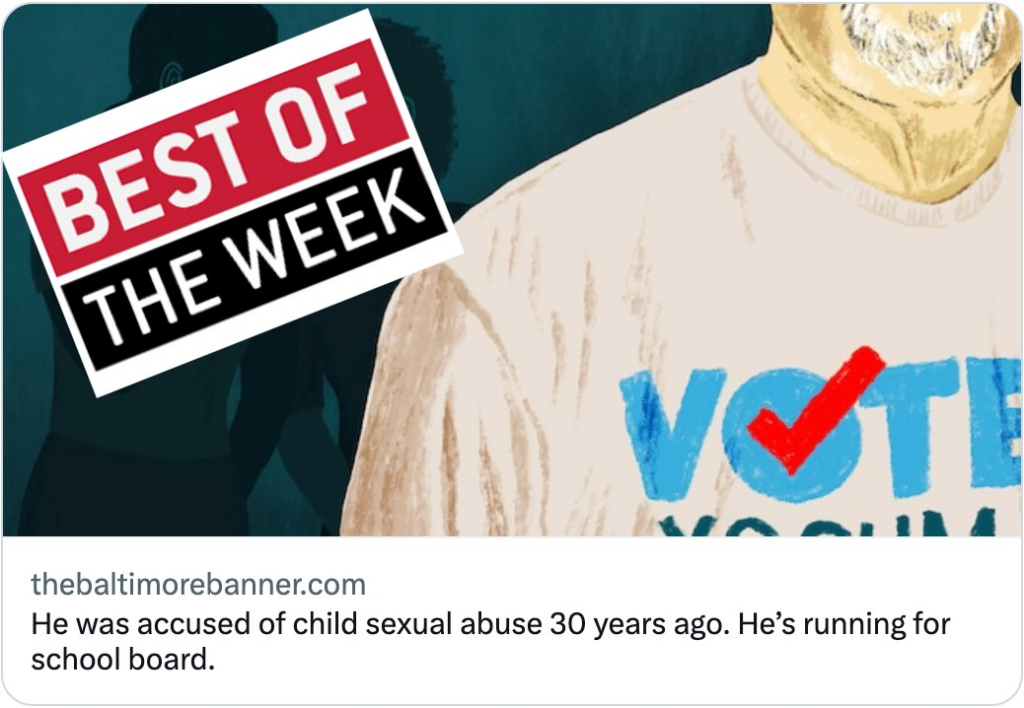
The best education journalism of the week is He was accused of child sexual abuse 30 years ago. Now he’s running for school board by Liz Bowie and Dylan Segelbaum of the Baltimore Banner.
In the early 1990s, authorities charged special education teacher Charles “Chuck” Yocum with child sexual abuse and the district removed him from the classroom. But for the past 30 years, he continued to work in Anne Arundel County schools as an administrator — including in school buildings near kids. And, hard as it may be to believe, he’s now a GOP candidate for the county school board.
Bowie, a longtime education writer, and Segelbaum, a courts reporter, tell this compulsively readable story through the district’s internal investigation, which has never been made public. The duo also give Yocum and his accusers ample opportunity to offer their versions of what happened.
It’s a remarkable feat, uncovering a disturbing, if murky, case that hints at district-wide practices that, according to one account, “discouraged rather than encouraged” educators and administrators from reporting and preventing abusive behavior. Serial school sexual predators are a problem that reporters including Business Insider’s Matt Drange, the Tampa Bay Times’ Bethany Barnes, and several others have covered in the past.
Other education journalism we liked include: How school shooting fears led to a 10-year-old boy with autism being handcuffed (Dallas Morning News), a 14-year-old’s path to alleged gunman at Apalachee High School (Washington Post), how CTE is changing the school landscape in Rhode Island (Boston Globe), and students embracing Louisiana’s cell phone ban (nola.com).
HIDDEN ISSUES CAMPAIGN 2024
Our latest columns and commentary
Education hasn’t been a big part of the 2024 presidential campaign, but education issues are being decided in roughly a dozen state ballot measures and many more local initiatives.
In this week’s new piece from The Grade, veteran reporter Christine Vestal describes how to report on state ballot initiatives in a way that’s accurate and useful to readers.
“There’s a deeper, more nuanced story behind every ballot measure,” writes Vestal, “and it’s one that your readers need to understand.”
This year’s state ballot measures include a Massachusetts resolution to remove the state education test as a graduation requirement and a Florida measure to include party affiliations in local school board elections.
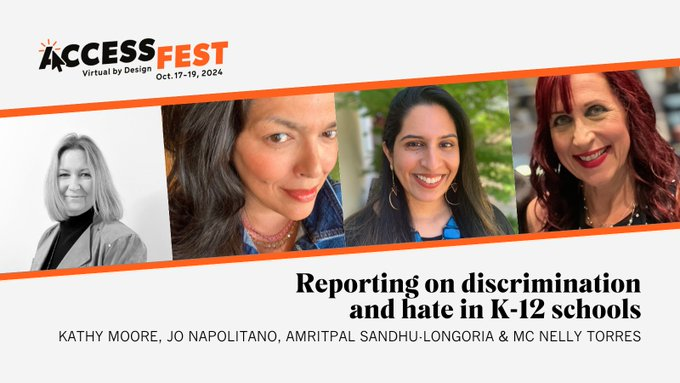
Above: The 74’s Jo Napolitano is among those who will be on a virtual IRE AccessFest panel about reporting on discrimination and hate in K-12 schools Oct. 18. Another panel of interest covers overlooked stories on the education beat. Also, catch Des Moines Register education reporter Samantha Hernandez on another panel about reporting on people with disabilities.
PEOPLE, JOBS, & EVENTS
Who’s going where and what’s happening
📰 Podcasts & documentaries: Sahan Journal’s Becky Dernbach was on Minnesota Public Radio to talk about challenges to teachers’ union contracts that favor seniority over diversity. Chalkbeat’s Erica Meltzer was on WBUR’s nationally distributed “Here and Now” to talk about the much-discussed report showing that Denver’s school closures helped students. Baltimore Banner education reporter Kristen Griffith was on the BBC podcast “Why Do You Hate Me? USA” in an episode about a suburban Baltimore teacher getting caught up in a scandal. Kirk Carapezza of the GBH and Hechinger Report podcast “College Uncovered” was on NPR’s “Weekend Edition Saturday” sharing his reporting on how colleges are responding to campus protests this year. And there’s a new documentary out this week on PBS News and YouTube called “Run, Hide, Fight: Growing up under the gun,” which features lots of reporting on school shootings.
📰 New ventures: Boston’s The Emancipator published a multimedia series this week uncovering the implications of the end of affirmative action in college admissions, in partnership with student journalists from the Media Innovation Studio at Northeastern University. NPR Midwest launched a new series about homeless students in rural areas and how schools are struggling to find them and offer help. We love to see the expansion of Signal Ohio with the new Signal Statewide. It builds on the efforts of Signal Cleveland, Signal Akron, and Signal Cincinnati.
📰 New to the beat: “All Things Considered” producer Jonaki Mehta has joined NPR’s education team, and Hiba Ahmad, another former NPR producer, has joined St. Louis Public Radio.
📰 New research & resources: School culture wars are fading, according to the Cato Institute. Check out some amazing data viz from the San Francisco Chronicle about school closures. And Washington Post columnist Catherine Rampell reports on a groundbreaking new study that found that pre-K is one of the most effective and pro-work policies ever evaluated.
📰 Sound-off:
- “This fails as basic accountability journalism on just about every level,” writes The 74’s Beth Hawkins.
- “Alas, news must be clicked on,” writes one X user about coverage of Biden’s student loan plan.
- “I’m going to ask my own questions, thank you,” said a reporter to Chicago Mayor Brandon Johnson.
THE KICKER
We saved the best for last
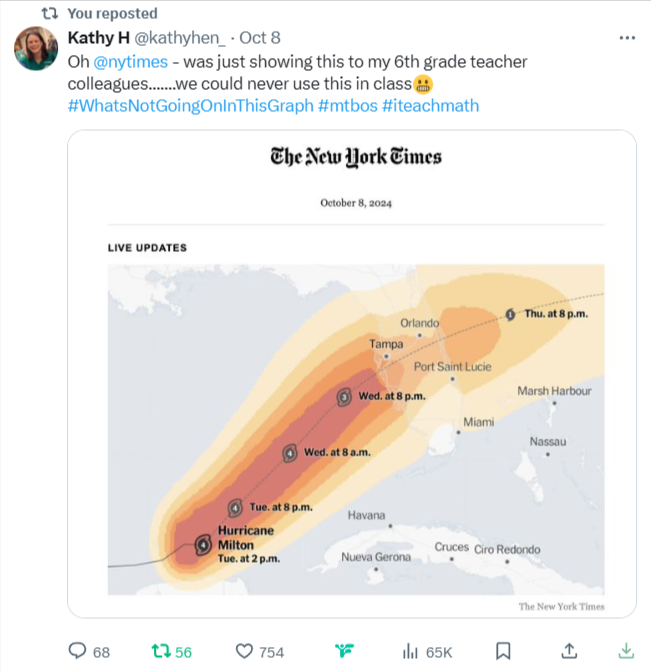
“Oh, New York Times … we could never use this in class,” quips middle school math teacher Kathy H.
That’s all, folks. Thanks for reading!
Reply to this email to send us questions, comments or tips. Know someone else who should be reading Best of the Week? Send them this link to sign up.
Using Feedly or FlipBoard or any other kind of news reader? You can subscribe to The Grade’s “feed” by plugging in this web address: http://www.kappanonline.org/category/the-grade/feed/.
Read more about The Grade here. You can read all the back issues of The Grade’s newsletter, Best of the Week, here.
By Alexander Russo with additional writing from Colleen Connolly.