In this week’s newsletter: Immigrant families played a small but hotly contested role in Tuesday’s debate. A student takes over teaching duties when her school fails to find a teacher. Why school cell phone bans are not all the same — and what to do when school shootings complicate the debate. Two new reports on chronic absenteeism and literacy suggest loads of story ideas. And a nod to all the journalists who, like former President Trump, also have “concepts of a plan.”
DEBATING IMMIGRATION
The big story of the week
The big education story of the week is the education issues touched on in Tuesday’s presidential debate — and those the candidates ignored.
Other than a single mention of the child tax credit, the candidates and the moderators failed to bring up any number of hot-button education issues facing American schools: sluggish academic recovery, declining public school enrollment, private school choice, the cost of college, or Trump’s promise to eliminate the U.S. Department of Education (Chalkbeat). As the Washington Post’s John Woodrow Cox noted on X, “the word ‘dog’ was said three times. The words ‘school shootings’? Not once.” Not even cell phones, book bans, or trans kids made the cut.
However, Trump’s headline-grabbing falsehoods about Haitian immigrants in Springfield, Ohio, has several connections to education. Last year, a deadly school bus crash caused by an immigrant driver led to backlash in the community. The town’s recent population growth, largely due to immigrants, has “taxed” local schools, according to Springfield’s mayor (PBS News).
Even without giving into political arguments and stereotypes, journalists are challenged to cover the effects of immigrant families on local communities in ways that — as Jo Napolitano recently wrote — don’t over-emphasize short-term challenges. Some positive coverage examples to consider include a recent story about migrant families finding refuge in school (San Diego Union Tribune), others struggling to find enough stability to get their kids into school (AP), and still others like sleeping in a car to be close to their children’s school (Chicago Tribune).
Other big education stories of the week include extreme heat in Southern California impacting school schedules, more possible school closings in Seattle and Portland, and the compounding effects of chronic absenteeism and declining enrollment across the country. Check out @thegrade_ for daily headlines!
STUDENT TEACHES CHEMISTRY WHEN NOBODY ELSE WILL
The best education journalism of the week
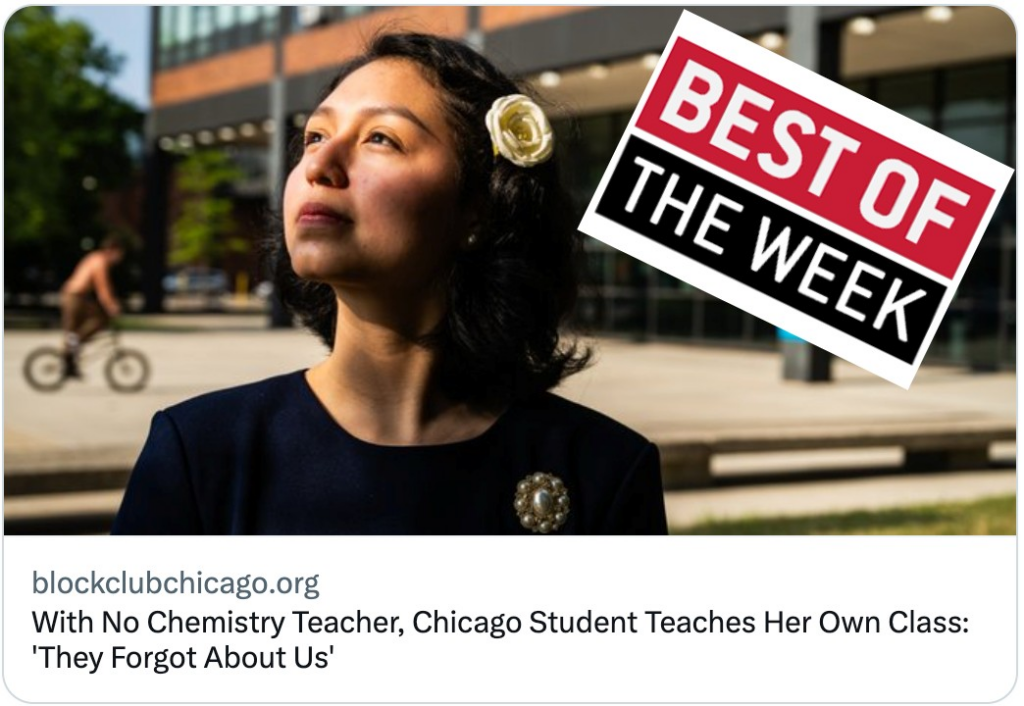
The best education journalism of the week is With No Chemistry Teacher, Chicago Student Teaches Her Own Class: ‘They Forgot About Us’ by Block Club Chicago’s Mina Bloom. It’s a master stroke of storytelling, a subversive narrative, and a brilliant piece of accountability journalism from a nonprofit outlet that deserves more attention.
Bloom’s feature provides a rare peek into the real-world consequences of teacher shortages and teacher absenteeism. Her story features Carolina Carchi, a fed-up 15-year-old who gets up in front of the class and — in the absence of anyone else to teach them — begins to teach the class (which happens to be chemistry).
In a school where teacher absenteeism is a major problem, Carchi prepares lesson plans during free periods and prints out assignments at a local copy shop. And, as it turns out, this isn’t the first time she’s taken matters into her own hands.
With its deep, detailed, context-rich reporting on the student’s efforts and the school’s travails, Bloom’s piece should be a viral sensation. We can only hope that her devastating account builds the audience it deserves and generates action from school officials.
Other education stories we liked this week: Why 300 Sacramento students were turned away on the first day of school (CapRadio), a newspaper probe means Akron Public Schools must return $800,000 (Akron Beacon Journal), a state college that quadrupled Black students’ graduation rate (Chronicle of Higher Ed), and the childcare workers who saved their children on 9/11 (Oprah).
THE PROBLEM WITH PARTIAL CELL PHONE BANS
Our latest columns and commentary
When is a school cell phone ban not really a ban at all? That’s the question that Phone Free Schools Movement co-founder Sabine Polak addresses in the latest commentary for The Grade: How to improve coverage of school cell phone bans.
“The articles I’ve encountered don’t generally explore any of the negative impacts that occur when schools allow cell phone use in between classes and during lunch,” writes Polak, a mom who became an advocate when her daughter began to struggle in school.
She worries that classroom-only plans that allow kids to have unfettered access to their devices in between classes and during lunch periods are much less effective than all-day cell phone bans — and that news coverage doesn’t make clear the difference.
She also calls on journalists to avoid over-focusing on the challenges of implementing new policies — and to question competing claims that are being made. Do phones really make kids safer in school? Do partial bans really work? These are the kinds of questions that reporters should be asking.
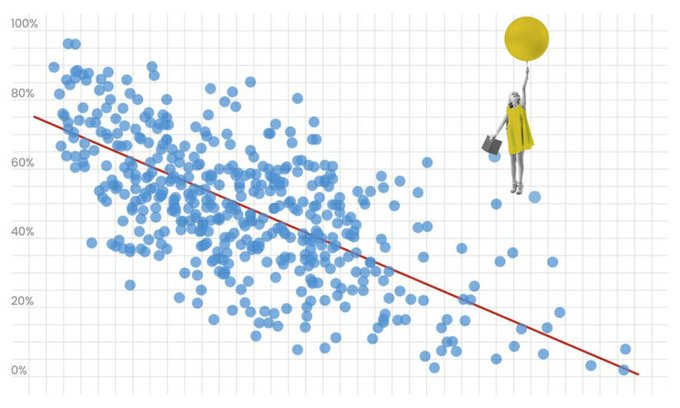
Above: As the poverty rate rises, reading proficiency tends to go down — except in some districts, like Steubenville City, Ohio. The 74 set out to find other exceptional districts to see what they’re doing right.
PEOPLE, JOBS, & EVENTS
Who’s going where and what’s happening
📰 Segments, podcasts, & appearances: ProPublica’s Alec MacGillis spoke about his reporting on falling enrollment in public schools on Amanpour & Company. Chalkbeat’s Erica Meltzer was on WBUR’s “Here and Now” dissecting former president Trump’s vow to abolish the Department of Education. The “TODAY” show highlighted the positive effects of one D.C. school’s smartphone ban. The Washington Post’s Laura Meckler appeared on the Post’s podcast to talk about school cell phone bans. WFYI’s Lee Gaines looked at how phone bans are going in Indiana for NPR. New York Times tech reporter Natasha Singer discussed cell phones’ “unending loop of distraction” in an episode of WNPR’s “Where We Live.” And Season 3 of the GBH and Hechinger Report podcast “College Uncovered” debuted yesterday, focused on campus politics.
📰 Events: WBUR Boston is hosting another K-12 education community listening session in Lowell on Sept. 19. Emily Hanford and AEI senior fellow Robert Pondiscio are having an in-person conversation about England’s rise in reading scores on Sept. 24 in Washington, D.C. You can also watch online. In case you missed it, investigative journalist and former ProPublica reporter Nicole Carr spoke to HBCU students about investigating education.
📰 Research: AEI’s “Return 2 Learn” effort has a big new report out on chronic absenteeism rates for 2023-24, showing some progress as well as continued room for improvement. Earlier this week, 14 states announced a commitment to cutting chronic absenteeism in half over the next five years, according to The 74’s Linda Jacobson. A new study shows that despite the massive financial resource that was ESSER funds, tutoring has not paid off much for students.Four-day weeks aren’t good for student learning or teacher retention, according to a new Ed Working Paper.
📰 Resources: Check out OpenSecrets for a list of state education ballot initiatives, including on funding, school board elections, and graduation requirements. “It wasn’t until I left the newsroom that I realized how hard it can be to find helpful and useful information to make decisions on candidates and ballot issues,” writes journalist Lynn Walsh, who’s written a guide to help reporters cover state ballots and candidate positions for Trusting News.
THE KICKER
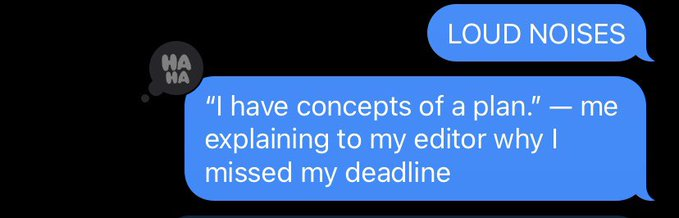
“Every journalist made the same joke at the same time,” says ProPublica’s Nicole Foy after former President Trump fumbled a question during Tuesday’s debate.
That’s all, folks. Thanks for reading!
Reply to this email to send us questions, comments or tips. Know someone else who should be reading Best of the Week? Send them this link to sign up.
Using Feedly or FlipBoard or any other kind of news reader? You can subscribe to The Grade’s “feed” by plugging in this web address: http://www.kappanonline.org/category/the-grade/feed/.
Read more about The Grade here. You can read all the back issues of The Grade’s newsletter, Best of the Week, here.
By Alexander Russo with additional writing from Colleen Connolly.