In this week’s newsletter: More districts are announcing — or hinting at — school closures to come. A reporter reflects on his own role in perpetuating suburban school myths. Boston Globe stories generate state and local responses. And student journalists solve a 30-year-old murder case.
CUTS & CLOSURES
The big story of the week
The big education story of the week is looming budget cuts and school closures in districts around the nation (AP, KSAT San Antonio, CBS Pittsburgh, Oklahoma Watch/KGOU, Pittsburgh Post-Gazette, EdWeek).
In Seattle, public school enrollment is up this year, but many area districts are still seeing student totals well below their pre-pandemic numbers, leaving administrators facing possible closures across the region (The Seattle Times).
In Wisconsin, districts statewide are facing budget crises forcing them to close or consider closing schools (Milwaukee Journal Sentinel).
In Denton ISD, northwest of Dallas, Superintendent Jamie Wilson told the school board that if state lawmakers don’t hold a special session to address inflation and growth costs, cuts will likely come soon (KERA).
The pain even extends to private schools: The Catholic Diocese of Belleville, which covers St. Louis and 10 counties in eastern Missouri, is closing two grade schools. Student headcounts districtwide have shrunk from 40,000 in 2000 to just 19,000 today (St. Louis Today).
Other big education stories this week:
NEWTON TEACHERS STRIKE: For a week now, teachers in Newton, Massachusetts, have been on strike, leaving 12,000 kids out of school and families scrambling (NBC Boston, WCVB). Local leaders including U.S. Rep. Ayanna Pressley have joined the fray (Commonwealth Beacon). While the Massachusetts Teachers Association is pushing for legislation that allows educators to strike, the local teachers union faces possibly the biggest illegal strike fine seen in decades in the state (Boston Globe).
COLLEGE ENROLLMENT RISES: For the first time since the pandemic began, college enrollment has increased — up 1.2% in fall 2023 from the year prior (Washington Post, USA Today, Inside Higher Ed). Community colleges got an especially big bump, with enrollment increasing by 2.6%. Vocational programs saw the biggest increases. Experts point to the rise of short-term credentials and skills-based training, which better match the needs of the newest generation of post-secondary learners (Fortune).

FRESHMEN AT THE STOCK SHOW
The best education journalism of the week
The best education story of the week is What happens when students are let loose at the stock show and a farm to learn by themselves? by Colorado Public Radio’s Jenny Brundin.
In this inviting 5-minute radio feature (the digital version is worth a read, too), Brundin follows several 9th-graders seeking answers to the question: “To what extent are animals and humans in a symbiotic and interdependent relationship?”
The story — like the project — is student-driven. Brundin listens carefully to a variety of curious and articulate teenagers talk about Indigenous husbandry and how farming culture differs around the world, and she packages what she hears into an immersive story in which the students speak entirely for themselves.
“It’s actually kind of fun trying to figure out how to answer a question on your own,” one of the students tells Brundin, “and them (teachers) kind of shoving you into it.”
They visit an organic farm whose Lebanese proprietor makes dairy products that remind him of his grandmother and a sprawling stock show where — once they’ve mustered the courage — they interview goat farmers and hat fitters.
The story is a reminder that the classroom can take many forms, and that kids’ curiosity and creativity knows no bounds. More student-centered stories like this, please.
Other great education stories this week — and why we liked them:
👏 Nadia Tamez-Robledo addresses the need for way more bilingual teachers by identifying holdups in the pipeline, including lack of support for Spanish speakers in early grades and the grueling certification process (EdSurge).
👏 The effectiveness of high-dosage tutoring has been well covered, but this thorough Michael Jonas piece addresses important implementation questions by highlighting several approaches in Massachusetts and emphasizing the relationship between student and tutor (CommonWealth Beacon).
👏 Sarah Karp’s twin radio features about school choice in Chicago dedicates its air-time to parent voices, giving listeners a sense of their decision-making process and what they expect from their schools (WBEZ, 1/18). It’s a refreshingly unusual approach.
👏 With a gentle-voiced principal as her guide, Pien Huang observes a Florida elementary school’s mindfulness program in a story that combines student voices, sounds from the classroom, and research tidbits about similar programs (NPR).
👏 Lauren Lumpkin’s piece about how the Israel-Gaza war is being discussed (and ignored) in D.C. schools covers a lot of ground in just 1,000 words, telling the story of a 15-year-old Palestinian American who managed to organize a night celebrating Palestinian culture (Washington Post).
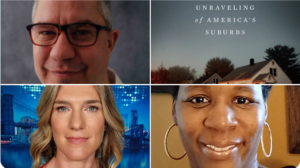
Above, clockwise from top left: Benjamin Herold, his new book “Disillusioned,” parent Bethany Smith, and Anya Kamenetz, who reviewed the book.
SUBURBS & SOURCES
Our latest columns and commentary
In the first of this week’s columns, Benjamin Herold reflects on writing his new book about the collapse of suburban school systems, an experience that forced him to consider his own complicity and resulted in his asking one of his main characters to write the epilogue. “Suddenly, it was my story, my choices, and my racial identity under the microscope,” writes Herold.
School struggles like the one taking place in his childhood suburb reflect “a much wider clash” over race and privilege, writes Herold. “How these collisions play out will depend in part on how we as journalists make sense of them.”
In a review of the book, former NPR education reporter Anya Kamenetz praises Herold’s focus on middle-class schools and his effort to hand the keyboard over to one of his main characters, among other things. But she found the narrative incoherent and worries that the book’s basic premise might not resonate with younger and more cynical readers who don’t have much expectation that suburban school systems can help families achieve the American Dream.
Though generally positive, other reviews (New York Times, Atlantic, New Yorker, Minneapolis Star Tribune, Evanston Now, and Philly Voice) echoed some of Kamenetz’s insights.
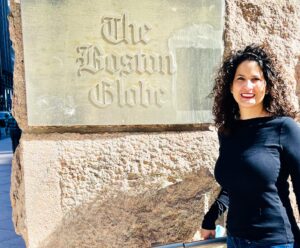
Above: Migrant students top the list for Boston Globe education coverage goals this year, according to editor Melissa Taboada. On a recent episode of EWA Radio, she said, “My mom was a migrant student herself coming from Mexico and didn’t have a great experience coming to the U.S., so it’s always top of my mind.”
PEOPLE, JOBS
Who’s going where and doing what
🔥 Career moves: Former EdWeek reporter Eesha Pendharkar is starting a new job covering education and equity at the Maine Monitor. Former Mercury News education reporter Elissa Miolene announced her new gig covering global development and U.S. government at Devex.
🔥 Job openings & deadlines: Chalkbeat Detroit is looking for a reporter to cover district and charter schools. The Florida Phoenix is hiring an education reporter. MLK50 is hiring a juvenile justice and youth reporter. Nikole Hannah-Jones announced Howard University is hiring a professor to teach investigative or data journalism. Applications for the Spencer Education Journalism Fellowship are due Feb. 1. Apply by Feb. 15 for the Institute for Citizens and Scholars Higher Ed Media Fellowship, which offers $10,000 to report a long-form story or series on post-secondary career and technical education.
🔥 Student spotlight: In Aurora, Colorado, high school student journalists sparked a police investigation following their reporting on the alleged social media sextortion of fellow students. And in Tennessee, a group of high school podcasters identified the alleged killer behind at least six murders 30 years ago (though no charges have been filed).
🔥 LAT layoffs: I haven’t heard about any LA Times education journalists or editors who got laid off, but more than 115 of their colleagues were let go this week — impacting nearly a quarter of the staff. Journalists of color were hit particularly hard. A new mutual aid community for laid off journalists is being created. Here’s how you can help.
APPEARANCES, EVENTS, & NEW RESOURCES
What’s happening and new research
⏰ Segments, podcasts, & appearances: WNYC’s The Brian Lehrer Show discussed mayoral control of schools with InsideSchools.org founder Clara Hemphill. Former NPR reporter Anya Kamenetz was on the podcast Chip Chat explaining her approach to covering climate change and kids. Former EdWeek reporter Ben Herold was on EWA Radio to talk about his new book, “Disillusioned.” Education Week also ran an excerpt of the book, and The 74 published a lengthy Q&A with him. The EdSurge Podcast ran an episode on the push to bring AI literacy to schools and colleges. In case you missed it last week, Boston Public Radio ran a long segment on how Massachusetts can help public school students with dyslexia.
⏰ Impact: The Boston Globe is on fire this week! Parents in two Massachusetts districts are pushing their school committees for literacy reform following the Globe’s big series. The Great Divide team’s reporting on banned books led to one book being returned to bookshelves in another district. And the Globe’s Rhode Island columnist Dan McGowan described how reporter Steph Machado’s reporting on the state’s inadequate special education program “led Governor McKee to increase funding for the Early Intervention program by $4m.” Congrats to all involved.
⏰ Upcoming: The Yale Education Summit is back, scheduled for April 19. Join EdSource reporter Diana Lambert on Jan. 30 for a virtual roundtable about why superintendents are quitting and what can be done to keep them. The same day, the Rennie Center for Education Research and Policy is hosting its annual summit on the state of education in Massachusetts in person.
⏰ Research: A report in Hennepin County, Minnesota, with implications for districts all over the country, noted that self-reported suicide attempts decreased significantly over the 20 years since they implemented a school-based mental health program (MinnPost). “Standardized test scores do substantially better than high school GPA at predicting … a student’s grade point average or the chances that a student will academically struggle once they’re in school,” according to researcher John Friedman, who co-authored a recently published study on test scores and academic performance at Ivy League schools (GBH).
THE KICKER
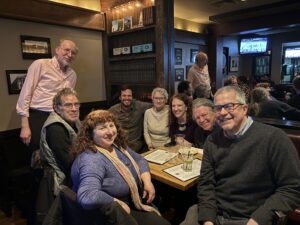
Above: This group of current and former Philly ed reporters — Paul Socolar, Avi Wolfman-Arent, Dale Mezzacappa, Kristen Graham, Bill Hangley Jr., Lauren Wiley, and Paul Jablow — have written 4.4 million words about education in the city, estimates Ben Herold. Who can top that?!
That’s all, folks. Thanks for reading!
Reply to this email to send us questions, comments or tips. Know someone else who should be reading Best of the Week? Send them this link to sign up.
Using Feedly or FlipBoard or any other kind of news reader? You can subscribe to The Grade’s “feed” by plugging in this web address: http://www.kappanonline.org/category/the-grade/feed/.
Read more about The Grade here. You can read all the back issues of The Grade’s newsletter, Best of the Week, here.
By Alexander Russo with additional writing from Colleen Connolly and Will Callan.
ABOUT THE AUTHOR

The Grade
Launched in 2015, The Grade is a journalist-run effort to encourage high-quality coverage of K-12 education issues.