|
With the widespread return to in-person learning, testing and quarantine protocols are being revisited in order to maximize student safety and minimize learning disruptions. Testing in particular has gotten renewed attention, though not all testing policies seem to be working as planned:
🔊 Most Schools Do Not Yet Meet Biden Demand for Testing & Vaccines (NYT)
🔊 Test to Stay at two Utah schools (Salt Lake Tribune)
🔊 NC school district quits most quarantines, contact tracing (Charlotte Observer) See also WBTV.
🔊 ’Pool testing’ grows popular in California schools (EdSource)
🔊 Maine schools adopting pool testing to beat delta variant (AP)
🔊 Montgomery County outlines new plan to respond to the coronavirus (Washington Post)
🔊 L.A. County schools see 30% decrease in COVID cases (KTLA)
🔊 Quick and Inexpensive Saliva Screening Raising Hopes (The 74)
🔊 Nearly 450 Illinois school districts and private schools have signed. So far, only 79 have started. (Chicago Tribune)
🔊 Detroit schools are spending $70M for COVID testing. Could a vaccine mandate be next? (Chalkbeat Detroit)
🔊 Shutdowns, testing, quarantines have become a maze for Philadelphia parents to navigate (Chalkbeat Philadelphia)
Also: Bus and transportation issues also continue to plague the return to school in districts across the country, leading at least one state to call in the National Guard. See stories from Gothamist, New York Daily News, the Minneapolis Star-Tribune, the Philadelphia Inquirer, WBUR Boston, and the New York Times.
Did someone forward you this newsletter? You can sign up here.

|
LA’S STUDENT MANDATE
Best education journalism of the week.
|
|
| 🏆 BEST: The best story of the week is With student vaccine mandate, L.A. Unified wins praise, provokes anger by Howard Blume and Melissa Gomez in the Los Angeles Times. LAUSD is the first and only large district to mandate vaccines for students. Will other districts follow suit? “Probably not — at least not right away,” according to Blume and Gomez, in part due to concerns about parent opposition and the obstacles it creates for vulnerable students returning to class. But all eyes will be on L.A. to see what difference the mandate makes. One reason why LAUSD was able to pass the measure is that it had support from both major statewide teachers unions. Also, nearby Culver City Unified, a much smaller district, approved what’s believed to be the first vaccine mandate for students in the state several weeks ago, and it appears largely successful. Up next? Possibly Oakland, which introduced a resolution last week. For more on student vaccines, check out the latest NYT education newsletter.
🏆 RUNNER-UP: This week’s runner-up is Schools facing critical race theory battles are diversifying rapidly, analysis finds by Tyler Kingkade and Nigel Chiwaya for NBC News. Kingkade has done some of the best and most consistent reporting on the “critical race theory” debate in schools, and this one is no exception. Kingkade and Chiwaya analized 33 cities and counties where school districts have been embroiled in conflict — Loudoun County, Gwinnett, etc. — and found that all of them have become substantially less white in recent years. The story focuses on an important piece of context in this debate and backs it up with data. Be sure to give it a read and take a look at the graphic showing demographic change in each of the 33 cities and counties since 1994. Something similar might be going on in your district.
BONUS STORIES:
🏆 How One Principal Got Students Back to a Bronx Public School (NYT)
🏆 Custodian Stayed At His School All Night Pumping Water During Ida’s Storms (NPR)
🏆 An Inside Look at the Spy Tech That Followed Kids Home (The 74)
🏆 San Francisco Schools Have Had No COVID-19 Outbreaks Since Classes Began Last Month (NPR – See also San Francisco Chronicle)
🏆 CPS COVID-19 testing program ripped as ‘an abject failure’ (Chicago Sun-Times)

ADVICE FROM
A HEALTH JOURNO
New from The Grade |
|
|
Sensationalist school COVID headlines, the importance of including denominators, and the value of talking to non-teaching school staff. These are some of the issues raised by health and science data journalist Betsy Ladyzhets in a new interview with The Grade.
The journalist behind the COVID Data Dispatch newsletter (who’s recently profiled five school districts and schools that successfully reopened last year), Ladyzhets urges education journalists to give readers more context when reporting COVID cases and to remember to tell readers how many kids remain uninfected. Most of all, Ladyzhets urges newsrooms to avoid producing stories that exaggerate the risks or the safety of returning to in-person learning.
“Stories that highlight school outbreaks and tension may cause readers to think there’s no way to open schools safely,” Ladyzhets told me. “At the same time, stories that argue, ‘schools are extremely low risk’ or ‘we don’t know if masks are actually beneficial for young kids’ are also harmful.”
Coming soon: An interview with Courtney Martin, the white mom who sent her daughter to a predominantly Black school and wrote a book about it, as well as a look at the current state of style guides at education news outlets and more advice about covering district spending effectively.
MEDIA TIDBITS
Thought-provoking commentary on the latest coverage. |
|
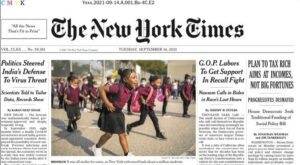
| Above: The safety survey website crashed temporarily. There were problems with buses and questions about the attendance data. Some parents protested. There’s still no remote option for most kids. But so far, so good. See first-week NYC schools coverage from the NYT, NY1, Chalkbeat, Washington Post, NPR, WSJ, NY Daily News.
📰 THE BIG RETURN: While news coverage has overwhelmingly focused on COVID concerns and setbacks, the big story that hasn’t gotten nearly all the headlines it deserves is what I call The Big Return. A month or two ago, it seemed possible or even likely that schools would switch back to remote learning or hybrid. But somehow that didn’t happen. The vast majority of U.S. schools returned to in-person learning despite political polarization, a surging Delta virus, and fear-amplifying media coverage focused on low-vaxx, low-mask Southern schools. The Biden White House, teachers unions, and school district leaders were not deterred. The process has been messy and precarious, to be sure. And some media outlets seem eager to speculate about district shutdowns and parent boycotts or to describe the situation as chaotic. But for now at least, millions more kids are back in school than last year. Schools and districts are making adjustments to keep kids safely in school. It’s notable and unfortunate that there’s been so little coverage pointing out how much progress has been made, preliminary as it may be. Two notable recent exceptions: The LA Times published a story this week reporting that COVID policies are working in schools. And US News noted that the numbers of cases and closures are relatively small given the enormous size of the US school system.
📰 THE FORGOTTEN STRATEGY: VENTILATION: Some school safety mechanisms like masking may have gotten more media attention than they warranted. But others like ventilation have arguably gotten much too little. It hasn’t gone entirely uncovered, of course. Education reporters like Colorado Public Radio’s Jenny Brundin have addressed school ventilation issues. A few others have written about flawed district purchasing processes that have resulted in ineffective equipment. But it’s good to remember that masks and vaccines — my personal obsession — are only part of the story. Is it true that portable filters don’t work with central air systems? (Apparently not.) What about those homemade boxes that some teachers and students are building? (They work, if you make them correctly.) How important is air quality compared to masks and distancing? (Very.) Start here for lots of information. Share your school ventilation stories by tagging @thegrade_.
📰 EASY SOURCES VS IMPORTANT ONES: In some ways, the school shutdown made finding sources easier than ever. You could do everything from your laptop or phone. For a time, you had to. But don’t be lulled into thinking that your online source-sleuthing is reaching the most vulnerable kids and parents, writes former WBUR education editor Kathleen McNerney in a new piece for Nieman Lab: “If education journalists are serious about covering inequity, we need to seek out the families and students that aren’t able to attend those events,” she writes. “Otherwise, we are only telling part of the story — the easiest one.” Who might you be missing? Sources without reliable internet, who never logged into public meetings or responded to social media queries, whose kids may have fallen off the radar and may still be out of school.
📰 TRAGIC BUT RARE: Every COVID death is a tragedy, including the deaths of educators and other school staff. But deaths of school staff have been relatively rare over the past 20 months, especially among the vaccinated. However, media outlets sometimes don’t take adequate care to make that clear to readers. In some cases, coverage has failed to note whether the death is attributed to being on campus. In other cases, the coverage has failed to note whether the death involved a person who was vaccinated. The most recent example is Vaccinated Texas school counselor who ‘had done everything right’ dies after contracting COVID-19. This Dallas Morning News Education Lab story does note that “breakthrough cases like this are rare” and that school staff deaths have been relatively few in number. The effort to give readers context is clear. However, as has been noted in the past, the rare nature of vaccinated deaths should have been noted much higher in the story and in the headline.
📰 UNSOLICITED STORY IDEAS: I haven’t seen much reporting about much-discussed “disenrollment” procedures for kids whose parents refuse to send them to school. Other stories I’d like to see more: whether “test to stay” is a safe alternative to quarantines and closures, why some districts like Seattle and New York City have limited or opposed remote options so stubbornly, what it’s like being an unvaccinated educator/staffer going back to school, and how early-opening schools (from August) have fared over the past month. See more unsolicited story ideas here.

|
PEOPLE, JOBS, KUDOS
Who’s going where & doing what?
|
|
|
Above: Kate Grumke, Jo Napolitano, and Eba Hamid-Rivera, all of whom have new jobs in education journalism.
🔥 New hires: Kate Grumke, formerly of PBS NewsHour, is replacing Ryan Delaney as the newest education reporter at St. Louis Public Radio, her hometown station. The 74’s new senior reporter is Jo Napolitano, formerly of Newsday, the New York Times, and the Chicago Tribune. She just released her new book The School I Deserve: Six Young Refugees and Their Fight for Equality in America following her Spencer Fellowship and was an EWA finalist this year for this feature she published with The 74. Chalkbeat hired its first director of audience, Eba Hamid-Rivera, who’s worked as a digital strategist, writer, and editor for outlets including PBS NewsHour Weekend, The Trace and The New York Times. Congrats to all!
🔥 Jobs: The Seattle Times Ed Lab is hiring a reporter now that Hannah Furfaro has moved over to the new mental health reporting team. WBUR, Boston’s public radio, is hiring a new education editor to replace Kathleen McNerney, who recently left to start freelancing. EdSource in California is hiring a managing editor and a web design manager. Bridge Michigan is hiring a statewide education reporter. Any new job opening out there that folks might want to know about? Let us know.
🔥 Congrats to Nikole Hannah-Jones, the Beyoncé of education journalism, who’s been named one of Time’s 100 most influential people of 2021. She tweeted, “I first subscribed to Time as a nerdy middle school kid. I still have copies from the week the Berlin Wall fell and of Nelson Mandela. So, to be named to the #time100 is just unfathomable & I’m blown away.”
🔥 Congrats also to former education journalist Francisco Vara-Orta, who’s been named director of diversity and inclusion at IRE.
|
APPEARANCES, EVENTS
What just happened & what’s coming next?
|
|
| Above: Economist Emily Oster’s COVID schools data hub has finally launched! It’s one of the most comprehensive databases about schools in the pandemic, and it will surely be helpful to reporters. “It’s crazy that 18 months into the pandemic, we are relying on such an incomplete understanding of what happened in schools during the last school year and how those decisions have affected students, teachers and parents,” Oster said. Read the NYT writeup of her plan here.
⏰ Media appearance: NPR’s Anya Kamenetz was on the Stand Up news podcast with Pete Dominick to talk about back to school. She’s working on a book about how the US responded to the pandemic and its effects on kids.
⏰ Upcoming: EdSource is hosting a webinar on Sept. 30 featuring a roundtable discussion about universal transitional kindergarten. The NYT’s Erica Green was a guest on the Elevate Maryland podcast, which should drop soon.
⏰ Are you applying for a journalism internship? Check out this event from the Ida B. Wells Society on Sept. 21 about tips on applying, moderated by LA Times health reporter Marissa Evans.
Did someone forward you this newsletter? You can sign up here.
THE KICKER
|
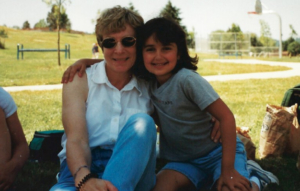
The Seattle Times Ed Lab’s Dahlia Bazzaz (above right) wrote a poignant essay about what it was like growing up post-9/11 as the daughter of Iraqi immigrants. “In the vacuum of any real conversations or context from many of my teachers about what was going on, all the feedback I had was from my peers making uneducated guesses,” Bazzaz writes. “We brought the headlines to school but none of the context.”
|
|
|
That’s all, folks. Thanks for reading!
Reply to this email to send us questions, comments or tips. Know someone else who should be reading Best of the Week? Send them this link to sign up.
Using Feedly or FlipBoard or any other kind of news reader? You can subscribe to The Grade’s “feed” by plugging in this web address: http://www.kappanonline.org/category/the-grade/feed/.
Read more about The Grade here. You can read all the back issues of The Grade’s newsletter, Best of the Week, here.
By Alexander Russo with additional writing from Colleen Connolly. |
|
|
|
|
|
|
|
|
|
|
|
|