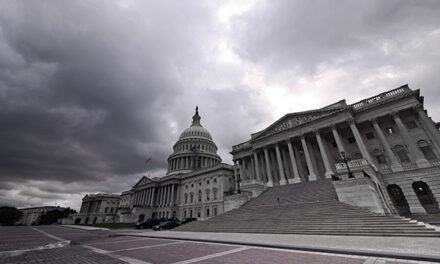
The poet Thomas Fuller is credited for the expression “It is always darkest just before the day dawneth.” I have always loved this saying because while it anticipates a brighter, more hopeful day, it also acknowledges the absolute darkness that can come before. I don’t know about you, but if I had to describe 2020 in just one word, my choice would be “dark.”
The good news, however, is that 2021 is finally here and a bright, hopeful new day is dawning. In Washington, the clearest example of hope is when coalitions, organizations, and special interest groups of all sorts issue policy recommendations to the incoming administration. After four years of President Donald Trump and Secretary of Education Betsy DeVos, many groups that support and advocate for public schools are champing at the bit to get their ideas out there. Although COVID-19 recovery is going to dominate much of the Biden administration’s first year, policy recommendations are still important and can have a significant impact on federal policies and programs. Here are some of the big ideas that I’ve been hearing about here in the nation’s capital.
Five priorities for the first 100 days
The Center for American Progress (CAP) left the gate early and issued a First 100 Days Agenda for K-12 Education (Sargrad et al., 2020) last October. Although most, if not all, of CAP’s suggestions would have likely fallen on deaf ears if Trump had won the election, a Biden administration should be more inclined to pay close attention to the five priority areas on CAP’s agenda:
- An explicit focus on racial equity when developing policy.
- College preparation and workforce development.
- Modernizing and elevating the teaching profession.
- Increasing and equitizing investments in public schools.
- A more balanced approach to charter school policy.
CAP suggests the U.S. Department of Education and the White House’s Domestic Policy Council work together to take a community-informed approach to education policy making. To that end, CAP’s recommendations include a nationwide listening tour to learn more about how schools and communities are dealing with COVID-19 and ongoing racial unrest and a reorienting of the department’s programs based on community feedback. Developing a more racially diverse teacher and school leader workforce (a concern shared by many education groups, including PDK) is also a priority for CAP. And much to the delight of the many education groups that continue to fight for racial and gender equity, CAP suggests restoring the Obama-era school discipline policies and Title IX guidance that were revoked by DeVos.
Recommendations from superintendents
The School Superintendents Association (AASA), a group that pushed back against the Trump administration on many issues, has called upon the Biden administration to support a series of education investments that they believe will support and sustain the public schools that educate well over 90% of the nation’s students (Pudelski, Ng, & Rogers, 2020). Not surprisingly, most of the AASA recommendations reflect the specific concerns of superintendents, but COVID-19 has made many of the needs addressed in these recommendations obvious to people across the education community. Among the suggested policy actions are:
- Fully funding the Individuals with Disabilities Education Act (IDEA) so school districts have more resources to cover their costs.
- Developing a more accurate student poverty metric so more low-income and at-risk students benefit from federal resources.
- Including the nation’s public schools in any larger infrastructure plan so much-needed upgrades can be made to both facilities and technology.
- Streamlining reimbursement programs for school-based Medicaid so districts are better able to provide critical health services to students.
- Prioritizing school nutrition programs.
Trying to meet the needs of teachers, students and families during a global pandemic is a seemingly impossible task, and school superintendents have truly been at the epicenter of the COVID-19 crisis. The challenge of opening schools safely in an environment that is constantly changing, along with the lack of any real federal leadership in the past year, has no doubt exhausted these local leaders. AASA’s recommendations clearly aim to give local leaders the resources they need to reconstruct schooling in a post-COVID world.
Addressing the needs of rural communities
The Organizations Concerned about Rural Education (OCRE) recently issued a letter to the incoming Biden administration that included a particularly interesting set of policy recommendations to address the unique challenges facing rural schools. While rural schools struggle with many of the same issues as their urban and suburban counterparts, the isolation of rural communities often compounds these challenges.
For example, every school district seems to struggle with hiring qualified teachers these days, but the challenge is greater for rural communities. Housing, a lack of economic opportunity for family members, and limited resources make rural schools far less attractive to many top candidates. Trying to find a highly qualified AP Physics teacher who is willing to relocate to an isolated, rural community is akin to searching for the Holy Grail. OCRE suggests a more focused policy approach to recruiting and supporting educators in rural communities, including a “grow-your-own” recruitment strategy that focuses on finding and nurturing local candidates. This kind of approach is also being implemented in some hard-hit urban areas.
OCRE has been advocating for universal broadband and a more robust infrastructure to support remote learning for years, but the COVID-19 crisis laid bare the need for every school, teacher, and student to have access to affordable broadband services. If the Biden administration can accomplish anything in four years, it is my fervent wish that we settle this issue once and for all and give all communities the broadband services they need and deserve.
Support for SEL
If there were ever a time for groups that advocate for more explicit federal programs to support social and emotional learning (SEL) to get some attention, it is now. Tragically, the impact of COVID-19 is providing groups like the Collaborative for Academic, Social, and Emotional Learning (CASEL) and The Aspen Institute’s National Commission on Social, Emotional, and Academic Development with some real-time evidence to support their policy recommendations. For years, these groups have struggled to get policy makers to put the social and emotional needs of students on equal ground with academic concerns.
The lack of a clear and consistent definition for SEL has certainly hindered their efforts, which is why some SEL advocates, like CASEL and others, support a clear and articulated definition of SEL that includes criteria for competency, benchmarks, and so on. Since the research base for social and emotional learning is still fairly nascent, ongoing federal support for research is a priority for these groups, as is teacher professional development and support for mental health and other wraparound services in schools. Both groups also highlight equity and inclusion as important to any SEL program or policy, something that will be even more important in the aftermath of COVID-19.
Listening to people who care
To someone unfamiliar with how Washington works, the ritual of organizations and advocates making policy recommendations may seem like nothing more than self-serving political theater. But leaving it at that overlooks a more nuanced point. Our democracy, despite the bruising it has taken in recent years, depends on people who have a passionate vision for America. We can agree to disagree (we can, right?) about specific issues and ultimate goals, but at the very least, we need to show up and make our case.
Like every administration before it, the Biden administration will need to strike a careful balance as they consider all these recommendations. Although they may already have an education agenda they plan to implement, they can and should continue to learn from the ideas and recommendations of the many groups that care about education. To believe that any one group of people is going to have all the answers is not only arrogant, it often leads to bad policy.
Reference
Pudelski, S., Ng, N.E., & Rogers, C. (2020, November). A new education vision for a new administration. Alexandria, VA: AASA: The School Superintendents Association.
Sargrad, S., Harris, K.M., Partelow, L., Campbell, N., & Jimenez, L. (2020, October 20). A first 100 days agenda for K-12 education. Washington, DC: Center for American Progress.

ABOUT THE AUTHOR

Maria Ferguson
Maria Ferguson is an education policy researcher, thought leader, and consultant based in Washington, DC.