In this week’s newsletter: A new report details pandemic learning recovery progress — while some gaps are growing. Polls suggest that Democrats have lost their traditional edge on education (and that most voters aren’t interested in school culture war debates). Another report sheds additional light on the Uvalde school shooter’s long-running academic struggles. Ahead of the EWA conference, 10 reporters offer their top wishes for how the organization might evolve. And a student writes a thought-provoking opinion piece about which parts of the pandemic attendance story are going uncovered.
RECOVERING, BUT STILL BEHIND
The big story of the week, according to us:
The big story of the week is the mix of good and bad news in the NWEA report on COVID learning loss and recovery. Some outlets focused on the positive side, including recent student gains that almost match pre-pandemic growth. But others focused on the more concerning findings, including large achievement gaps and the length of time it may take for students to fully recover. A sampling of the coverage:
🔊 Students Are Learning Well Again. But Full Recovery? That’s a Long Way Off. (New York Times)
🔊 Study: Student gains last year narrowed COVID learning gap (AP)
🔊 The state of learning loss: 7 takeaways from the latest data (Chalkbeat)
🔊 Report shows how the pandemic affected students’ pace of learning (KQED MindShift)
🔊 Pace of learning back to normal but student achievement lags far behind (Hechinger Report)
🔊 Harvard Economist Offers Gloomy Forecast on Reversing Pandemic Learning Loss (The 74)
🔊 One classroom but very different students: Why it’s now harder for children to catch up in school (NBC News)
Another big story of the week: New polls continue to suggest that Democrats have lost their traditional edge over Republicans when it comes to education — and that voters want more focus on core educational issues rather than culture war debates (EdWeek, The 74, US News, NBC News).
Also: The Biden administration issued a new school discipline guideline that attempts to decrease the rate of suspension and expulsion of students with disabilities (Washington Post, The 74, Chalkbeat, US News).
Last but not least, a Texas House of Representatives report featured new details about the Uvalde shooter’s school experiences being bullied, falling behind academically, and missing loads of school (Vox, Education Week, CNN, Wall Street Journal, Texas Tribune). The Austin American-Statesman also translated the report in Spanish.
READING CHALLENGES; OPAQUE SPENDING
The best education journalism of the week, according to us:
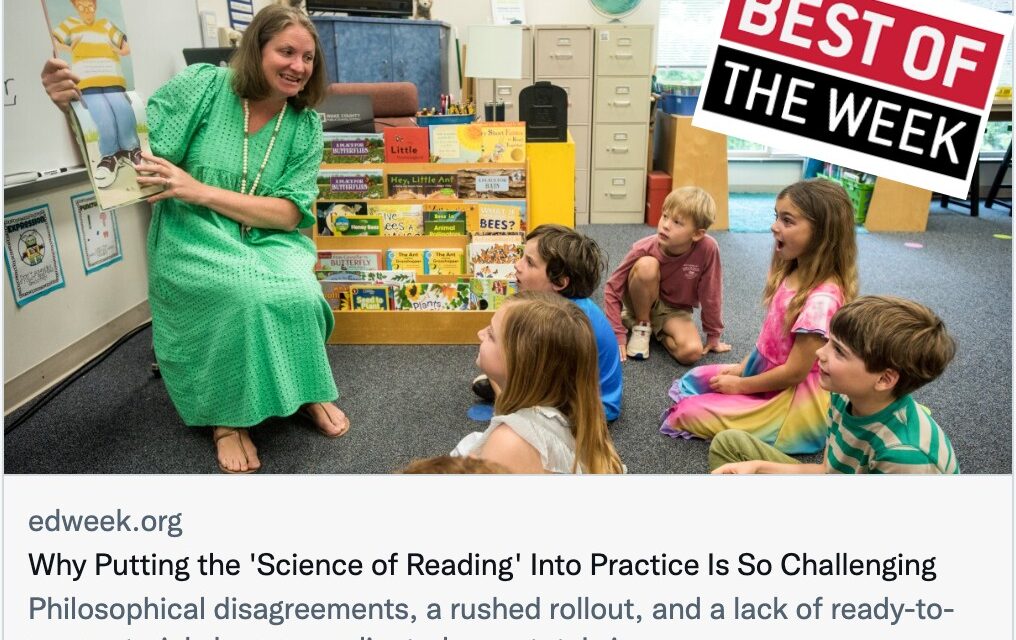
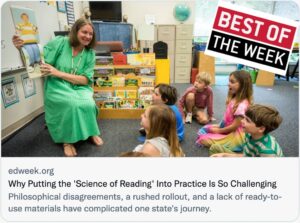
🏆 BEST: The best story of the week is Why Putting the ‘Science of Reading’ Into Practice Is So Challenging by Sarah Schwartz in Education Week. We’ve been hearing a lot lately about the “science of reading” — thanks largely to Emily Hanford’s pioneering work — but this story stands out for its up-close look at implementing the technique in the classroom. Schwartz focuses on North Carolina, one of more than two dozen states transforming their reading instruction to align it more with what the science says works. She talks to educators who, after decades of teaching reading one way, are trying to change. Some are confused, others hesitant, still others hopeful. “Your philosophy on reading is as deep as religion,” says one principal. “I felt like a lot of it was giving me background knowledge,” said a kindergarten teacher in Schwartz’s story. “But I wasn’t getting — how do you apply it?” The story thoroughly explains how the “science of reading” works, and sheds light on the depth of the controversy surrounding it, all while bringing us into vibrant classroom scenes. It’s a great example of how to report a policy story with a human angle.
See also: New Reading Curriculum Is Mired in Debate Over Race and Gender in the New York Times and Gwinnett County schools taking new approach to literacy in the Atlantic Journal-Constitution.
🏆 RUNNER-UP: This week’s runner-up is Analysis Of COVID Funding Reveals California Districts Have Spent Little So Far To Address Learning Loss by John Fensterwald in EdSource. Some days I despair that we’ll never really know how districts spend COVID money, despite all efforts, but the few stories like this offer a glimmer of hope. Fensterwald analyzes what we know — and don’t know — about how California has spent its federal ESSER dollars. The data isn’t super clear due to broad categories being used (such as “other evidence-based interventions”), but this alone merits reporting. This story is more of an explainer than a revelation of surprising ways schools are spending money, but it does a great job giving an overview of the requirements and flexibility of ESSER funds and what the implications of that are. “With billions and billions of dollars, we should be able to show how it is helping kids,” said one advocate quoted in the piece. While the work of poring over spending plans can be a bit dry, it’s incredibly important in holding districts accountable for how they are using this funding windfall and whether they’re prioritizing academic recovery after two-plus years of pandemic learning loss. Let’s see more please.
BONUS STORIES:
🏆 Students juggling added pressures like jobs, anxiety seek out alternative high schools (WBUR)
🏆 SC school districts are investing thousands in security. Experts warn it’s not the answer. (Post and Courier)
🏆 Gender transitions at school spur debate over when, or if, parents are told (Washington Post)
🏆 How NYC sets up kids with emotional disabilities for failure: ‘I had more kids in the correctional system than I had graduates’ (NY Daily News)
🏆 In an age of misinformation, why are there so few librarians at Chicago Public Schools? (Chicago Sun-Times)
🏆 The path to prison is often paved by illiteracy. Yet many prisoners aren’t being taught to read. (USA Today)
🏆 Police Are Being Removed From Schools for Sexual Assault (DAME magazine)

10 REPORTERS’ EWA WISH LIST
New commentary from The Grade
At this point, everybody probably knows what I think EWA needs to do: Fix the awards process, rename (or reconfigure) the public editor position, and diversify leadership.
But for this week’s new column, we gathered 10 education reporters’ top wishes for EWA, which included some familiar ideas and some new ones.
As you’ll see, journalists called for EWA to add more conservative viewpoints, foster collaborations, and champion the beat in larger newsrooms:
“Let everyone know education is an important beat that deserves as much respect and resources as politics, business… dare I say sports,” wrote WBEZ Chicago public radio’s Sarah Karp. Education “touches every family and is the bellwether for social justice and equity. Media organizations need to be reminded.”
Thanks to Karp, Meghan Mangrum, Jamaal Abdul-Alim, Erin Einhorn, Dale Mezzacappa, Linda Jacobson, Catherine Carrera, Jill Barshay, Liz Bowie, and Beth Hawkins for sharing their ideas. Much appreciated.
Follow @alexanderrusso for thought-provoking commentary on education journalism all day, every day.
PEOPLE, JOBS
Who’s doing what, going where
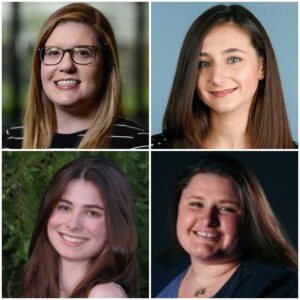
Above, clockwise from top left: Dallas Morning News’ Meghan Mangrum, former Chalkbeat New York reporter Christina Veiga, Inside Higher Ed’s Katherine Knott, and the Hartford Courant’s Alison Cross.
🔥 Career moves: Meghan Mangrum, who recently announced her departure from The Tennessean, is joining the Dallas Morning News Education Lab as their newest reporter. “A true ed nerd who has kids at the heart of her reporting,” said editor Eva-Marie Ayala. Christina Veiga is leaving Chalkbeat New York — and journalism — to be the media relations director at the News Literacy Project. You can apply for her old job here. Katherine Knott is leaving her job as K-12 reporter at the Daily Progress in Charlottesville to join Inside Higher Ed. And in the wake of Seamus McAvoy’s departure from the Hartford Courant, reporter Alison Cross is taking over some education coverage, she tells us. Congrats to all!
🔥 Impact: After investigating a judge in Tennessee who was illegally jailing children, reporting by Nashville Public Radio’s Meribah Knight and ProPublica’s Ken Armstrong is still making an impact. The judge in question has announced her retirement, and her replacement faces the challenge of restoring confidence in the system. Last year, I interviewed Knight about the complex role that schools play in juvenile justice. Kudos to all involved in the reporting.
🔥 Controversy: Former LA Times journalist Paul Pringle is out with his new book “Bad City,” about his reporting on scandals at the University of Southern California, in which he blames his former bosses at the paper for suppressing his work. See reviews from the LA Times and the New York Times. However, a former LA Times investigations editor who was involved in the story wrote a rebuttal, accusing Pringle of lying. We won’t pick sides here, but the debate is nonetheless interesting.
APPEARANCES, RESOURCES
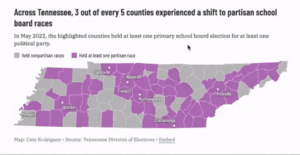
Above: Chalkbeat data reporter Cam Rodriguez created this nifty clickable graphic showing the alarming shift to partisan school board races in Tennessee. Check it out and read the story here.
⏰ Appearances: Wall Street Journal investigative reporter Tawnell Hobbs was on WBUR’s Here and Now to talk about her story on parents turning in their kids to prevent school shootings. The Washington Post’s Moriah Balingit was on the Post Reports podcast explaining what the universal free lunch program did and why it’s going away now despite how popular it is among schools. The Economist’s Tamara Gilkes Borr was on the magazine’s Checks and Balance podcast to talk about critical race theory. (She also tweeted a helpful thread about her recent story on CRT, which was one of the steadiest, least inflammatory pieces on the debate I’ve read in a long while.) The Dallas Morning News’ Emily Donaldson was on NBC DFW to talk about how Texas trains teachers to carry guns. And on Tuesday, members of education labs at the Seattle Times, Dallas Morning News, AL.com, the Post and Courier and the Christian Science Monitor talked about their reporting on student mental health for a Twitter Spaces chat.
⏰ Podcast: The final episode of School Colors season 2 is now out. Hosts Max Freedman and Mark Winston Griffith talked to parents on both sides of the divide over the Queen’s school’s diversity plan and ask, “what’s next?”
⏰ Reporting resources: The LA School Report published a helpful explainer on how blue states and red states are using COVID relief funds differently. Vox has a new resource for journalists called “Language, Please,” intended to help journalists navigate changing social, cultural, and identity-related topics. New research from CRPE reveals that nearly 40% of the largest districts are cutting staff or closing schools due to lost enrollment. Many other districts are giving out bonuses to encourage staff to stay.
⏰ Looking for some ideas for how to interview difficult subjects? Check out Isaac Chotiner’s masterful and amusing Q&A with emeritus Harvard law professor Alan Dershowitz for the New Yorker. As you may recall, Chotiner executed a successful interview with teachers union head Randi Weingarten last year, a feat not many have pulled off well.
THE KICKER

Above: Chicago high school senior Andre Young.
“Some students had trouble making friends, and some had no friends at all,” writes Chicago’s Andre Young about the attendance crisis (for The 74). “Some, like me, struggled with certain classes. And then the number of absent students began to breed more of the same.”
That’s all, folks. Thanks for reading!
Reply to this email to send us questions, comments or tips. Know someone else who should be reading Best of the Week? Send them this link to sign up.
Using Feedly or FlipBoard or any other kind of news reader? You can subscribe to The Grade’s “feed” by plugging in this web address: http://www.kappanonline.org/category/the-grade/feed/.
Read more about The Grade here. You can read all the back issues of The Grade’s newsletter, Best of the Week, here.
By Alexander Russo with additional writing from Colleen Connolly.
ABOUT THE AUTHOR
Alexander Russo
Alexander Russo is founder and editor of The Grade, an award-winning effort to help improve media coverage of education issues. He’s also a Spencer Education Journalism Fellowship winner and a book author. You can reach him at @alexanderrusso.
Visit their website at: https://the-grade.org/