0
(0)
BEST OF THE WEEK
The week’s best education journalism, all in one place:

REMOTE LEARNING/LIVE INSTRUCTION

🏆 Could holding live, online classes lure MIA students back? (CT Mirror)
🏆 Uncertain online teaching rules leave L.A. families in limbo (LA Times)
🏆 Can Chicago find its missing students in time for fall? (Chalkbeat)
🏆 How 2 New York Schools Became Models for Coping (New York Times)
🏆 Is NYC working fast enough to improve remote learning?  (Chalkbeat)
🏆 Survey reveals rich-poor divide in how children taught remotely (Hechinger)
🏆 Philly schools will stay all-online at least until November ( Inquirer)

PODS/CHOICE

🏆 How Well-to-Do Children Will Weather the Pandemic (New York Times)
🏆 The Closure Of Catholic Schools Is ‘Devastating,’ Advocates Say (NPR)
🏆 How parents are finding ways to help their kids manage schooling (Tribune)
🏆 Some Parents Turning To Cyber Charter Schools (CBS Pittsburgh)

INEQUALITY

🏆 English schools to get £1bn to help pupils catch up after lockdown (Guardian)
🏆 Nearly a dozen districts faulted for asking parents to sign away rights (Globe)
🏆 American students may start seeing Black capitalized in textbooks (CNN)
🏆 15 Chicago schools have voted to keep their resource officers (Tribune)
🏆 Students Suspended Over Dreadlocks Continue Fight (Houston Public Media)

Many other stories are featured in the MEDIA TIDBITS section below.  For additional stories every morning, follow along on Twitter.

A POWERFUL WAY TO COVER INEQUALITY

Much of even the best of the recent wave of recent school segregation coverage such as 2018’s America To Me documentary series has generally left white students and families off to the side, focusing instead on Black and other students of color who often bear the brunt of school inequality.

But as my new review details, the Serial/NYT podcast Nice White Parents differs markedly in that regard, focusing instead on on the beneficiaries of our inequitable school system. In Episode 1, we meet a band of relatively affluent white parents who in 2015 decided to try a Brooklyn middle school that had previously served mostly Black and Latino students. In Episode 2, reporter and host Chana Joffe-Walt interviews parents who made said they wanted an integrated education for their children but then sent their kids to private schools or moved elsewhere.

This alternative to the traditional coverage of school inequality is a powerful addition to how journalism covers school inequality.

MEDIA TIDBITS

Thought-provoking commentary on the latest coverage:

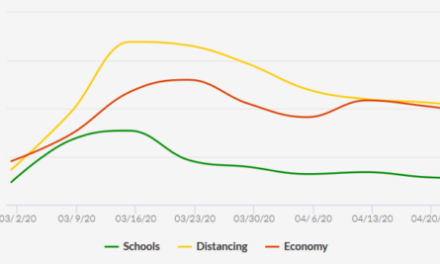
📰 INFECTION RATES, POLITICS, & REOPENING DECISIONS: Brookings’ Jon Valant has made explicit the disconnect between infection rates and school reopening decisions, a dynamic that should be a part of reopening coverage but often isn’t. He finds a correlation is between Trump support and in-person schooling, but “no relationship between school districts’ reopening decisions and their county’s new COVID-19 cases per capita.” That means that districts where in-person classes are not advisable are going that way, which has been widely noted. But it also means that vulnerable kids in low-infection districts are going to get more low-quality remote instruction may be required — an outcome that has not been noted widely in the coverage I’ve seen.

📰 SKIMPY AND REMEDIAL REMOTE LEARNING: Meanwhile, the bad news about last spring’s remote learning keeps coming in. “Low-income schools spent considerably more time reviewing old content,” according to the Hechinger Report. And almost all school districts — rich and poor alike —  “dedicated much less time to instruction than they do in ordinary times.” How much less? The average was less than four hours a day for high schools, compared to a standard six hours. Check out Chalkbeat, too.

📰 SUMMER SCHOOL/CAMP/CHILD CARE: Looking for a good way to ground your school reopening stories and give them some specificity? One option is to check out summer school, camp, or even child care that’s been open. You might even get some great tape. Some examples of stories that have been useful in this way: Summer School Offers Peek Into Reopening Schools Amid Coronavirus Outbreak (St. Louis Public Radio), Camps that stayed open in summer of COVID could offer lessons for schools (ABC News), All eyes on summer school classes that may shed light on September opening (LoHud). Give it a try!

📰 INFECTION RATES VS. TEACHER FEARS: There are 18 states with infection rates below 5 percent, according to EdWeek, citing Johns Hopkins numbers. And yet, teachers are currently “three times as likely as other U.S. workers to say they are very concerned about workplace exposure to the virus.” Increasingly, teachers unions are talking about going out on strike if their concerns are not addressed.

📰 #EWA20 FOLLOW-UP: “As leaders of the board and staff, we were excited to share EWA’s Reporter Guide for Inclusive Coverage,” according to a recent EWA statement. “So, when we received a fair but tough question about our process for selecting the team that produced the guide… we were deeply concerned.” That’s great. The concerns around selection process behind the guide were real. But EWA has not yet released the recording of the session so other members can view it for themselves, despite several requests.

Missed some previous editions? You can see the archive of past newsletters here. Additional reporting by Colleen Connolly.

REFLECTING ON RACE IN EDUCATION JOURNALISM 

In this week’s column, I asked education journalists to reflect on their own newsroom experiences involving race, any concerns they may have about how journalists have covered the topic — and any past coverage they now wish they’d done differently.

Nine journalists responded, describing difficult newsroom experiences, resistance to addressing racial inequality in schools, and regrets about some of the stories that they’ve written.  They include current and former education reporters Claudio Sanchez, John Merrow, Jay Mathews, Hannah Furfaro, McQueen Thackeray, Kent Fischer, Yasmeen Khan, and Joe Williams.

“It’s good when journalists examine and critique their own work,” tweeted @myoaktwon.

I couldn’t agree more.

PEOPLE, AWARDS, JOBS
Who’s going where & doing what?

🔥 “Nothing is more important to me than telling the stories that help our kids,” tweeted the Dallas Morning News’ Eva-Marie Ayala (above), announcing that she’s landed her dream job: education editor at the paper’s newly expanded education section. “I KNOW the real struggle many kids in our community still face. It is those children I carry in my heart as I approach this new job to lead the ed lab.” Click the link to read Eva’s backstory and join the crowd congratulating her.

🔥 “For years, Connecticut has had the largest achievement gaps between students,” the CT Mirror’s Jacqui Rabe Thomas tweeted. She points the way with a thread showing how the pandemic has likely widened these gaps, and what CT is doing about it.

🔥 Kudos to NPR’s Anya Kamenetz, who wrote that she’s been humbled by COVID-19 and its impact on parenting and working from home, especially when it comes to her area of expertise: I was a screen time expert. Then the coronovirus hit.

🔥 Great news! Freelance education writer and Spencer alumna Danielle Dreilinger has book news: “My book’s title has been finalized! (I think.) The Secret History of Home Economics: How Trailblazing Women Harnessed the Power of Home and Changed the Way We Live.”

🔥 The Boston Globe’s Felice Belman, who’s been helping with the paper’s education section, will be assistant national editor at the NYT starting after Labor Day.

🔥 Jobs! Jobs! Jobs! The Christian Science Monitor is looking for an education writer/editor. Details here. The Dallas Morning News is still looking to fill three jobs: Education reporter: https://bit.ly/32LSLDU. Audience engagement producer: https://bit.ly/3hjkn7s. Reporting fellow: https://bit.ly/2WMtntN. More info on the education lab here. Apply ASAP!

Did someone forward you this newsletter? You can sign up here

EVENTS

⏰ In a long-rumored move, Chalkbeat and the Philadelphia Public Schools Notebook have announced  they are joining forces to create an eighth bureau (New York, Detroit, Colorado, Tennessee, Chicago, Indiana, and Newark) along with the national desk. Congrats to all. Glad to read that Dale Mezzacappa will remain on board. Read the details here. Apply for the bureau chief job here.

⏰ Hey, education reporters. Here’s an example of the kind of story that the National Center on Disability and Journalism is looking for in its annual award: KING 5 – Back of the Class – Lack of Inclusion. Send in your best stuff ASAP. Ping Amy Silverman with any questions. The deadline is Aug. 7. Details on applying: https://bit.ly/3gjZgSj

⏰ The Boston Globe’s ⁦Meghan Irons⁩ participated in a webinar earlier this week about The Digital Divide: Education, Race And Virtual Learning.”

⏰ “In the published story, children’s voices should come first,” advises the Washington Post’s John Woodrow Cox on how to involve children and families in reporting, via the Dart Center. He just finished the manuscript for his new book, “Children Under Fire,” which will expand on his Post series about kids and gun violence — a finalist for the 2018 Pulitzer Prize in feature writing.

THE KICKER
This year’s awkward back-to-school ads, ranked, via Slate.

ABOUT THE AUTHOR

Alexander Russo

Alexander Russo

Alexander Russo is founder and editor of The Grade, an award-winning effort to help improve media coverage of education issues. He’s also a Spencer Education Journalism Fellowship winner and a book author. You can reach him at @alexanderrusso.

Visit their website at: https://the-grade.org/

How useful was this post?

Click on a star to rate it!

Average rating 0 / 5. Vote count: 0

No votes so far! Be the first to rate this post.