The story of a family whose history in teaching goes back 150 years can inform how we recruit and retain teachers today.
At a Glance
- For more than 150 years, Seán William Henne’s family has embraced teaching as a career.
- Henne researched his family legacy and interviewed almost 40 teachers within his family.
- These teachers found support from each other as they shared stories about their challenges and successes.
- A belief in the transformative power of education, passed down the generations, sustained these educators in difficult times.
- By building intentional communities where teachers can support each other, schools can help teachers stay in the profession.
In January 1993, I taught a composition course at Boston College. Although I had done some student teaching, this was my first time as the instructor of record, and I relished the opportunity. I grew up in a family of teachers. My mother was my high school English teacher. She took tremendous joy from the language arts, and her passion and care for her subject and how it could transform students’ lives have inspired and sustained me through my entire career. Now, in my 32nd consecutive year as an instructor of record, I teach English and education courses to community college undergraduates. I do so with increased excitement for my content and greater interest in my students learning it well.
My own education students are statistically far less likely than my mother and I to enjoy a long career in education. Teacher retention has been a serious concern for some time. Guili Zhang and Nancy Zeller (2016), for example, found that between 40% and 50% of new teachers leave the field before their fifth year of service. RAND’s 2024 State of the American Teacher survey shows that teachers today report significantly higher rates of job-related stress and burnout than other similarly educated working professionals (Doan et al., 2024).
Unfortunately, this problem feeds on itself. One of the best sources of support for new teachers is a community of committed veteran colleagues. New teachers can benefit tremendously from learning from experienced mentors about how to manage their own cycles of setbacks and successes. As more veteran teachers leave the profession early, building that strong community becomes more difficult and stress and burnout more likely for young teachers.
Looking to the past
My great-grandparents, Daniel and Rose Dwyer, farmed in Michigan’s Lapeer County; Daniel was also a teacher. He was one of many. Since my family emigrated from Ireland to North America in the mid-19th century, there have been nearly 40 teachers in the family at all levels, from preschool through graduate programs.
Last fall, I was on a sabbatical conducting genealogical research. As part of my project, I’ve surveyed or interviewed most of my teaching relatives seeking to better understand their ability to persevere and find joy in the profession. Two factors emerged quite clearly: the necessity for an intentional support network to foster resilience and a powerful shared belief in the value of education.
Gatherings of family teachers in more recent years have featured sustaining collaborative conversations, reminding us that the work of education flourishes not in isolation but in the strength of shared purpose.
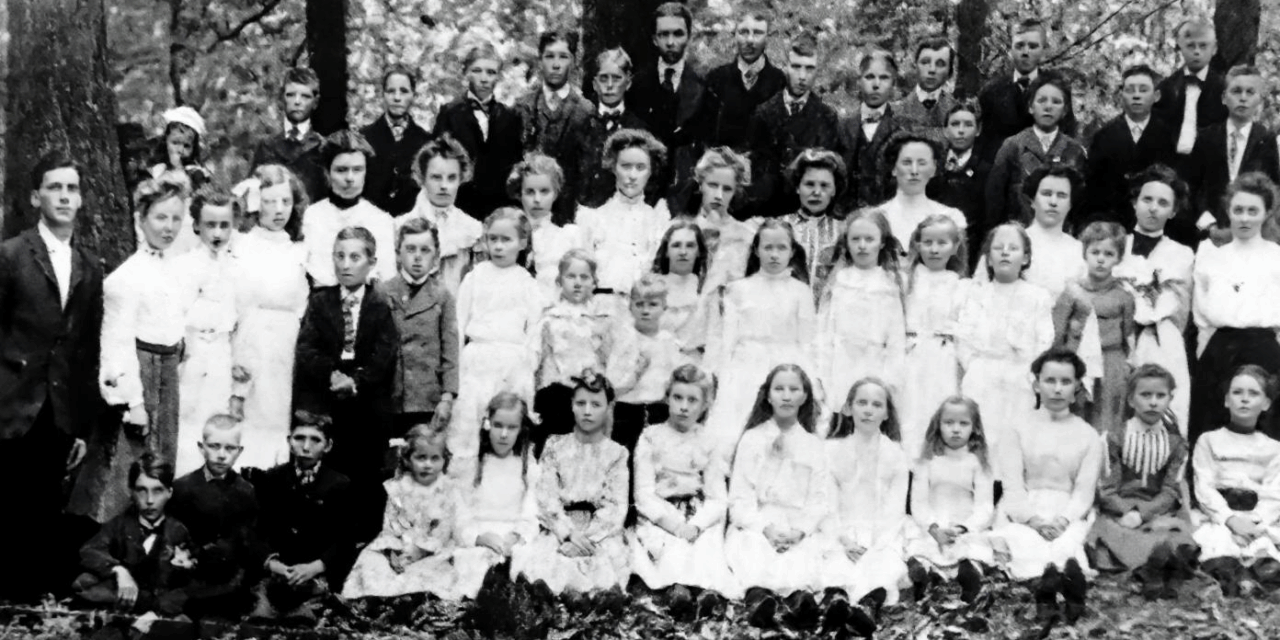
My family’s teaching story begins with two young women, Mary Neville and Maggie McGarry, both children of Irish immigrants, who taught in one-room schoolhouses in Michigan in the 1870s. Mary’s nephew, William Bolger, earned a teaching certificate from Michigan State Normal College in 1898 and went on to obtain an undergraduate and graduate education at Notre Dame and eventually became chair of economics there. Also a Roman Catholic priest, he emerged during the Great Depression as a fierce and noted advocate for a living wage, worker protections, and an equitable distribution of wealth.
Father Bolger officiated at his sister Rose’s marriage to Daniel Dwyer in 1912. Daniel’s mother, Maggie McGarry, had been a teacher, and three of Daniel and Rose’s first cousins were also teacher-priests. Grounding their pedagogy in Catholic social teachings, the cousins emphasized the moral responsibility of educators to nurture the social conscience of their students. Now, so many years later, it is largely a work of the imagination to recreate the conversations between Dan and Rose and their cousins. However, it is clear that learning was deeply valued in that household and that the shared profession of teaching held a place of honor and respect. Gatherings of family teachers in more recent years have featured sustaining collaborative conversations, reminding us that the work of education flourishes not in isolation but in the strength of shared purpose.
Shared stories
In the corner of my dining room sits a wide-bottomed wooden chair, resonant with a warm brown varnish and determinedly sturdy looking despite being finely carved and ornamented. This was Daniel Dwyer’s teaching chair. Sitting in it enables me to reflect on how the sturdy foundation of family provided Dan with sustaining pride in a profession that three of his children, including my own grandmother, eventually took up.
My grandmother raised a family on a dairy farm just across the Flint River from her father’s farm. My uncle, another teacher, built a “sugar shack” along the riverbanks for boiling off maple syrup. In that sugar shack, over the 40 or so years it has been sending clouds of steam rising over the river flats, knots of family teachers have stood unraveling for each other the intersections of their lives with the lives of their students.
Robyn Fivush, a psychologist at Emory University, has done tremendous research into the power of storytelling to build family cohesion and identity (Vedantam, 2024). She has demonstrated how a collaborative process of storytelling that enables multiple contributions and acknowledges life’s ups and downs provides a framework for building resilience and empathy. These shared stories create what Fivush calls “vicarious memories” that provide models for navigating adversity and managing stress. Sharing and building stories together fosters trust. For a family of teachers, this means trust in the profession. At the sugar shack, moments of triumph or struggle recounted amid the steam merged into a syrup of vicarious memories that helped teachers in my family persevere, adapt, and find joy in our profession.
Examples and inspiration
It is no surprise that children of teachers — who grew up listening to teaching stories — are more than twice as likely to become teachers themselves, a generational legacy that is greater than for other similar professions (Jacinto & Gershenson, 2019).
My cousin Millicent Malcolm — the daughter of two teachers — is a case in point. Originally a nurse, when she entered her doctoral program, she took education courses to prepare for teaching. She soon realized that “teaching and nursing merged in the effort to help people of any age improve their own lives and well-being.” She told me, “I felt much closer to my parents in knowing more about their chosen profession and feeling like I was also part of it.” Later, she found inspiration during the pandemic from hearing her daughter, a middle school health teacher, cleverly engaging her students over Zoom as she navigated the sensitive topic of sexually transmitted diseases: “It was clear she was imparting knowledge that was going to stick with these kids, many with difficult life situations.”
Millicent is deeply aware of how both of her professions — nursing and teaching — make others’ lives better. But Millicent also is keenly aware of belonging to a community of educators and the encouragement and inspiration such membership provides. As educators, we are at our best when we believe that what we are doing makes a real difference in our students’ lives. However, such work is demanding, and we need a powerful network of support to sustain the effort.
Resilience from a community of practice
In Communities of Practice, Etienne Wenger (1998) argues that learning is not an isolated activity but one rooted in collaboration, shared purpose, and mutual support. A community of practice emerges when individuals engage together in a shared domain of expertise. Within my family’s teaching legacy, this collaborative model is a central thread. Throughout my interviews, I heard time and again about how the teachers in our family thrived because of the strength of their networks, the mentorship of colleagues, and the power of shared experience.
The teachers in our family thrived because of the strength of their networks, the mentorship of colleagues, and the power of shared experience.
My first cousin, Pat Henne, is now retired from a career as a high school teacher. Both of his parents were teachers in Lapeer County, like his grandmother, great-grandfather, and great-great-grandmother. When Pat first taught, he lived at home with his parents. “I would come home and say to my parents, ‘You won’t believe what happened today!’ We would share stories, they would give me advice and direction, and I became a better teacher.”
Pat’s mom, my aunt Connie, found a community of practice not just within the family, but with colleagues who had done extensive professional development in literacy and invited her to collaborate with them:
For many years teaching second grade, kids would come to me and couldn’t yet read, and I didn’t know yet how to back up far enough to help them. And then two of my very best friends said … Why don’t you come down to first grade? … That was really the most fulfilling time for me because I was learning so much, and I had my colleagues’ support. They were right across the hall from me, and I beat that path … and it was amazing.
Connie learned with and from others who helped her develop a deeper understanding of literacy instruction in real time. What made the experience even more impactful was that her principal, too, rolled up his sleeves and participated in the exploration of effective literacy instruction. Shared leadership practices that foster a “sense of connectedness” among teachers and their colleagues are key to teacher retention (Cells et al., 2023).
Support for those who need it most
My cousins, Catherine Stratton and Mary Burdis, are currently involved in supporting roles that are in keeping with the lessons of the family’s teaching legacy. Catherine, a longtime kindergarten teacher, was recruited by her district to be an instructional coach and new teacher mentor. Mary works as a school-home coordinator, connecting teachers and families and helping students find the support, resources, and personal care they need to succeed. Across their school communities, Catherine and Mary offer the benefits of a collective received wisdom at a particular crisis point at which it is even more necessary.
My family’s teachers have described overwhelming workloads, insufficient pay, and declining respect for their profession as well as standardized testing pressures, rigid curricula, and systemic inequities. They have personal experience with relentless real-life community challenges and a rising mental health crisis among both students and teachers. All teachers, and new teachers in particular, suffer when facing isolation and inadequate support for managing their own mental health needs, as well as the increasingly complex needs of their students. Districts that invest in positions like Catherine’s and Mary’s do so in recognition of the necessity for direct personal and collegial support to teachers to enable them and their students to thrive.
My great aunt Joyce Dwyer was an English teacher who had a fine career in the schools of Lake Orion, Michigan, and raised nine children in that community. At the end of many an exhausting school day, she would sit on the couch to recover as her youngest son, John, brushed her hair. If, as teachers, we “do it right,” as my cousin Pat says, we need regular hair-brushing moments of care. My cousin Catherine sometimes fills in for colleagues who have approached breaking points. Reflecting on her role, she says, “It’s very easy to let teaching overwhelm you unless you rely on the people around you and ask for help.” As a mentor, she encourages young teachers to build relationships, set boundaries, and seek support — skills essential for longevity in the profession.
Family members not only provide hair-brushing moments, they also can provide tough love and tell us the things we need to hear, but don’t want to. My cousin Mary does both as a school-home coordinator. Neither strictly a teacher nor a social worker, she sometimes advocates for perceived “bad kids,” promoting their growth and potential to teachers who might otherwise lose hope. Mary says the hard things when others can’t, holding parents accountable and supporting teachers who are nearing their breaking points. Successful school reform efforts foster both collaboration and accountability in which all participants — paraprofessionals, teachers, administrators, and families — share ideas and learn together (Brown, Horn, & King, 2018).
The transformative power of teaching
Interdependent support — like that shared with and among my family members — is necessary for enabling teachers to deal with the raw challenges of the profession. But another important element is a shared belief in the transformative role of education.
The commitment to teaching as a transformative act finds embodiment in my cousin Carrie Smith, who entered education through Teach for America. Carrie speaks with fierce passion about the moral imperative that fuels her teaching. Witnessing profound inequities in Philadelphia’s Kensington neighborhood left her “furious and heartbroken,” emotions that have continued to fuel her through two decades in the classroom. Her career has been marked by unwavering dedication to marginalized students. Carrie’s moral fury at injustice echoes William Bolger’s desire to empower students, honor their dignity, and transform their lives. Her experience highlights the influence of a family teaching legacy that values advocacy as vital to the profession. In environments marked by inequity or systemic barriers, communities of care can reinforce trust in education as a force for justice in the lives of students enduring problems that are, as Carrie says, “not of their own making.”
Teachers who work desperately hard to help students in the face of fierce challenges need the solace of colleagues who care for them as families care for each other.
Across my relatives’ teaching stories, I’ve seen a determination to empower students and help them become agents of change in their own lives and across their communities. This kind of commitment is only possible when teachers trust in themselves, in each other, and in the school culture. Teachers who work in authentic learning communities where their voices are valued and respected, and their personal and professional needs are met, can support students and enable transformative learning.
In a 2013 New York Times editorial, Thomas Friedman described what he called the “Shanghai Secret,” a culture of support that appeared to fuel the success of schools in Shanghai, China. Shanghai teachers, in comparison to colleagues around the world and especially in the United States, are “given far more time for peer review and constructive feedback, exposure to the best teaching and time to deepen their knowledge of what they’re teaching.” Shanghai administrators, Friedman maintains, insist “on the highest standards and a culture that prizes education and respects teachers.”
This secret would not have been much of a secret to my family. Across six generations of family history, their stories echo with reminders of the power of a strong support network to foster resilience and a shared commitment to a caring transformative pedagogy. These factors are mutually dependent: Teachers who feel supported can much more easily offer support. Teachers who work desperately hard to help students in the face of fierce challenges need the solace of colleagues who care for them as family members care for each other. Intentionally designed learning communities can reflect the close-knit, intergenerational system I have seen sustain my family and encourage trust in teaching as a sustainable and fulfilling vocation.
References
Brown, B.D., Horn, R.S., & King, G. (2018). The effective implementation of professional learning communities. Alabama Journal of Educational Leadership, 5, 53-59.
Cells, P., Sabina, L.L., Touchton, D., Shankar-Brown, R., & Sabina, K.L. (2023).Addressing teacher retention within the first three to five years of employment. Athens Journal of Education, 10 (2), 345-364.
Doan, S., Steiner, E., Woo, A., Pandey, R. (2024). State of the American teacher survey. RAND Corporation.
Friedman, T.L. (2013, October 22). The Shanghai secret. The New York Times.
Jacinto, J., & Gershenson, S. (2019).The intergenerational transmission of teaching. [IZA Discussion Papers, No. 12201]. Institute of Labor Economics.
Vedantam, S. (Host). (2024, November 25).The power of family stories (No. 426) [Audio podcast episode]. In Hidden Brain. Hidden Brain Media.
Wenger, E. (1998). Communities of practice: Learning, meaning, and identity. Cambridge University Press.
Zhang, G. & Zeller, N. (2016). A longitudinal investigation of the relationship between teacher preparation and teacher retention.Teacher Education Quarterly, 43 (2), 73-92.
This article appears in the Fall 2025 issue of Kappan, Vol. 107, No. 1-2, pp. 19–22.

ABOUT THE AUTHOR

Seán William Henne
Seán William Henne is a professor of English and education at West Shore Community College in Michigan.