In this week’s newsletter: Slamming Trump’s education secretary nominee. A masterclass in covering a messy school board race. Connecting the dots between the Trump victory and schools. A plea for education journalists to be more curious than furious. And a recent study suggests large numbers of people get their news from nontraditional sources, but who are they?
SLAMMING MCMAHON
The big education story of the week
The big education story of the week is Trump’s nomination of former World Wrestling Entertainment CEO Linda McMahon to be head of the U.S. Department of Education — a department Trump has pledged to dismantle.
Initial coverage traced her time in the wrestling business to heading the U.S. Small Business Administration (NPR, CNN, New York Times, AP). Advocates including National Parents Union President Keri Rodrigues note that her likely focus on workforce development and school choice could be a good thing for kids (The 74).
However, McMahon has little experience in education, other than a former aspiration to be a teacher and a two-year stint on the Connecticut Board of Education (CT Mirror). And McMahon also faces accusations of permitting a culture of sexual abuse of boys in wrestling (Washington Post, MTN).
Journalists covering McMahon already appear to be repeating some of the mistakes of the past, invoking the superficial and hostile coverage of Betsy DeVos. At least one major outlet has already jumped on a discrepancy in her resume (Washington Post).
Other big education stories of the week include the new FAFSA rollout, the second week of teacher strikes in Massachusetts, the arrest of the founder of an ed tech startup that put AI in schools, and some promising improvements in chronic absenteeism in Oregon and elsewhere.
AN INSIDE LOOK AT A MESSY PROCESS
The best education journalism of the week
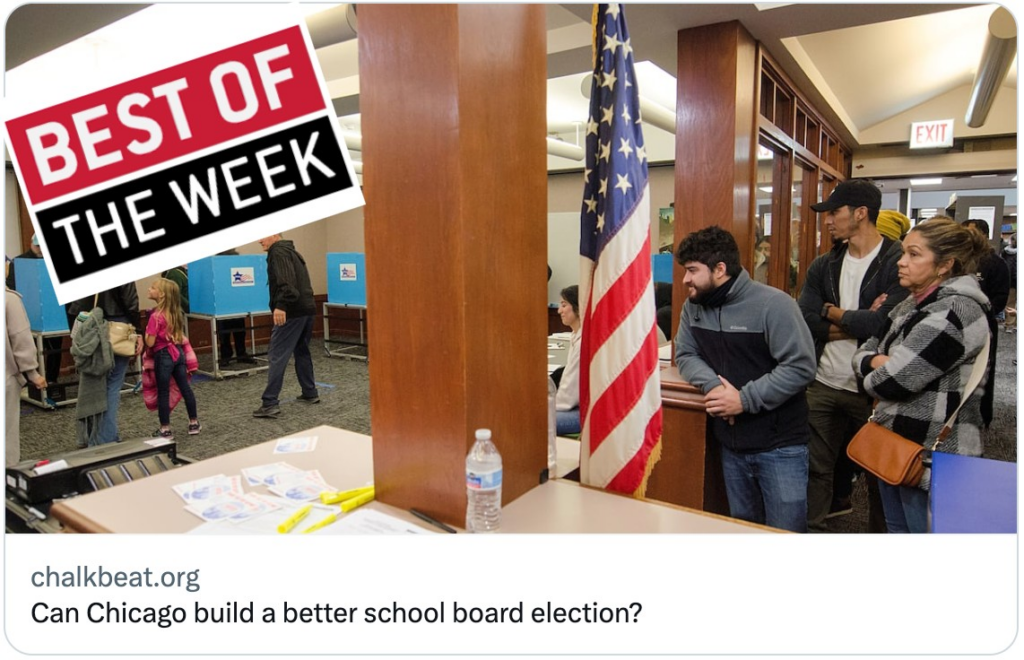
The best education journalism of the week is Ballot challenges, big money, information gaps: How Chicago’s first school board elections played out by Chalkbeat Chicago’s Mila Koumpilova with contributions from Becky Vevea and data analysis by Kae Petrin.
Koumpilova offers readers a rare inside look at the first-ever school board race that ended Nov. 5. What makes the piece stand out is her deep reporting and revealing data about a race that had surprising results.
She focuses on District 10, a “sprawling expanse that hugs the city’s south lakefront from Soldier Field to the Indiana border.”
It’s a big, loud, messy race that, according to Chalkbeat, cost $9 million for a single seat. Koumpilova follows the candidates for weeks, coming away with a valuable firsthand look including vivid dialogue, colorful characters, and convoluted procedures that may prompt readers to question whether they’ll be better served by an elected school board rather than an appointed one.
Kudos to Koumpilova and Chalkbeat for carefully crafted metro coverage that doesn’t take an obvious side You don’t have to know or care about Chicago to find this a compelling story about representation and inequality.
Other education stories we liked include a federal investigation in New Jersey over a year-long suspension (Philadelphia Inquirer), segregation academies across the South getting millions in taxpayer dollars (ProPublica), school battles emerge as one reason Democrats fell flat on Nov. 5 (New York Times), and a journalist looking for answers about the 2024 election at a high school in Allentown, Pennsylvania (Washington Post).
MORE CURIOUS THAN FURIOUS
Our latest columns and commentary
In more than two weeks since the election, I’ve seen only two reported pieces exploring possible connections between the Trump victory and schools.
It’s a good start, but we need much more. Parents of school-age children have shifted sharply towards Trump. So have younger educators. You already probably know about the Latino and Asian-American shifts.
The realization that large numbers of parents, educators, and immigrants don’t necessarily see the world the way you thought they did is a lot to digest. But as I write in my latest piece, I’m hoping that journalists will find ways to be more curious than furious.
Speaking of which, journalists desperately need somewhere to reflect on pre-election coverage and chart post-election adjustments. Roughly 350 folks — including a bunch of education journalists — tuned into Bellwether’s recent election debrief. Chalkbeat also had a webinar earlier, which I unfortunately missed. More, please?
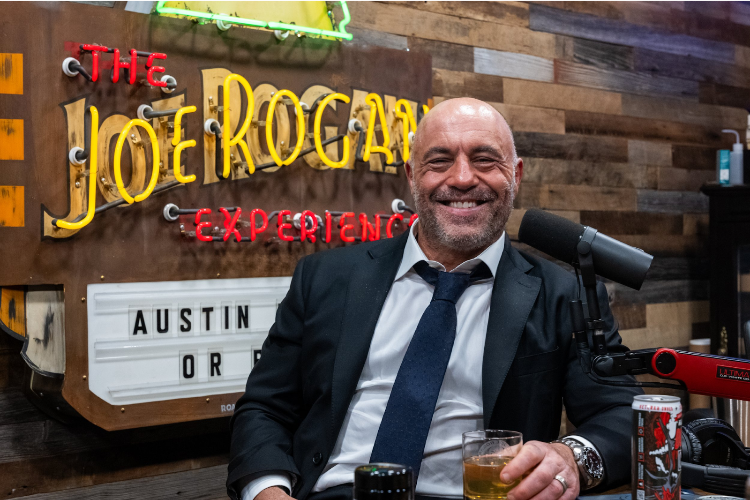
Above: A new Pew Research Center study shows that more than 20% of U.S. adults get their news from “news influencers” like podcaster Joe Rogan (above). The Boston Globe’s Mandy McLarenand Chicago reporter Leigh Giangreco have ventured out on TikTok. But who’s education’s version of Rogan?
PEOPLE, JOBS, & EVENTS
Who’s going where and what’s happening
📰 Comings & goings: It was a sad week for education journalism. The Illinois Answers Project and Better Government Association abruptly laid off education reporter Jewél Jackson (and ended the beat entirely). The Seattle Hall Pass podcast is shutting down due to creative differences among the founders. The Center for Public Integrity, which has done some great education journalism, has shut down, according to former editor Mc Nelly Torres. And the AP announced it will lay off 8% of its workforce, though we’re hoping the layoffs won’t affect the foundation-supported education team.
📰 Sound-off:
- “It’s upsetting to see how this industry treats Black journalists. ESPECIALLY young and/or early career folks,” says Chalkbeat Chicago reporter Samantha Smylie. “When you look at education reporters in Chicago now, how many of us are Black? It’s really a problem when MOST Black kids go to public schools in the city.”
- “My top priority as a journalist is to make the political and policy subtext clear for average people. People deserve to know what those in positions of power and influence are debating and deciding, especially on issues where there are multiple paths that could be taken,” says Vox reporter and former education journalist Rachel Cohen.
- “Seriously, public schools suck,” said former Fox TV investigative reporter Meghan Dwyer during a memorable 2014 Emmy acceptance speech. “They need to be held accountable.”
📰 Research: A new report from The GRAD Partnership indicates that the longer a district kept school buildings closed in 2021 and 2022 — and the greater share of time kids spent on remote learning — the less likely they were to graduate (Chalkbeat, The 74). New data from NYC shows a big impact of the increase in immigrant families — 1 in 8 public school students was homeless last year, a record high (Gothamist, New York Times).
📰 Resources: Trusting News has tips on how to cover the next four years without alienating communities and burning out. Chalkbeat data reporter Kae Petrin offers guidance from the Trans Journalists Association on how to better cover the story of trans lives. The Journalist’s Resource rounded up research on chronic absenteeism and the ways school nurses can help. And the Cato Institute published a helpful interactive map showing documented public school battles — including ones about freedom of speech, religion, race, and sexuality. It includes only about 12% of districts.
📰 Joining Bluesky: Go ahead and join Bluesky. Here’s an education news “starter” pack to help you get going. But before you deactivate your X account, consider that last time everyone said they were leaving, almost no journalists actually left — or stayed away for long.
THE KICKER
We saved the best for last
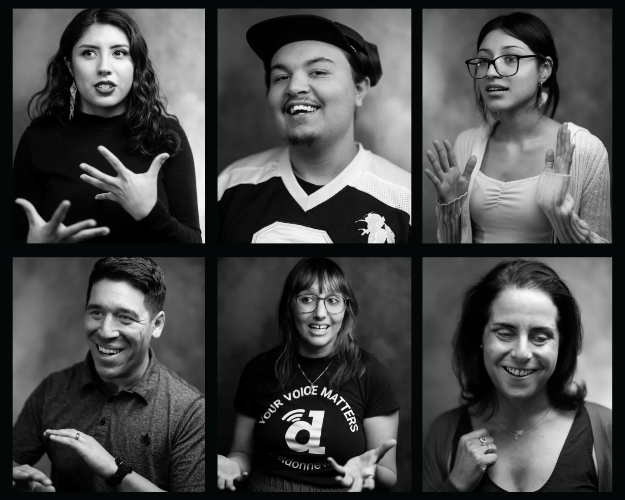
These college students are pursuing journalism in spite of, well, everything (LAist)
That’s all, folks. Thanks for reading!
Reply to this email to send us questions, comments or tips. Know someone else who should be reading Best of the Week? Send them this link to sign up.
Using Feedly or FlipBoard or any other kind of news reader? You can subscribe to The Grade’s “feed” by plugging in this web address: http://www.kappanonline.org/category/the-grade/feed/.
Read more about The Grade here. You can read all the back issues of The Grade’s newsletter, Best of the Week, here.
By Alexander Russo with additional writing from Colleen Connolly.