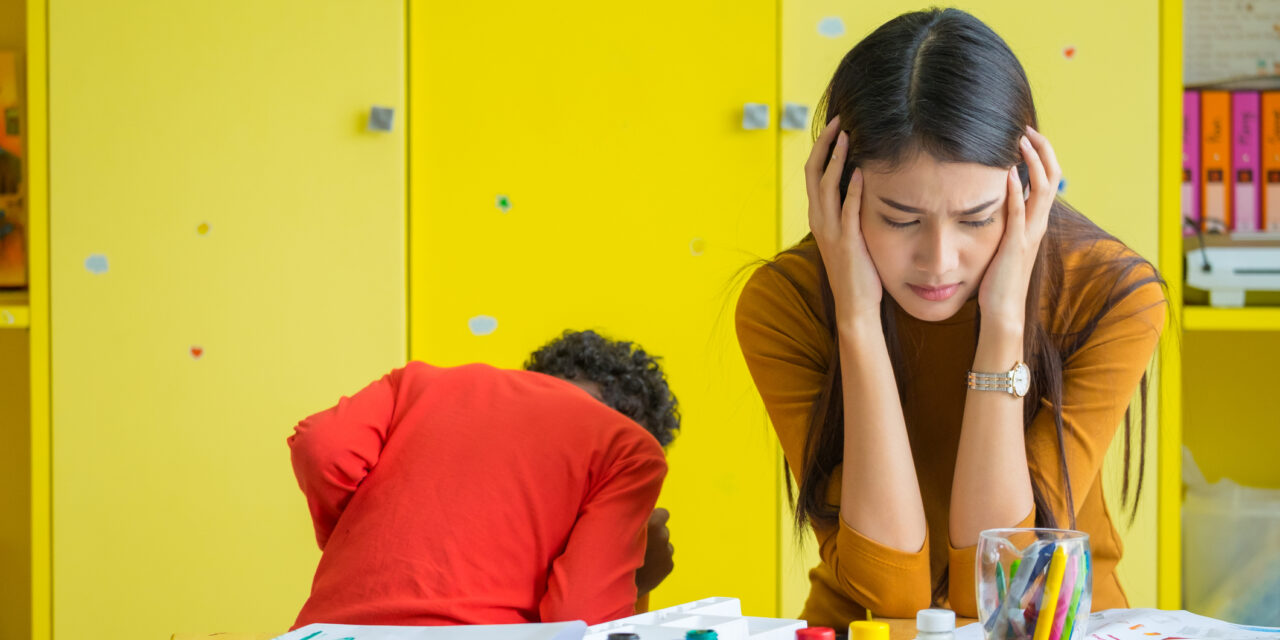
Q: As an educator, I’ve witnessed a profound shift in my students since COVID. Their motivation has dwindled. Once eager learners now display apathy toward assignments and class participation. Many seem disengaged, staring blankly at screens or texting during lessons. Behavioral challenges have also escalated, with increased disruptions and emotional outbursts. Seeing students struggle with focus and connection is disheartening. It’s as if the pandemic has created a barrier between us. I worry about their future and strive to find ways to reignite their passion for learning while addressing their emotional needs.
Additionally, there are so many extra tasks expected of teachers right now. There doesn’t seem to be a way to address all the needs without burning out.
How can we make school learning meaningful for students and decrease additional burdens put on teachers?
Signed, Not sure how much longer I can do this
A: If you feel the weight of additional burdens and the challenge of keeping students engaged, you’re not alone. Many of us are grappling with student apathy, lack of motivation, and behavioral challenges, all while facing heightened expectations. So, how can we make school learning meaningful for our students while easing the load on teachers?
Understanding the landscape
First, let’s acknowledge the elephant in the room: The aftermath of the pandemic has left many students feeling disconnected and teachers feeling overwhelmed. The shift to online learning and resulting social isolation has contributed to a sense of apathy toward education. Many students struggle to find purpose in their studies, leading to disengagement and behavioral issues. As educators, we need to address these concerns while also managing our own increasing responsibilities. Unfortunately, the system has not weathered well since COVID-19, and what we have always done is no longer working.
Creating relevance
One of the most effective ways to combat student apathy is to make learning relevant. When students see how their education connects to the real world, they’re more likely to engage. Consider incorporating project-based learning where students tackle real-life problems. By allowing them to see the impact of their work, you can spark their motivation. Too often in school, we tell students to do as they are told without showing them why it matters. This doesn’t inspire passion for learning.
Incorporating student voice
Another way to make learning meaningful is to give students a voice in their education. Invite them to share their interests and ideas about what they want to learn. This could be through surveys, class discussions, or suggestion boxes. When students feel their opinions matter, they’re more likely to invest in their learning. Plus, it lightens your planning load by giving you ideas for tailoring lessons to their preferences.
Simplifying expectations
With the ever-increasing demands, it’s essential to streamline what we’re asking of ourselves. Consider prioritizing quality over quantity. Instead of cramming in multiple topics, focus on a few key concepts and dive deep. This not only alleviates pressure on you but also gives students a chance to truly understand the material. If possible, speak to your administrators about the need to decrease the number of competing initiatives and streamline what needs to be done. If we are going to take on something new, then something else needs to be taken away.
Building relationships
When students feel connected to their teachers, they’re more likely to engage and behave appropriately. Take the time to get to know your students individually. Simple gestures, like checking in on their well-being or showing interest in their lives, can foster a sense of belonging. I saw this firsthand in my AP English classes, where the academic rigor was demanding. Because I made a point of getting to know students, they came to class willing to explore complex topics with me.
Implementing flexible learning environments
Flexibility in the classroom can also make learning more meaningful. Consider incorporating different learning styles and preferences into your lessons. This could mean allowing students to choose how they demonstrate their understanding — whether through presentations, creative projects, or written assignments. You might set up a station rotation model where students can choose what they work on in service of larger objectives.
Encouraging collaboration
Group projects not only allow students to learn from one another but also build a sense of community. When students work together, they’re less likely to feel isolated and more likely to invest in their learning. Working with a handful of groups, rather than a classroom full of individuals, will also allow you to engage more with students’ work before they complete it, and it can ease the assessment burden.
Utilizing technology wisely
While technology can contribute to distractions, it can also be a powerful tool for engagement. Use educational platforms that promote interactive learning experiences. Gamifying lessons or incorporating multimedia resources can capture students’ attention and make learning fun. Just be sure to set clear boundaries to minimize distractions. Always balance screen time with interaction time — too much of anything is not good, and technology is not always the answer.
Prioritizing self-care
Finally, don’t forget about you. It’s easy to get caught up in the demands of the job, but when you take care of your well-being, you’re better equipped to support your students. Set realistic boundaries, practice mindfulness, and make time for activities that recharge you. A happy, healthy teacher creates a positive classroom atmosphere. Educational leaders can help with this by modeling expectations — setting away messages on evenings and weekends and not expecting folks to work outside the workday.
Remember, it’s about progress, not perfection. Small changes can lead to significant outcomes. Together, we can create a learning environment that inspires students and makes our jobs a little easier. Keep pushing forward and know that you’re making a difference every day even when it doesn’t feel like you are.
Have a question that you’d like Career Confidential to answer? Email mssackstein@gmail.com. All names and schools will remain confidential. No identifying information will be included in the published questions and answers.
ABOUT THE AUTHOR

Starr Sackstein
Starr Sackstein is the Massachusetts state coordinator for PDK’s Educators Rising program, COO of Mastery Portfolio, an education consultant, instructional coach, and author. She was a high school English and journalism teacher and school district curriculum leader. She is the author of more than 15 educational books, including Hacking Assessment (Times 10, 2015), Making an Impact Outside of the Classroom (Routledge, 2024), and Actionable Assessment (Routledge, 2026).
Visit their website at: https://www.mssackstein.com/