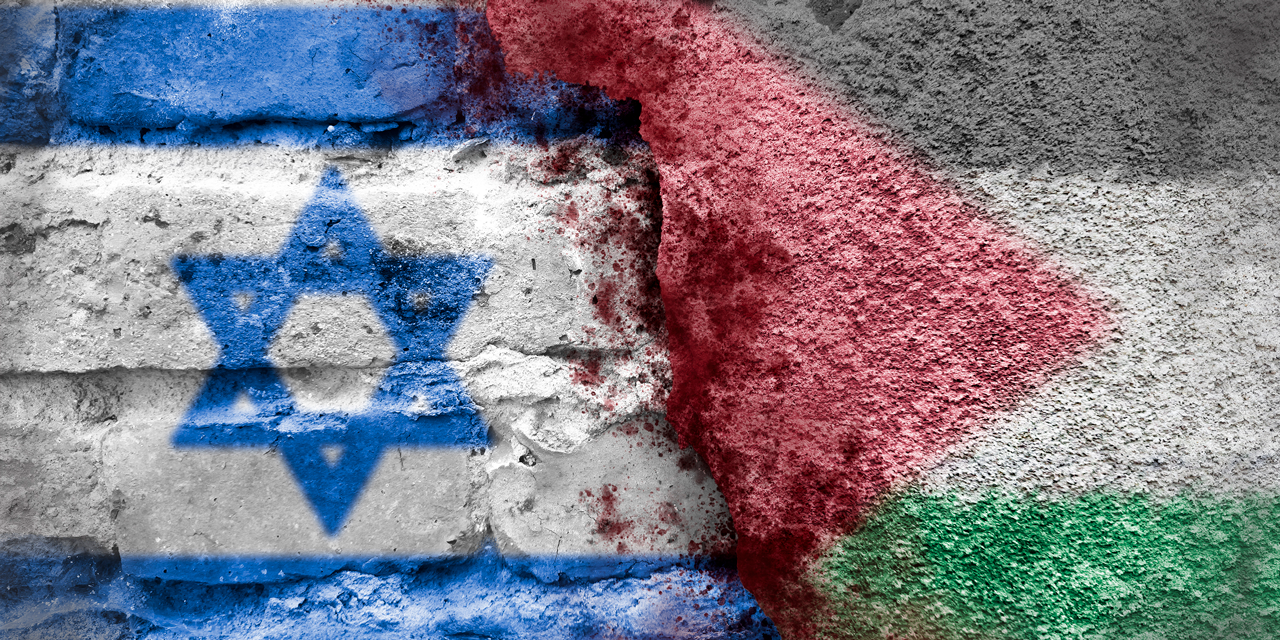
Following Hamas’ attack last October on Israel — and Israel’s retaliatory military strikes in Gaza — there has been increased unrest at American colleges and universities — and major repercussions for higher education leaders deemed insufficiently forceful in their denunciations of antisemitic behavior on college campuses.
Such incidents are not limited to higher education. There have been numerous reports of protests, bullying, fights, violence, antisemitic and anti-Islamic rhetoric, and other bias-related incidents occurring across the nation (Heubeck, 2023). In one recent incident, a 6th-grade counselor allegedly called a Muslim and Palestinian student a “terrorist” (Council on American Islamic Relations Michigan, 2023). In another, students allegedly drew swastikas and wrote “Blood of the Jews” in red-splattered ink on a paper airplane and threw it at a Jewish student (Gellman-Beer, 2024). As of March, the federal Office for Civil Rights (OCR) has opened several dozen investigations of K-12 school districts involving allegations of racial or national origin-related harassment or discrimination connected to students’ religious identity or ancestry.
This should come as no surprise, given that tensions involving religion, race, and culture have been among the greatest drivers of litigation involving U.S. public schools. And some of the most influential cases involving civil rights and civil liberties have come during times of war or major conflicts overseas. Consider, for example, the landmark Tinker v. Des Moines case (1969), which clarified that students had the right to wear black armbands to school to protest the Vietnam War, or the infamous Korematsu v. United States (1944), in which the Supreme Court justified the detention of Japanese American U.S. citizens during World War II based on “military necessity.”
Deciding how schools should respond to student speech or conduct in these cases is often not so easy. When it comes to student actions motivated by religion-based identity or ancestry, school leaders and judges alike face a fundamental question: What speech is protected by the First Amendment — and what’s a discipline-worthy transgression?
Drawing legal boundaries
At the highest level, the legal guideposts are clear. The First Amendment protects public school students’ right of free speech, including speech that some might disagree with or find offensive. Threats or harassment, on the other hand, are not protected. Public schools may be found to have violated the Equal Protection Clause of the 14th Amendment or other laws if they fail to address threatening or harassing behavior students experience. Similarly, schools may be found to have violated civil rights laws if they act with “deliberate indifference” to student harassment (see Davis v. Monroe County Board of Education, U.S. Sup. Ct., 1999).
From there, things get murkier. OCR legal guidance (2023) clarifies that schools aren’t legally responsible for addressing all objectionable speech — only speech that is “unwelcome,” “subjectively and objectively offensive,” and so “severe or pervasive” that it effectively impedes a student’s education. This language generally applies to school harassment cases of many stripes. But the OCR guidance also casually slips in — in a footnote — that nothing in the guidance itself should be interpreted to “impinge upon rights protected under the First Amendment.” In other words, unwelcome, offensive, and severe or pervasive speech is unlawful (legally unprotected) — unless it’s not (legally protected).
There’s another wrinkle when it comes to school cases involving religious identity or politics: Title VI of the Civil Rights Act, which OCR is responsible for enforcing in public schools, does not protect students from discrimination based on religious beliefs or practices, per se — only religion as connected to their race, national origin, or ethnicity. It’s religion-adjacent at best. So, under Title VI, schools that receive federal financial assistance have an obligation to address harmful conduct based on students’ “shared ancestry or ethnic characteristics” or their “citizenship or residency in a country with a dominant religion or distinct religious identity.” This includes Jewish, Muslim, Arab, or Palestinian students. (OCR issued more recent guidance in March that also references Sikh, South Asian, and Hindu students.)
Prohibited conduct related to religious identity or ancestry includes harmful words or actions based on “racial, ethnic, or ancestral slurs or stereotype”; “skin color, physical features, or style of dress that reflects both ethnic and religious traditions”; or the “country or region where a student is from or is perceived to have come from.” Other examples include words or actions based on a student’s accent or name, as well as their spoken language or ability to speak English.
Court cases involving religious identity or ancestry
Has the judiciary provided any further clarity? Sort of. The outcomes in related court cases have diverged depending on the particular facts of each case. In T.E. v. Pine Bush Central School District (S.D.N.Y., 2014), the court had no difficulty determining that a district could be held liable under Title VI for failing to address repeated instances in which Jewish students were subjected to swastika graffiti, physical aggression, verbal epithets, and other taunts referencing Hitler or the Holocaust. (A $4.5 million settlement was reached in 2015.) A different district court reached a similar result in I.G. v. Jefferson County School District (D. Colo., 2020), also related to antisemitic acts.
But C1.G v. Siegfried (10th Cir., 2022) — in which a high school student posted a picture on the social media platform Snapchat and captioned it, “Me and the boys bout [sic] to exterminate the Jews” — had a different outcome. The court held that the school couldn’t punish the student because, under a 2021 U.S. Supreme Court case governing off-campus speech (see Kim, 2021), their speech was protected by the First Amendment.
In Bhombal v. Irving Independent School District (5th Cir., 2020), the court affirmed the lower court’s dismissal of a case involving a Muslim elementary school student who was kicked in the face and neck by students who asked if he was Muslim and called him “Tally,” short for “Taliban.” (The school had also suspended the student in response to a rumor that he had brought a bomb to school, which the student’s father alleged was happening because his son was “Muslim and/or from India.”) The court stated that the plaintiffs had failed to establish either “race or national origin” discrimination under Title VI or “deliberate indifference” to such discrimination on the part of the school.
At the higher education level, in Felber v. Yudof (N.D. Cal., 2011), the court held that protests that two student groups, Students for Justice in Palestine and the Muslim Student Association, organized against the policies of the State of Israel did not constitute harassment against Jewish students and were political speech protected by the First Amendment. Similarly, in Mandel v. California State University (N.D. Cal., 2018), the court dismissed a case in which Jewish students and community members claimed that San Francisco State University (SFSU) and its leadership and faculty had tolerated and even encouraged antisemitic conduct on campus. The court held that the plaintiffs had plausibly alleged a hostile environment for Jewish students and students with Israeli ancestry, but not that the university had acted with “deliberate indifference” resulting in significant harm to students and their education.
In sum, although the number of cases in this arena is limited (so far), the courts seem willing to uphold free speech principles in colleges, while sometimes holding K-12 schools liable for failing to address harmful on-campus speech based on religious identity.
Addressing tensions at school
It’s clear the events in Israel and Gaza have sparked hostility on U.S. campuses. As ever, the law offers only limited guidance for educators. It defines a relatively small subset of egregious incidents for which a legally appropriate response is required. But it says nothing about the much larger number of daily situations in which educators must exercise their professional, ethical, or personal responsibility.
When it comes to addressing current events that reflect long-standing racial, religious, or cultural divisions, teachers have a challenging job. They must introduce or respond to current events while managing sensitive feelings about them. They must allow students to express differing opinions while helping students to resolve their differences peaceably. In some states, they must do so while adhering to sweeping new laws that require them to avoid causing discomfort or teaching “divisive” topics (see Kim, 2021). All the while, they must do their part to curb hurtful, biased, and even violent behavior against students based on their religious identity or ancestry. They must, in short, promote peace in the classroom, even when it remains elusive outside of it.
References
Council on American Islamic Relations Michigan. (2023, Dec. 16). Re: Concerning incidents involving a school counselor and seemingly Islamophic statements to Palestinian student [Letter to U.S. Department of Education]. www.cair.com/wp-content/uploads/2023/12/DOEcomplaint.pdf
Gellman-Beer, B. (2024, Jan, 29). Response to OCR Complaint 03231373. U.S. Department of Education, Office for Civil Rights. www2.ed.gov/about/offices/list/ocr/docs/investigations/more/03231373-a.pdf
Heubeck, E. (2023, Nov. 29). Rising tensions from Israel-Hamas war are seeping into schools. Education Week.
Kim, R. (2021). Anti-critical race theory laws and the assault on pedagogy. Phi Delta Kappan, 102 (5), 63-64.
Kim, R. (2021). Regulating student speech in the Snapchat era. Phi Delta Kappan, 102 (6), 62-63.
Office for Civil Rights. (2023, Nov. 7). Dear colleague letter: Discrimination, including harassment, based on shared ancestry or ethnic characteristics. U.S. Department of Education.
Office for Civil Rights. (2024, Mar. 4). Dear colleague letter: Addressing Discrimination Against Muslim, Arab, Sikh, South Asian, Hindu, and Palestinian Students. U.S. Department of Education.
This article appears in the May 2024 issue of Kappan, Vol. 105, No. 8, p. 64-65.

ABOUT THE AUTHOR

Robert Kim
Robert Kim is the executive director of the Education Law Center, based in Newark, NJ. His most recent book is Education and the Law, 6th ed.