In this week’s newsletter: Cell phone bans are all the rage, but parent behaviors and preferences will play a big role. The Biden administration’s FAFSA fiasco is finally starting to get the attention it deserves. What parents really want to know about in the months leading up to the 2024 election. The Houston Chronicle has removed part of an article at the request of Houston public schools. And the digitally manipulated Kate Middleton family photo provides a timely reminder to journalists and readers.
CELL PHONE BANDWAGON
The big story of the week
The big education story of the week besides the FAFSA fiasco (see below) is the growing interest in limiting students’ use of cell phones in schools.
At this point, the downsides and miseries of a “phone-based” childhood are well documented (Atlantic). Most teens surveyed by Pew reported that they felt better when they were away from their phones (AP). Led by Florida, more and more state governors and state legislators are jumping on the bandwagon (Stateline).
However, the momentum — and chances of success — aren’t entirely behind the pro-ban advocates. Parents turn out to be big fans of texting their kids throughout the day (AP, Slate, WGRZ Buffalo). They’re much more concerned about their kids’ social media use (The 74). Putting phones in pouches solves some problems but creates others (Yahoo!). And there are already lots of cell phone policies on the books that simply go unenforced in schools and classrooms.
As always, the devil’s in the details — and the politics. That’s why some governors like Ohio’s Mike DeWine are holding off for now on outlawing phones in schools (Cleveland19). Other states like Indiana have adopted new state policies that include exemptions for things like monitoring diabetes (Chalkbeat IN).
Journalists will have to give readers a clear-eyed assessment of how the new policies are being implemented (and whether they’re more than a feel-good exercise). For guidance, you could find worse places to start than Tim Daly’s December exploration of the pros and cons of various kinds of bans.
Other big education stories of the week:
‘DON’T SAY GAY’ SETTLEMENT: In Florida, a settlement was reached in a lawsuit over the state’s “don’t say gay” law, concluding that it is, in fact, OK to say gay as long as it’s not part of instruction (NBC News, Washington Post, New York Times, NPR, AP, WMFE). It’s the latest evidence that the much-feared far-right takeover of schools has not succeeded — something education reporters should be sure to contextualize in culture war stories.
COVID ANNIVERSARY: On the four-year anniversary of schools suddenly shutting their doors and going remote, a few public officials, news outlets, and journalists are looking back at the decisions that were made (New York Times). In New Jersey, the state released a report on its COVID response — thought to be the only such state-level investigation in the nation — concluding “in hindsight, it is likely that New Jersey students would have benefited from schools opening sooner” (Governing, NJ Spotlight News, NJ.com).
SAT SUCCESS: It’s not every day that we hear good news in education (not because it isn’t happening but rather because the media doesn’t always report on it). The first-ever all-digital SAT could have gone wrong but didn’t. It was declared a success (New York Times, Higher Ed Dive).

FAFSA FIASCO
The best education journalism of the week
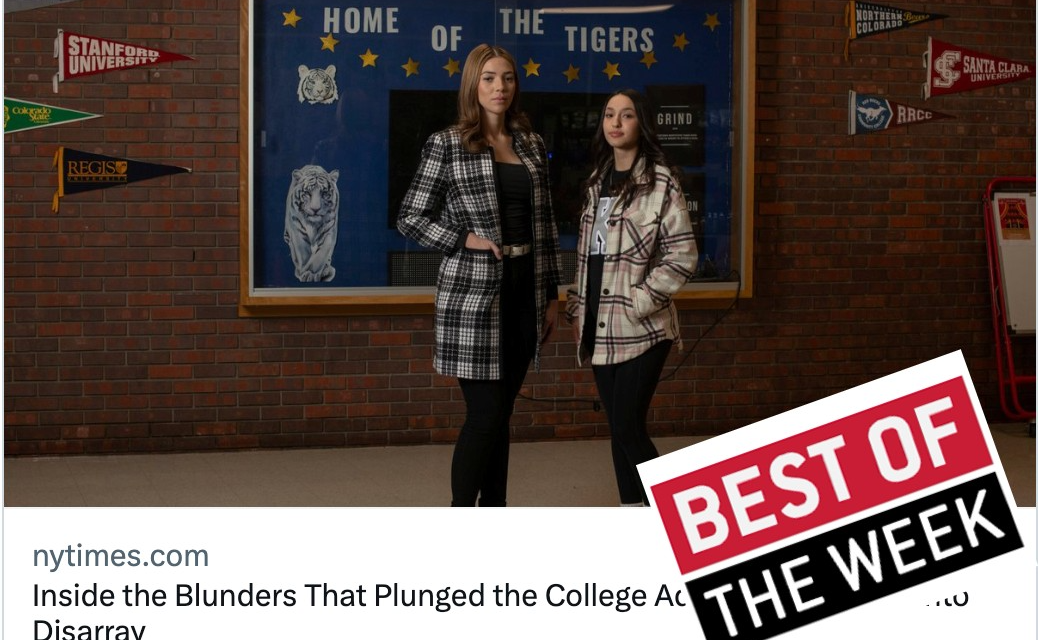
The best education story of the week is Inside the Blunders That Plunged the College Admission Season Into Disarray by the New York Times’ Erica Green and Zach Montague.
The Grade doesn’t often feature higher education coverage, but the latest investigation into the disastrous rollout of the Department of Ed’s new FAFSA application contains suspense, intrigue, and jaw-dropping stats — while still managing to stay focused on what’s at stake for students. The fiasco also arguably deserves much more attention than it has thus far received.
The lead anecdote depicts a three-day scramble by 20 Ed Dept staff members to parse 70,000 unread emails. As Green and Montague put it, “The students’ futures depended on it.”
With its lucid description of the FAFSA system, the story shows how the Ed Department’s overambitious redesign has screwed up budgeting at colleges and universities and how that, in turn, has put many high schoolers’ dreams of college on hold.
At one point, we learn that the Ed Dept nearly missed an error in the application’s income formula that would have cheated students out of $1 billion in aid. The majority of applications, more than 10 million, haven’t even come in yet.
In a way, this investigation is also a piece of breaking news. Federal officials are still far from processing all of this year’s applications, and it’s still unclear who deserves blame for the meltdown (though Green and Montague suggest some candidates, including one of the same contractors involved in the HealthCare.gov rollout, another mess).
See also this FAFSA fiasco deep dive from Inside Higher Ed, which we featured in last week’s newsletter.
Other great stories of the week — and why we liked them:
🏆 In this uplifting story about a successful model for keeping English learners in school, Ariel Gilreath profiles an afterschool program in Charlotte, North Carolina, that makes every effort to hire staff who speak the many languages of the city’s newcomer population. The program is so popular among families that the Charlotte school district has hired it to help track down absent kids (Hechinger Report).
🏆 Denver’s community hubs — which have served more than 4,000 families since 2022 with services like childcare and adult education — are the subject of this anecdote-rich Melanie Asmar piece. Asmar emphasizes the program’s flexibility, with each hub adapting itself to the needs of its neighborhood (Chalkbeat Colorado). You may recall a Colorado Public Radio piece about migrant students from December, which mentions the community hubs.
🏆 Jocelyn Gecker supplies amusing anecdotes, research stats, and practical tips in this stern but respectful plea to parents to cut “the digital umbilical cord” and stop texting their kids at school so much (AP). Turns out it’s not just kids and lenient teachers who contribute to classroom distractions.
PARENTS, POLITICS, & EDUCATION NEWS
Our latest columns and commentary
In our latest piece, National Parents Union president Keri Rodrigues describes what parents want from education news between now and the November elections.
She calls on education reporters to shift from sensationalism to substance, especially when it comes to issues that directly affect families: economic concerns, literacy, school safety, student mental health, and career pathways. And, whether the topic is phone bans or anything else, she reminds journalists that parents’ concerns aren’t always as obvious — or uniform — as one might think.
This is the fourth in our series on parent-focused education news coverage. Previous installments include: Finding real parents on deadline, Schools coverage should serve parents’ needs, Parents need reporters — and vice versa, and What parents really want.
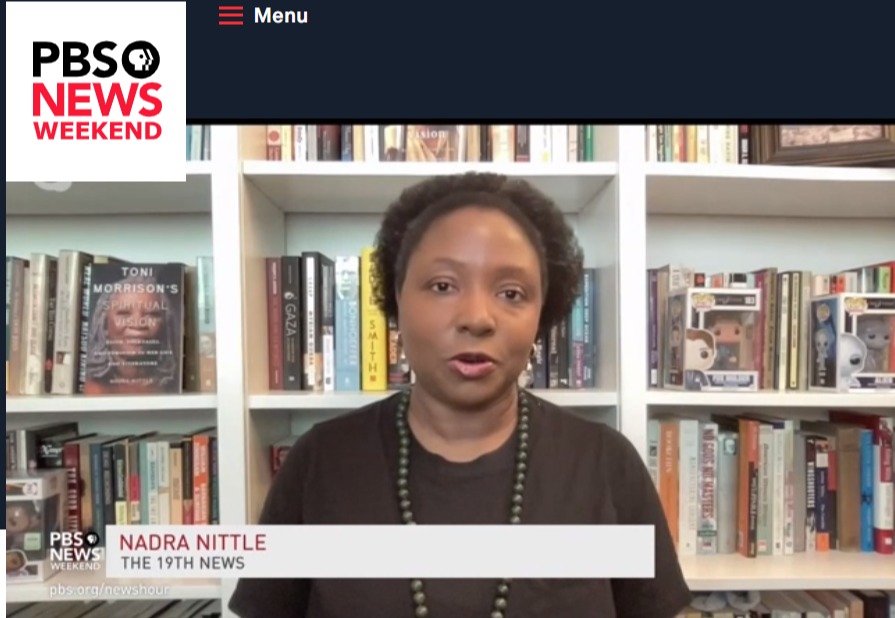
Above: The 19th News education reporter Nadra Nittle is everywhere, including on PBS NewsHour this week talking about what the SAT going digital means for college admissions.
PEOPLE, JOBS
Who’s going where and doing what
🔥 Shifting focus: “Here in the U.S., babies have it pretty rough,” says NPR’s Cory Turner in an email explaining his shift of focus from covering the federal student loan system to covering children 8 years old and younger. “Compared to other wealthy nations, the U.S. is in the bottom third in infant mortality and relative child poverty.”
🔥 Controversy: The Houston Chronicle and Houston ISD are mired in a conflict over the paper’s publication of a list of principals who were notified by the district that they may be removed due to low performance ratings. Threatened with legal action over the publication of “unverified” and “illegally obtained” information, the Chronicle took the surprising step of removing the names of the principals from the Sam González Kelly article and issuing an editor’s note saying they “received a tip that the district may have included someone erroneously in its distribution.” Houston Public Media has the whole story.
Sound-off:
🔥 “If ‘education freedom’ means the death of public school, it also likely means the death of a certain kind of education journalism, one steeped in data and accountability,” says writer and podcaster Jennifer Berkshire in this Democracy Journal review of Cara Fitzpatrick’s book “The Death of Public School.”
🔥 “Bad journalism… can dilute the rewards for careful, time-consuming scholarship,” writes AEI’s Rick Hess, “while rewarding researchers for slapdash studies that advance self-serving agendas.”
🔥 Job openings: The 74 is still looking for a new editor-in-chief. The Dallas Morning News is hiring a reporter to join its five-person Ed Lab team. Check previous versions of the newsletter for other jobs that might still be open.
🔥 Best advice of the week: “When you do an open records request, ask for Teams messages!” tweeted Cobb County (Georgia) school counselor Jennifer Susko, whose damning trove of district messages were published in the Cobb County Courier.
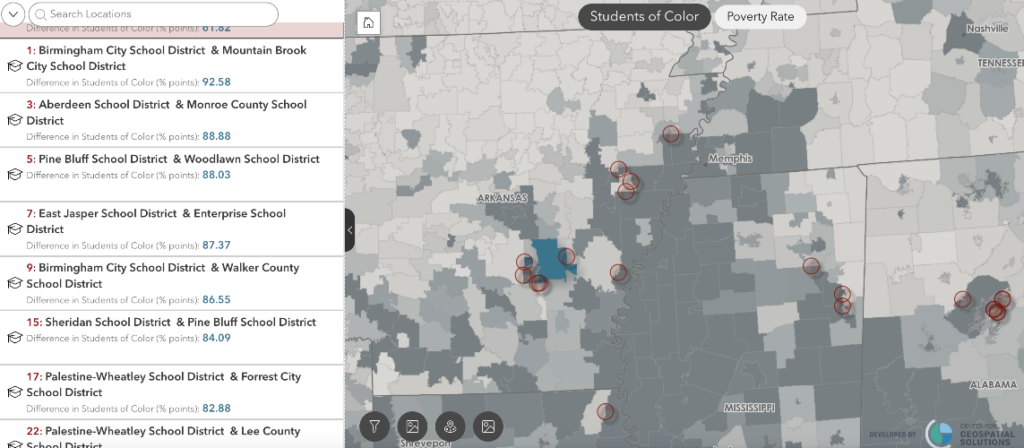
Above: The stark contrasts between (often neighboring) districts when it comes to race and class segregation is not new. But this interactive map from New America shows it in a whole new — and more detailed — way. It’s a great resource for journalists reporting on segregation.
APPEARANCES, EVENTS, & NEW RESOURCES
What’s happening and new research
⏰ Segments, podcasts, & appearances: WMFE education reporter Danielle Prieur appeared on PBS NewsHour to explain the legal settlement regarding Florida’s “Don’t Say Gay” law. WBUR’s Max Larkin discussed a bill to ban legacy admissions at colleges in Massachusetts on “The Common.” Former Spencer fellow Kavitha Cardoza dove into why school cyberattacks are on the rise for NPR’s “All Things Considered.” And WUWM Milwaukee education reporter Emily Files was on NPR’s “Weekend Edition Sunday” to talk about chronic absenteeism and the unique challenges teachers are facing because of it.
⏰ ICYMI events: “Disillusioned” author Benjamin Herold and Hechinger Report executive editor Nirvi Shah discussed segregation, the suburbs, and education funding in a New America virtual event. Herold was also part of an EWA webinar on covering suburban schools. Voice of San Diego held a free in-person workshop for parents to answer all their questions about San Diego schools. I’d love to see more outlets do that. And if you missed SXSW EDU, don’t miss this recap of a panel featuring Laura Pappano on school culture wars and a replay of a panel with “Grapevine” creators Mike Hixenbaugh and Antonia Hylton.
⏰ Research & reports: Think every issue in education is polarizing these days? Think again. According to the Aspen Institute, five key success factors have led to bipartisan education policies in some places. An analysis by The Economist suggests that schools are lowering academic standards to help more students graduate, but the trend may actually hurt low-performing students the most. Alabama has become the 12th state to offer a private school choice program open to all students, according to EdWeek.
⏰ Books: Mike Hixenbaugh’s forthcoming book “They Came for the Schools” — about the racial turmoil in Southlake, Texas, schools — is described as an “extraordinarily detailed analysis of current conservative thought and political activity” and “a vital work of reportage” by Publishers Weekly. Jonathan Kozol’s 15th and final book, “An End to Inequality,” is described as “an unapologetic cri de coeur about the shortcomings of the schools that serve poor Black and Hispanic children” in Dana Goldstein’s New York Times review. Josh Cowen, who’s written about school vouchers and culture wars for outlets like Slate and Time, has a book coming out in September on how billionaires created a culture war and sold school vouchers. “No Adult Left Behind,” a new book from Ohio State’s Vladimir Kogan, is slated to come out in May.
⏰ Oscar win: As we predicted (and hoped for), “The Last Repair Shop” won an Oscar last weekend in the documentary short film category. Students who participated in the film arrived at the ceremony in an LAUSD school bus with their instruments in tow. Congrats to all involved!
THE KICKER
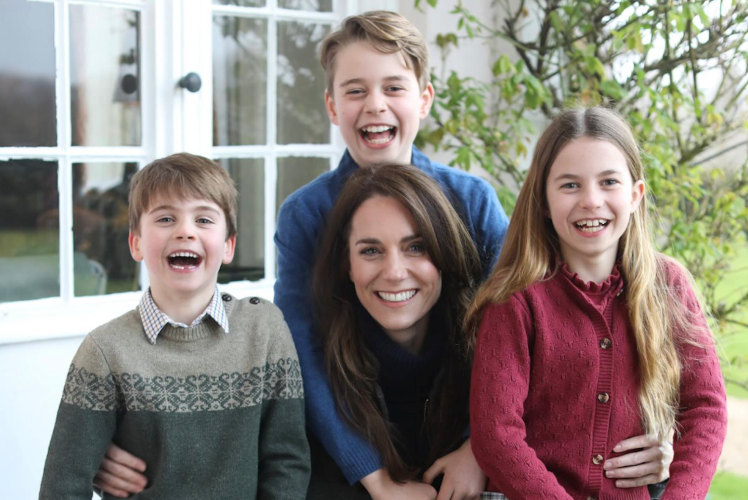
If the future king’s mother says a photo is real — check it out!
That’s all, folks. Thanks for reading!
Reply to this email to send us questions, comments or tips. Know someone else who should be reading Best of the Week? Send them this link to sign up.
Using Feedly or FlipBoard or any other kind of news reader? You can subscribe to The Grade’s “feed” by plugging in this web address: http://www.kappanonline.org/category/the-grade/feed/.
Read more about The Grade here. You can read all the back issues of The Grade’s newsletter, Best of the Week, here.
By Alexander Russo with additional writing from Colleen Connolly and Will Callan.