Practical advice for finding authentic parent voices from journalists Laura Testino, Sarah Carr, Patrick Wall, and Jill Tucker. (Fourth in our new series on parent-centered education coverage: Part 1, Part 2, Part 3).
By Andrew Bauld
This past spring, thousands of Tennessee families discovered that their third graders might be held back based on the results of a single English language arts test under a new state law that purportedly will improve literacy.
Laura Testino, who covered the story for Chalkbeat Tennessee, spoke with several families who described the emotional stress the make-or-break test was having on their children.
One mother described her 8-year-old daughter wandering off from the school the morning results were being handed back, ultimately being found a mile away by police. Another mother shared how her 9-year-old son was “sick and crying over the results.”
These parents’ stories brought feeling to the story and made the impacts of the new retention law real and specific.
We all know that having “real life people” in stories improves them and sometimes adds entirely new elements – or drives a story in a completely new direction.
The inclusion of parent voices in stories by Testino and others highlights the value that parents add to a story — and to the reporter’s grasp of the issues.
“You’re always going to have a better understanding about your story when you know what people’s lives are like outside of the classroom,” says Testino, whom The Grade interviewed in 2021 about parent-focused education coverage
What’s less clear is how reporters find not just the parent activists and those who speak up at school board meetings, but also the parents who aren’t on the front lines but still have important perspectives to share on what happens at their children’s schools.
Reporters who make parents a priority in their coverage offer successful strategies: Start with local parent advocacy groups, which often work with many parents who have no partisan bent even if the group itself does. Put out a call to readers through your online stories and keep track of respondents interested in speaking with you on future topics. And there might be nothing more helpful than having a group of “connectors,” past sources who can help you find parents, especially within specific communities.
Reporters who make parents a priority in their coverage offer successful strategies.
How to find parent sources
In Memphis, Testino began her reporting by letting longtime sources know she was looking for 3rd grade families to speak with. She also reached out through social media, including to members of a Facebook group that formed to specifically amend the 3rd grade retention law.
“If I notice a particularly interesting post I’ll reach out,” Testino said in a phone interview with The Grade.
Also key to her work were parent advocacy groups. While those groups certainly can have an agenda, they are also uniquely situated in the community to connect reporters with families simply looking for help navigating a difficult situation. Testino found parents through one Memphis-based group called MICAH that had organized a town hall over the law earlier in the year.
“The advocacy groups can fill a hole that the district isn’t providing,” Testino says. “I think a lot of time what I’ve found is people coming from these groups who were connected because they were a real person just trying to find an answer to something.”
Testino also keeps in regular contact with parent teacher associations and community organizations, which she says “can be pretty connected to a specific neighborhood and school’s issues.”
Although she didn’t use them for her coverage of 3rd grade families, in the past Testino has turned to groups like the Frayser community PTSA and RESPECT The Haven, a community development corporation that serves the predominantly African American community of Whitehaven in Memphis, to find parents.
A network of connectors
Finding those average parent voices can make all the difference between good and great education reporting, and key to that is having access to a variety of groups, advocates, and personal sources, or “connectors,” as longtime education reporter Sarah Carr calls them.
Now running the Spencer Education Journalism Fellowship at Columbia University, Carr relied on the breadth of her contacts to find parents for a story she wrote for the Boston Globe Magazine about children struggling to read. She turned to lawyers, advocates, reading tutors, reading specialists, and researchers, including one, Xue Bao, a doctoral student whose research on language acquisition and loss was featured in the story. Bao subsequently shared with Carr her own experience as a parent, which turned out was the impetus for her research.
“It ultimately took reaching out to a dozen types of connectors to ultimately find the diversity of families that I wanted for that piece,” Carr said during a phone interview with The Grade.
Carr also reached out to groups that worked with Spanish-speaking and Mandarin-speaking families. Although she interviewed a set of Chinese American parents who ultimately didn’t make it into the story, “their insight was really important in shaping my thinking,” Carr says.
Carr believes it’s important for reporters to not just return to the same people who feel comfortable speaking out publicly, but that effort isn’t always feasible, especially for beat reporters on a tight deadline.

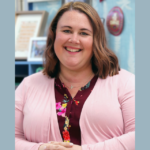
Above, clockwise from top left: Testino, Carr, Wall, and Tucker
Finding new parents — and getting them on the record
Even seasoned reporters struggle with this challenge.
“You’d think I’d be sourced up to the gill,” says Jill Tucker, who has covered K-12 education for the San Francisco Chronicle for more than 25 years. “But it’s not like that. I struggle just like someone starting the beat because you want to consistently have different voices and it’s a constant effort and job to find new parent sources.”
For her coverage last spring of the Oakland teacher strike, however, finding parents opposed to the strike was relatively easy since many were emailing and reaching out with their dissatisfaction. Tucker found parent Sergio Romero online and after messaging him, he shared his frustrations over the impact that the fight among adults was having on students like his 3rd-grade son.
But finding parents like Romero eager and willing to speak is not typical in Tucker’s experience when it comes to “finding that average parent voice to share their thoughts but who are also plugged in and have an opinion.”
Although the internet has made it easier than ever to find parents, getting them to speak on the record is another matter. Tucker says she often reaches out to parents who are critical of her work on social media, but they end up refusing to go on the record.
She sympathizes with parents who are wary of giving their opinions publicly over fears that they’d be attacked themselves. But her paper will rarely allow anything but the full name.
But for other reporters, the direct approach of appealing to parents has paid off.
Former Chalkbeat reporter Patrick Wall says his organization found one effective solution to this problem by including a call out for community input by embedding a Google Form in several of their stories.
The form included some basic questions along with contact information, and Wall says Chalkbeat received hundreds of responses, especially during Covid when parents were particularly activated and engaged.
“We could sort through them and use them as an unscientific survey of patterns, but also follow up with individual people,” said Wall, who is now running a statewide education news team in Louisiana. “I used some of those spreadsheet responses for a year or two afterwards.”
For a story in 2020 on laptop shortages in some Newark schools, Wall got in touch with parent Niurka Ortiz-Murray, who had responded to an embedded survey in a story that ran earlier that summer.
Ortiz-Murray shared that her son’s preschool was still waiting on a shipment of laptops for the beginning of remote school and she was so desperate that she was getting ready to lease a laptop from Rent-a-Center so he would have a device. After the story was published, Wall says the district reached out to her to provide the laptop.
Although the response rate tapered off as the pandemic wound down, Wall says the forms remained effective, and even if a parent wasn’t helpful for a particular issue, he could still reach out about another topic.
No matter how many parent voices a reporter includes, it’s important to keep in mind that no one parent will ever be representative of all parents. “The way around that is to talk to as many parents as you can, and not say ‘parents say,’” Wall advises. “Be clear and transparent about what they are representing.”
A diversity of perspectives
Even when parents don’t make it into the story, their viewpoints can still deepen reporters’ understanding on a topic that enriches their current story or future stories. Talking to parents on background can encourage new ideas and a reframing of the topic for reporters, as well as inspire new avenues of questions for policymakers and school leaders.
“I do find a lot of help in making my journalism better just by talking to parents as much as I talk to district officials or teachers,” Testino says.
But parent voice should also serve a clear purpose, Tucker says.
“You don’t want parent voices in there just to check off the box,” she says. Her goal when including parents is to inform policymakers and provide readers with a different perspective.
Parents also can provide an important counterweight to the narrative that school and district officials tell.
“One of the really important things about talking to parents is getting a better understanding about what they are concerned about, what they are thinking about, what they are seeing in the classroom, and comparing it to what you hear from officials and administrators,” says Wall. “Sometimes those things can be in line and sometimes there can be discrepancies.”
Before joining the national team at Chalkbeat, Wall covered public schools in Newark, New Jersey, and the discrepancies he learned about developed into several of his stories.
It was thanks to parents that Wall learned that Newark Vocational High School, which was announced by the superintendent to be ready for reopening for the start of the 2019 school year, remained under construction on the first day of school. Parents also alerted Wall to news of a bomb threat that the district tried to deny.
“It’s local, granular stuff, but that absolutely matters to parents if their kids aren’t getting the quality of education they were promised,” Wall says.
Andrew Bauld is a freelance education reporter based in Brooklyn, New York. His writing regularly appears in the School Library Journal, US News and World Report, and Harvard Graduate School of Education’s Ed. Magazine. You can find his latest work here.
Recently from The Grade
Schools coverage should serve parents’ needs, says journalism researcher
Parents need reporters — and vice versa
What parents really want
ABOUT THE AUTHOR

The Grade
Launched in 2015, The Grade is a journalist-run effort to encourage high-quality coverage of K-12 education issues.