By Richard Rothstein, May 1998, pp. 672-678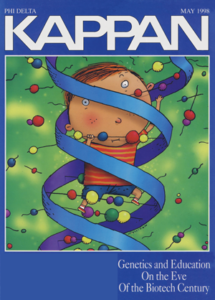
In this classic Kappan article, Richard Rothstein describes how the arguments against bilingual education are based on myths about how prior generations of immigrants learned. Bilingual education, in which students learn academic content while also learning English, is contrasted with immersion models, in which immigrants are placed in English-only environments. Those who prefer immersion models point to past immigrants who ostensibly rose to the challenge when immersed in English. On the contrary, says Rothstein, many past immigrant groups sought education in their native languages instead of full immersion in English.
In his exploration of the education trajectories of past immigrant groups, he finds that bilingual education has a long history. There is plenty of anecdotal evidence both for and against both bilingual and English immersion, with no clear evidence that one is better than the other in every situation. Without clear and persuasive evidence, the issue has become politicized, with policy makers backing the approach that fits their agenda. Rothstein concludes, “The best thing that could happen to the bilingual education debate would be to remove it from the political realm. Sound bite pedagogy is no cure for the complex interaction of social, economic, and instructional factors that determine the outcomes of contemporary American schools.”
You’ve accessed your three free articles for this month.
If you are a PDK member, login to read more.
If you are not a PDK member, join for full access, in addition to other benefits. Complete our membership form to join.
Forgot your password? Visit the Member Portal to reset your password.
Having trouble? Contact our member services team at memberservices@pdkintl.org or 800-766-1156.