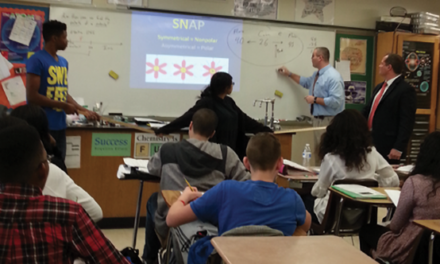

At the beginning of each school year, high school math teachers Lara DeMoya and Jose Manuel Arias point students in their STEAM Design Thinking and Innovation (DTI) class to shelves filled with recyclables and art materials and give them an assignment: Make something that wasn’t there before. The only parameters are that their “something” must be innovative, and they must use the whole time allotted to them. Typically, the students flounder. (The teachers’ toddlers, on the other hand, excel when given similar instructions at home.)
“The students really want us to tell them exactly what to do and how to do it,” DeMoya said. “They don’t remember how to think outside of all those constraints.”
Evanston Township High School (ETHS) in Illinois is integrating STEAM (science, technology, engineering, art, and math) with a human-centered design curriculum to help students reharness their creativity. STEM education is rooted in late-20th-century efforts to help students compete in the global marketplace by building skills in science, technology, engineering, and math (Blackley & Howell, 2015). It has been lauded for its transdisciplinary approach to equipping students with the skills they’ll need in a high-tech future (Madden et al., 2013). Integrating the A – arts – in STEAM adds creativity to the mix.
You’ve accessed your three free articles for this month.
If you are a PDK member, login to read more.
If you are not a PDK member, join for full access, in addition to other benefits. Complete our membership form to join.
Forgot your password? Visit the Member Portal to reset your password.
Having trouble? Contact our member services team at memberservices@pdkintl.org or 800-766-1156.