Associated Press reporter Heather Hollingsworth about the risks and rewards of writing publicly about her family’s struggles to help her son learn to read.
By Alexander Russo
Most reporters try to keep their personal experiences out of their writing. But a handful of outlets and teams are experimenting with much more personal kinds of writing. Done well, journalist-written personal essays can be moving and informative.
One recent example is The struggle to read: One third grader’s winding journey, about AP reporter Heather Hollingsworth’s excruciating experience coming to terms with her son Thomas’s challenges, then getting him the help he needs.
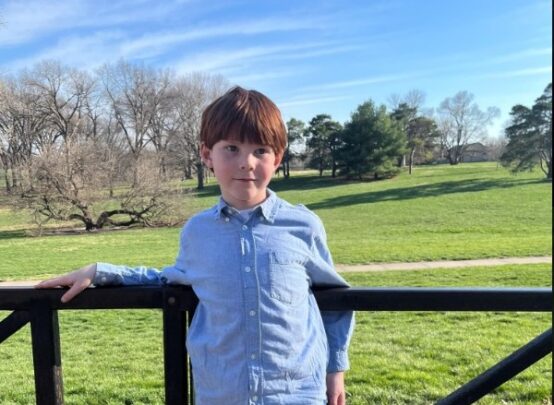
Teaching Thomas at home was a constant struggle, even with the help of an older daughter and a loving grandparent. He was wiggly, the assignments frequently too difficult, needing constant adaptation. None of that was easy at home. Getting the medications and services right was a constant challenge. A smart, sweet boy, the 3rd grader was eventually found to have a learning disability, ADHD, epilepsy, and dyslexia.
“This is hard — harder than I thought possible,” wrote Hollingsworth in a moving piece published as part of the AP’s impressive series on learning loss, recovery efforts, state efforts, and reconsidering literacy instruction. (More stories are on the way.)
In the following interview, Hollingsworth talks about the risks and rewards of writing such a personal piece, the process through which she and her family went in deciding to publicize their experience — and the enormous response the piece received.
“We are really trying to take policies and trends and explain them at the individual level,” says Hollingsworth.
The following interview has been edited.

Above: Hollingsworth’s first-person story about her family’s struggles to help him learn to read.
How did you end up being picked to write such a personal story?
HH: I had suggested framing a story on reading loss by looking at third graders, given how little they were when the pandemic started — just babies, really. I mentioned to an editor the struggles I had with my own children. But I was hearing the same thing from teachers and friends whose kids didn’t have learning disabilities — that this grade seemed particularly affected. In the course of figuring all this out, one of the editors suggested I write about my own experience.
What was your initial reaction to the idea, and how was the writing experience?
HH: I was hesitant at first because I am used to being a fly on the wall. This isn’t what I normally do.I didn’t want it to sound too sappy. And I know a lot of kids with epilepsy have uncontrolled seizures. My child’s seizures are well controlled with medication. And then how will Thomas feel about this later? I really struggle to read it, though. It was an excruciating time for us, and I’m still processing it. Even the backread on the edit was hard. In short, this wasn’t easy.
I am used to being a fly on the wall. This isn’t what I normally do.
Were there any particular factors that made you hesitate about writing about your own experience?
HH: I was hesitant because our experience was messy and sort of extreme. There were so many complicating factors — the epilepsy diagnosis, etc. — that I worried our story might distract from the standard kindergartener. There was all this other stuff going on, so I was concerned it might muddy the story too much. But my editor thought it was still a compelling story, and a features editor thought it would be OK too.
What did you already know about reading instruction, dyslexia, and kids’ and parents’ experiences with schools, and what did you learn from doing this piece?
HH: There’s been a lot written about the science of reading lately. “Sold a Story” put the issue on the map. The reading specialist for the district I am writing about could not be sweeter; she texts me links of things to read. I haven’t written about education exclusively, but I was aware of some of this. And I’m a parent with a kid. I’m in a parents’ dyslexia and an epilepsy support group, so I very much get the emotional piece of this, the toll this takes. I know how it feels to get an IEP.
I know how it feels to get an IEP.
How did you go about writing the piece?
HH: It was forever ago that I wrote a personal experience piece, so the features editor suggested why don’t you write a few tops for the story, and then we can discuss which approach. But then I kind of just wrote it up and it ended up pretty close to how I wrote it. Sometimes you can’t tell until you write something what you’re missing. I also wanted my husband to read it because it was about our family. He really liked it, and I felt OK with it. They told me you can back out at the last minute, but it sat there so long, I kind of got used to it being in existence, so when it got closer, I went in to make a few changes but otherwise felt OK.
As a parent, are there aspects of your children’s experiences in school that you wish would be included more often in education coverage?
HH: I feel like we are really trying to take policies and trends and explain them at the individual level. I like that direction. And the nice thing about this job is that I get to suggest ideas. That means if I don’t like what I am seeing, it is kind of my own fault.
What kind of reactions did the piece get?
HH: I’m horrible at doing social media for myself and I like to think that nobody reads my stories. But my husband likes to post my stories on Facebook and texts me reactions. The personal response from people we know was really interesting. Even family members. People reaching out to say that it made them cry. There were also a lot of people bringing their own personal experiences as students or as educators. There was a lot more response than you get to a normal news story.
We are really trying to take policies and trends and explain them at the individual level.
Why do you think that the piece resonated with so many readers?
HH: It is sometimes hard to tell why one story works and another doesn’t. But people told me it was raw, and I lot of people know someone who has struggled to read, so I think people brought their own experiences to what I wrote. They told me it reminded me of their own child or brother or even themselves.
What are the pros and cons of telling personal stories as a way of informing readers? Would you recommend it to other reporters?
HH: I do think people relate to them differently because they are so personal. But you do have to put yourself out there, and it isn’t easy. I also think it is important not to dip into advocacy, and I tried not to do that. Ultimately, this is a personal decision, and I have no advice on whether to do it.
What skills or talents help you write powerful stories, reported or personal?
HH: I just feel like at the core, people are scared. I wrote a lot of COVID stories during the pandemic. I talked to a lot of people. I think what I’m good at is just talking to people who are sad. I’m good at talking to people who are going through big issues in their lives. There are a lot of parents who are really worried. Honestly, I think it doesn’t hurt that I’m a woman, that I have kids, or I’m from the Midwest. Maybe my Kansas byline makes me less scary. Sometimes it’s a matter of just shutting up and listening.
Previously from The Grade
On motherhood and education journalism (by US News’ Lauren Camera)
How I missed the phonics story (by former AJC reporter Patti Ghezzi)
Schools are ‘hugely dynamic places,’ says the Washington Post’s Eli Saslow
Education reporters share their own back-to-school decisions (2020)
ABOUT THE AUTHOR
Alexander Russo
Alexander Russo is founder and editor of The Grade, an award-winning effort to help improve media coverage of education issues. He’s also a Spencer Education Journalism Fellowship winner and a book author. You can reach him at @alexanderrusso.
Visit their website at: https://the-grade.org/