In this week’s newsletter: Debate swirls around the College Board’s revised African American studies AP course, but don’t let the DeSantis hype mislead you. A local reporter holds a school district and police department accountable for a student’s death. Three PR experts weigh in on last month’s Dr. Seuss debacle. And student journalists at HBCUs set out to debunk stereotypes about their schools.
DEBUNKING THE DESANTIS HYPE
The big education story of the week
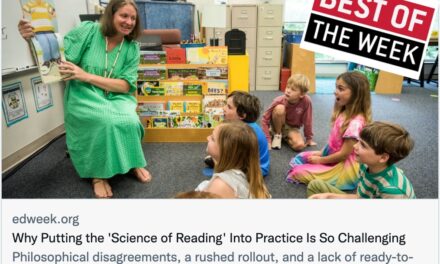
The College Board’s revised AP African American Studies course is the big education story of the week — though strong emotions and media hype surrounding the topic may be misleading some readers (and perhaps even some journalists).
While several media outlets and political advocates are eager to suggest otherwise, my take is that the nonprofit College Board’s changes are unlikely to be the result of the DeSantis “ban” or conservative pressures. The timing is off. The evidence is weak. Starting soon, students at 500 American high schools are going to get a robust course on African American history and culture that many would not previously have been offered.
Mainstream media coverage has generally emphasized the connection between the complaints and the revised version of the course (AP, NPR, WSJ). The New York Times’ initial coverage of the story is probably the most extreme version — one that led the College Board to make a rare public rebuttal, reiterating its claim that the decisions were made before the DeSantis announcement on the basis of feedback from teachers and curriculum developers. (The Times also ran a big piece about DeSantis’s focus on education last week.)
There’s lots more to learn, and the nonprofit has yet to produce the internal documents that would support their case. But the best arguments that their decisions weren’t influenced by DeSantis include historian Adam Laats (who notes that the Board often revises new AP course curriculum) and Media Matters for America (which points out that the New York Times coverage “reads like a press release” from the DeSantis press office). NPR’s Morning Edition features a University of Louisville professor who consulted on the project emphasizing the value of the course and materials that more students will be exposed to (and scoffing at the argument that DeSantis influenced the outcome).
Correction: The Washington Post story (including a review of the revised College Board materials from December) helps debunk the notion that DeSantis shaped the standards and should have been included in the original version of this newsletter. Apologies to all.
Whatever your views on the situation, don’t miss Cheyanne Mumphrey and Sharon Lurye’s lovely Associated Press piece featuring the kids and teachers who are currently taking the pilot version of the course. Dana Goldstein’s New York Times look at what’s lost and what’s retained in the revised version of the course is also very good, noting that the revised course is “a leap forward from the current state of Black history in the K-12 classroom.” Politico Magazine’s feature story is highly recommended.
Other big stories of the week:
LEARNING LOSS REPORT: A new report finds that kids across the globe have fallen behind about a third of a year since the pandemic began, largely due to school closures, the shift to virtual learning, and mental health deterioration (USA Today, New York Times, Education Week). See also segments on CNN and NewsNation.
HIDE THE BOOKS: Book challenges continue to make waves in the news cycle, with stories this week from Florida, Missouri, and Ohio (Washington Post, Springfield News-Leader, Columbus Dispatch).
SPECIAL ED SERVICES: Ahead of Virginia’s Richneck Elementary reopening this week after a 6-year-old student shot a teacher, the district reassigned the principal (AP, CNN). Local reporters have dug into what experts are calling “missteps” in addressing the student’s special needs (Richmond Daily Press, WTVR CBS6 News).
SCHOOL CHOICE SPREAD: While it hasn’t gotten nearly as much attention as other hot-button issues, school choice continues to attract attention and action in conservative-leaning states (KUER Utah, Wall Street Journal, Associated Press, USA Today).

BUS STOP KILLING
The best education journalism of the week
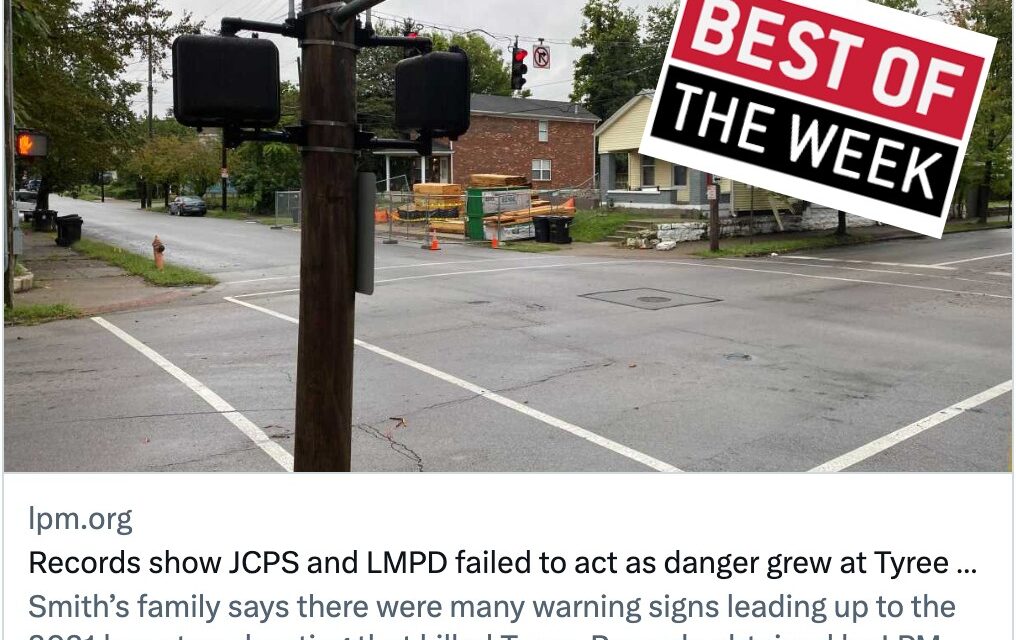
The best education story of the week is Jess Clark’s Records show JCPS and LMPD failed to act as danger grew at Tyree Smith’s bus stop for Louisville Public Media. The result of dogged public records work, the piece describes how both the district and the police department failed to respond to looming danger in the weeks leading up to a tragic 2021 school bus stop shooting in which a student who was not involved was the unintended victim. Like the Boston Globe’s Mandy McLaren says, it’s “really great digging.” Most of all, the story puts the victim’s family’s experiences front and center rather than accepting the official version of events.
To pull off this story, Clark picked up on another outlet’s work and filed public records requests that — a year later — finally came back, revealing that the district and PD both knew about a previous shooting at the same location just two weeks before, but failed to take action (like posting a squad car near the bus stop).
“This is probably the most records-heavy story I’ve reported,” Clark told us. It required records requests from two huge agencies and a review of hundreds of pages of court filings. During the four-month reporting process, Clark also took care to stay in touch with the victim’s mom, and she continued after publication of the story.
You might also note that the piece doesn’t use the sister’s name, an approach to protecting vulnerable sources journalists are increasingly using (and school districts and parents are increasingly asking for).
RUNNERS-UP:
🏆 How Montgomery’s magnet school admissions reinforce a system of haves and have nots (Montgomery Advertiser)
🏆 Why Black Families Are Leaving New York, and What It Means for the City (New York Times)
🏆 Tired of turmoil, Kiel residents rebuke far-right school board members (Milwaukee Journal Sentinel)
🏆 The Language of Equity (Education Week)
🏆 How Neidig Elementary School is tackling its students’ pandemic learning loss. (Philadelphia Inquirer)
🏆 Once Resistant, An Alabama Town Now Sees Its English Learners as Its Future – EdWeek
🏆 A Woodland Park educator stood up for her students — and lost her job (Colorado Public Radio)
REPORTER REGRETS
What we’ve been up to
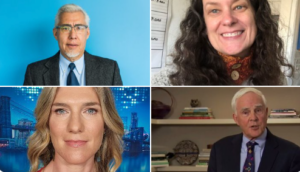
Above (clockwise from top left): Former education reporters Claudio Sanchez (NPR), Patti Ghezzi (AJC), John Merrow (PBS), and Anya Kamenetz (NPR).
Three items from us this week:
📰 Over and over, top education journalists (like those above) lament not having pushed harder on powerful sources and stories they knew were important. You don’t want that kind of regret.
📰 We asked three PR pros what Olentangy (Ohio) schools should have done instead of calling for a sudden stop to a classroom conversation in front of an NPR reporter. Why should you care? In-school access for reporters is increasingly difficult and delicate.
📰 Uh oh. I asked the ChatGPT artificial intelligence program to describe my views on education journalism, and its response was nearly perfect.
HS ELECTIVE SPURS STATEWIDE INNOVATION
Coverage of promising school innovations & signs of progress
💡 A high school elective in Rhode Island led to a statewide embrace of participatory budgeting, a model in which community members decide how public funds get spent (The 74/Boston Globe).
💡 A Baltimore middle school’s approach to pandemic-related academic setbacks begins with mindfulness: “We care about them beyond their instruction,” says one teacher (PBS). Read also about a Philly-area elementary school’s catch-up efforts (Inquirer).
💡 A student-led network for Black middle and high schoolers has made inroads at hundreds of California schools. (EdSource)
💡 A principal in Florida is addressing staffing shortages by recruiting his own students (The 74). Meanwhile, a group of states is mulling cross-border licensing rules for teachers (AP).
Also: With the addition of Medill, four journalism schools — Northwestern, Arizona State, University of Georgia, and Stony Brook NY — now have solutions “hubs” among their offerings.
Read more about the importance of covering promising innovations and preliminary successes.
PEOPLE, JOBS
Who’s going where and doing what
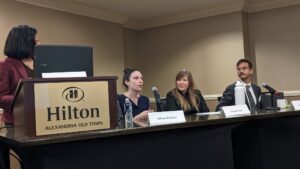
Above: Great to see everyone at the EWA higher ed seminar last week in Alexandria, Va., including (left to right) EWA public editor Kavitha Cardoza, MarketWatch editor Jillian Berman, Virginia Public Media’s Megan Pauly, and USA Today’s Chris Quintana. Follow #ewahighered for more on the seminar. Apologies for my inept photography!
🔥 Career moves: The Wall Street Journal’s Sara Randazzo — whose superpowers include more than a decade on the legal beat — is back on the national education beat. Follow her here if you don’t already. Isaac Windes was the inaugural early childhood education reporter at the Fort Worth Star-Telegram and is now headed to the San Antonio Report to cover education. And Montgomery Advertiser education reporter Jemma Stephenson is joining the new Alabama Reflector to cover education in the state. Her amazing series about how magnet schools “reinforce a system of haves and have nots” is one of our top picks of the week.
🔥 Job openings: The LA Times is hiring an early childhood development and education reporter. The Seattle Times is hiring an Ed Lab reporter. See previous editions of the newsletter for more jobs that may still be open.
🔥 Kudos: Nieman Storyboard praised the Washington Post’s John Woodrow Cox and the New York Times’ Rick Rojas for their humanizing profiles of two best friends who were victims of the the Uvalde shooting — one who died and one who survived.
Reporters sound off:
📢 The Voice of San Diego’s Jakob McWhinney wrote about what scares him the most being an education reporter: the “singularly horrific” thought of having to cover a school shooting.
📢 “In hindsight, I do wish I had been more careful with the writing of that one paragraph, instead of deploying rhetoric,” says Nikole Hannah-Jones about The 1619 Project, which is now also a series on Hulu.
📢 After a tweet from a sports journalist about “paying your dues” as a low-paid rookie reporter went viral, the Minneapolis Star Tribune’s Eder Campuzano added his take to the mix: “This isn’t paying your dues. It’s exploitation. I lived off ~$17,000 a year my first two years away from my parents and I would not wish that experience on anyone.”
WHAT TO WATCH
New happenings & opportunities
⏰ Segments & documentaries: PBS NewsHour ran a segment on how educators are trying to turn around pandemic-era learning loss. And in case you missed it, Alabama Public Television debuted a documentary about Fred Shuttlesworth, a civil rights leader who fought for school integration.
⏰ Opportunities: Georgetown’s Certificate in Education Finance is offering NYC and LA options in March and April. They say about two dozen reporters have gone through the course, including from the New York Times, Wall Street Journal, Indianapolis Star, Chalkbeat, and EdSource. Scholarship funds may be available.
⏰ Research: The Pew Research Center has a new report out on the concerns that are most worrying American parents, with mental health topping the list. EdWeek has a map showing where Critical Race Theory is under attack. The CRT Forward Tracking Project at UCLA maps measures against CRT in more than two dozen states, according to a recent New York Times article. The 74 has a piece from Chad Aldeman showing that schools have been adding teachers even as they serve fewer students.
⏰ Journalism resources: Denise-Marie Ordway of the Journalist’s Resource rounded up research on the substitute teacher shortage and wrote about why it warrants more news coverage. A new report from the Knight-Cronkite News Lab based on interviews with more than 75 news leaders offers guidelines for newsrooms on how to restore the public’s belief in trustworthy news and shed the old meanings of “objectivity.” Thinking about writing another story on ChatGPT? Hear from Princeton computer science professor Arvind Narayanan, who’s writing a book about “AI snake oil,” on whether it’s worth all the hype.
THE KICKER
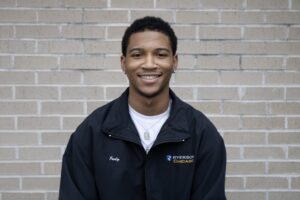
“Stereotypes dampen the light that HBCUs all over the country have to offer.”
– Xavier University of Louisiana student Reggie King (above) in an Open Campus Media HBCU Student Journalism Network fellows piece about debunking HBCU stereotypes.
ABOUT THE AUTHOR

The Grade
Launched in 2015, The Grade is a journalist-run effort to encourage high-quality coverage of K-12 education issues.