📌 We’re piloting a new, shorter newsletter — see below — but you can find the full version here. Let us know what you think! 📌
In this week’s newsletter: School districts are retreating on school closing plans, even as enrollments drop. A 6-year-old shooting a teacher in Virginia has led to a massive media response. And the Boston Globe announced a new big hire.
RETREAT ON SCHOOL CLOSINGS
The big story of the week, according to us
The big story of the week is districts retreating on school closing plans designed to address lower enrollment and budget shortfalls.
Districts including Oakland, Kansas City, Miami-Dade, Denver, and Jefferson County (Colo.) are rethinking or reversing course on school closure plans, trying to avert the need for closures by adding magnets or boosting pre-K enrollment to offset K-12 losses.
The response is understandable. However, public schools lost more than a million students between 2019 and 2020, according to NCES data cited by Axios. That’s roughly $15 billion less in school funding nationally, according to USC law professor Derek Black. And overall public enrollment is likely to continue to decline.
For more on enrollment trends, check out the latest Burbio update. For more on the challenges of closing schools, check out this helpful Fordham essay.
For more big stories of the week, go here.
ALL EYES ON RICHNECK ELEMENTARY SCHOOL
The media story of the week
The media story of the week is the overdone coverage of the tragic events in Newport News, Va., where a 6-year-old student shot his teacher with a gun brought from home.
I understand how terrifying, tragic, and increasingly frequent school shootings are. But it’s irresponsible to focus so much attention on schools — and the white teacher who was shot — without addressing the prevalence of everyday community gun violence and reminding readers how safe schools are compared to other settings.
Thanks to the handful of folks who have spoken out against a narrow focus on school gun violence and the focus on school “hardening” that it generates, including journalist Mark Follman, educator Shelley Buchanan, and Moms Demand Action founder Shannon Watts.
To read The Grade’s past commentary and analysis about school gun violence coverage go here.

SCHOOL BOARD TAKEOVERS
The best education journalism of the week, according to us
The best education story of the week is NPR’s A coordinated nationwide agenda dominated local school board elections last year, featuring NPR education journalist Sequoia Carrillo, MPR’s Elizabeth Shockman, and WUSF’s Kerry Sheridan.
I don’t love the headline for the story — and I’m not sure about the framing either. However, the piece is still a reminder of the standout kinds of segments that the NPR education team used to pull together fairly often on hot topics like graduation rates. And it’s a welcome melding of national perspectives and local news coverage.
My favorite bit of tape includes the surprise and dismay that northern Florida community members experience when the conservative board members they elected promptly fire the popular district superintendent. A conservative school board member who helped found Moms for Liberty claims she doesn’t know where the push to oust him came from. The fired superintendent laments the amount of time he’s had to spend on “politics and nonsense” and points out that he’s a conservative Republican, too.
You should definitely check it out.
Click here for more of the week’s best education news coverage.
JOURNALISM REMADE
What we’ve been up to at The Grade
This week’s new essay is a first-person piece from Idaho Education News’ Carly Flandro, a former reporter who taught in schools for 11 years before coming back to journalism on the education beat.
Flandro taught until she couldn’t do it any longer, and she’s excited to be back in journalism now that there are so many more nonprofit news outlets (like the one she is part of). “The journalism world I left in 2012 in many ways seems remade today – for the better,” she writes.
ICYMI: Lazy and curious, I asked ChatbotGPT to write a media column for me. The result was both amusing and disconcerting.
APPRENTICESHIPS FOR ASPIRING TEACHERS
Coverage of promising innovations & signs of progress
💡 Wyoming and other states are training future teachers through apprenticeships that are usually associated with trades like carpentry and welding. (The 74)
💡 A middle school lottery selection 13 years ago inspired an undocumented Denverite to pursue a career in elementary education. (Denver Post)
💡 Grade schoolers in Finland learn how to interpret propaganda and identify misinformation. (New York Times) See also: New Jersey will develop academic standards in media literacy.
💡 A high school in one of Philadelphia’s most beleaguered neighborhoods is improving test scores and graduation prospects. (Philadelphia Inquirer)
Read more about the importance of covering promising innovations and preliminary successes.

PEOPLE, JOBS
Who’s going where and doing what. Plus job openings.
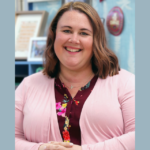
Above: One of my 2023 predictions has already come true! Mandy McLaren is headed to the Boston Globe to join their Great Divide team. Congrats!
🔥 More career changes: Mackenzie Wilkes is the new national education reporter for Politico. Jeanie Lindsay is leaving the Seattle Times Ed Lab to report on state government for KUOW. Meanwhile, Chalkbeat Tennessee’s Sami West will soon be the station’s K-12 and higher ed reporter. And KQED MindShift contract reporter Kara Newhouse is making it official and moving over into the editor role. Congrats to all!
🔥 Kudos: NPR’s Erika Beras got some great tape from an Ohio classroom when a nervous public information officer interrupted a student discussion about a Dr. Seuss book. And the Columbus Dispatch’s Megan Henry picked up on the story and got a response from the PIO that she wished she’d responded differently. Great work, everyone! Now if only someone at NPR would add this story — and the one about the school boards — to the NPR education page.
Click here for job openings, a spotlight on student journalism, and some education journalists you might want to follow.

EVENTS, APPEARANCES
What’s happening and new research
Above: Colorado Public Radio’s new season of its podcast “Systemic” focuses on education inequities and features teachers, parents, students, and administrators of color asking the hard questions.
⏰ Events: Join Open Campus for a Jan. 19 event on telling the full story of HBCUs, featuring the New York Times’ Erica Green, The Atlantic’s Adam Harris, and fellows in the HBCU Student Journalism Network. And in case you missed it, EWA hosted a webinar on how teacher shortages affect special education this week, featuring WFYI’s Lee Gaines and AL.com’s Savannah Tryens-Fernandes.
⏰ Appearances & podcasts: iHeartPodcasts has a new podcast on the history of a reform school in Alabama that “derailed the lives of thousands of Black children” and was called a slave camp by some former students. St. Louis Post-Dispatch columnist Aisha Sultan was on EWA Radio to talk about making her documentary “Education, Interrupted.” And WBUR On Point featured an episode that provides a counter narrative to the alarmist stories of how AI will impact education.
For approaching deadlines and the latest education and media research, click here.
THE KICKER

Kudos to Ann Arbor high school journalist Aaron Puno who got a nice shoutout for his education coverage. “Best in-person school board coverage of any media organization!” wrote Ann Arbor schools observer Lena Kauffman.
ABOUT THE AUTHOR
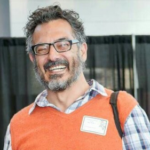
Alexander Russo
Alexander Russo is founder and editor of The Grade, an award-winning effort to help improve media coverage of education issues. He’s also a Spencer Education Journalism Fellowship winner and a book author. You can reach him at @alexanderrusso.
Visit their website at: https://the-grade.org/