A local reporter shifts her approach to covering youth mental health.
By Rory Linnane, Milwaukee Journal Sentinel
Sitting at the Weseners’ kitchen table in central Wisconsin on a fall evening in 2015, I felt unprepared.
As journalists, we’re used to going into new situations, asking probing questions that might be considered inappropriate in other contexts, and publishing the most moving findings for all to see.
Sometimes it’s even considered an advantage to be unprepared – to bring an outside perspective and be able to explain it to other outsiders.
But in the case of reporting on youth mental health, at least, I have come to deeply value preparation.
Seven years after that kitchen table conversation, I’ve learned that there are steps journalists can take to prioritize the well-being of sources — that we can turn our scrutiny on institutions that are supposed to support mental health while contending with underlying public health issues, and that there are resources to support our own mental health, too.
There are steps journalists can take to prioritize the well-being of sources — and resources to support our own mental health, too.
Growing interest in youth mental health
Thanks to generations of people with mental health challenges who’ve spoken up and broken stigmas, journalists in all fields are coming to see how mental health intersects with many beats we cover.
Youth suicide rates in the U.S. have largely been trending up over the past decade and many more young people are seeking help, overwhelming pediatricians with symptoms of anxiety, depression, and other challenges. It’s impossible to ignore.
Young people are facing a compounding battery of challenges: surviving a pandemic, grappling with swells of hate speech and misinformation, navigating social media platforms designed to feed insecurity, feeling extreme academic pressure in competitive environments, battling new addictive substances, and experiencing climate anxiety and great uncertainty about the future.
While the response may be slow and inadequate, we are now seeing an unprecedented investment in youth mental health resources. Hospitals are adding departments. Pediatricians are learning new skills. And schools are building on-site therapy teams and supporting student-run mental health organizations – with a major boost from federal COVID relief funds.

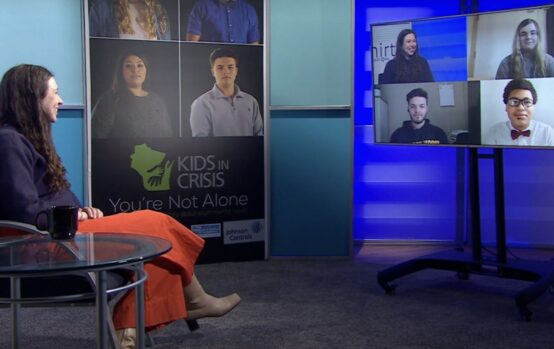
Above: The author, Milwaukee Journal Sentinel reporter Rory Linnane
The responses are as complex as the causes. It can be daunting to cover thoughtfully. It certainly was for me.
As the Weseners told me about the bullying their 16-year-old son Jonathan had endured at school, the circumstances under which he had killed himself, and their concern over what signs they may have missed, I wanted to say something to make them feel better and I wanted to write something that would stop this from happening to others.
But I didn’t know how.
Their family was patient through several emotional interviews and continued participating for years in our youth mental health project, “Kids in Crisis.”
It became a multi-newsroom project of USA Today Network-Wisconsin that produced dozens of stories, panel discussions, resource fairs, suicide prevention trainings, youth story-telling events, and a final documentary.
Ultimately, I’m proud of what we accomplished. I’m lucky to have learned from so many others along the way.
That first year of the project, I had an eye-opening fellowship with the Association of Health Care Journalists. Later I was accepted as a Rosalynn Carter Fellow for Mental Health Journalism. Both fellowships allowed me to hear from top experts across the country while digesting information and brainstorming with a community of reporters.
I hope that by sharing some things I learned, I can help give other journalists a head start.
You can read The Grade’s previous essays and columns. Or, follow us on Twitter or Facebook!
Make your sources a higher priority than your story
Early in my career, I was conditioned to feel a win whenever someone was willing to share something personal for publication, something so vulnerable that it would have to make readers care about the subject.
The story was the goal, and whatever it took to get there, within the shallow idea of what I’d learned as “ethics,” would be worth it.
Since then, other journalists and life experiences have shown me the value in prioritizing the integrity of process over the luster of destination.
And far from trying to be objective, I think the most valuable thing you can do is consider how you are in relationship with the people sharing their stories with you.
This shift means that you place the well-being of your sources over the story.
Place the well-being of your sources over the story.
This didn’t come naturally to me in “journalist” mode. It felt wrong to ask people how they were doing with the recorder off. I didn’t consider checking in with people to see if they still felt comfortable sharing their story publicly. And it didn’t feel like my job to worry about how an interview left them feeling afterward, or when the story published.
When we prioritize the well-being of the people sharing their stories, I’ve learned that can look like:
- Talking with sources to be sure they understand potential consequences of going public, including social media backlash or even threats and being “Google-able” for years down the road
- Providing explicit opportunities for people to change their minds about sharing their stories
- Telling your editor that a story might take longer, or might fall through, despite their expectations
- Interviewing sources where they feel most comfortable and with anyone they wish to have present (such as a parent, friend, counselor, etc.)
- Limiting the number of times you need to return to talk about difficult subjects, and having certain questions ready to end on a positive/constructive note (for example, “What do you hope this story accomplishes? What do you want to see change?”)
- Providing options for sources to hear what parts of their interview you’re planning to use in the story and provide feedback
- Keeping in touch with sources about when to expect the story to publish
- Watching for trolls on social media after publication, deleting harmful comments, seeing if sources need any resources for support
I’m thankful to all the journalists who’ve been vocal about changing some of the traditional standards of reporting and making it feel more comfortable to do so. (For example, check out this Guide to Less Extractive Reporting from Natalie Yahr and this guide for people to read before talking to journalists from Lewis Raven Wallace.)
Get specific in scrutinizing institutions like schools and hospitals
When we share stories to make people care about an issue, I think it’s important to include actionable information.
This includes the traditional and important listing of resources at the end of a story.
It can also include tools for residents to hold institutions accountable, such as school districts:
When reporting on the Wesener family, it seemed as though the local school district had missed opportunities to better support Jonathan, or intervene in the bullying that his parents felt led to his suicide. My colleague reported on the district’s bullying policy, but I didn’t know what else a school could do. We focused mostly on the family’s grief and their hope of better support for other children.
Four years later, when reporting on a 15-year-old who died by suicide in the Milwaukee area, I was armed with examples of evidence-based programs that support mental health in schools, including student-run organizations like Sources of Strength; screenings for depression and suicidal thoughts; adequate levels of school social workers, psychologists and nurses; and partnerships with clinics to place therapists inside schools. That allowed me to ask school officials detailed questions about what they offered and provide readers with ideas about what’s possible for their schools.
And hospitals:
Psychiatric hospitals are often accredited by the Joint Commission, a private organization that generally reviews facilities every three years. Its inspections are confidential, with limited info on their Quality Check website. Hospitals pay the Joint Commission for these inspections and for accreditation.
Hospitals are also inspected by state health departments and the Centers for Medicare & Medicaid Services randomly and based on complaints. These are public records. Request letters and inspection reports (which they call surveys) through your regional contact at CMS. You can also see many inspection reports already online at hospitalinspections.org.
For me, the violations clocked in these reports have illuminated numerous problems and severe staff shortages at Wisconsin’s public psychiatric hospital. There was a patient who wasn’t sent to an emergency room until more than 14 hours after he fell and was unresponsive all day. He died. In another case, after a mother told me her daughter was released from the hospital to a stranger, inspection reports showed that there were more widespread failures in discharge planning.
And carceral facilities:
Because most people who are incarcerated have mental health challenges, it’s also important to monitor what’s happening – or not – in prisons and jails, including juvenile detention centers, and why people are being placed there. State agencies generally conduct regular inspections of these facilities, and those inspections are public records. They also may produce “incident reports” after suicide attempts. And law enforcement agencies conduct investigations after deaths.
These records helped me report a story of how a teenager died by suicide in a detention center after many warning signs. The girl had attempted suicide multiple times in the same manner in which she died. Guards were late to check on her that night. She was being isolated, though that’s against best practice. And authorities failed to get her the help she needed as she was recovering from sex trafficking.
Reporting on such public records can also help the public understand how to find information about their local hospitals, make informed decisions about their own care and advocate for change.
Don’t miss the public health angles
Mental health can be closely tied to factors in our environment. While psychiatric care is one material way to help people with mental health challenges, there are myriad upstream factors for many people as well.
Mental health organizations are increasingly recognizing housing, income, food security, environmental health, and supportive community bonds as key pillars of mental health.
For kids, you can see trends in some of these areas by looking at Youth Risk Behavior Survey results in each state. These surveys ask students about whether they ate breakfast, have seen a dentist, feel safe in their neighborhood, been harassed at school, felt anxious or hopeless, or attempted suicide. The surveys also track student demographics and can illuminate disparities, along with pointing toward areas that schools can improve, from providing meals to strengthening anti-discrimination policies.
Find support for yourself
Most importantly, it’s crucial to take care of yourself. If you can, use your company’s Employee Assistance Program to find a therapist you connect with if you don’t already have one.
And find community in your field. I have been fortunate to feel supported locally in the Milwaukee News Guild and by global communities through the Association for Health Care Journalists, Carter Center Mental Health Program, and the Solutions Journalism Network. Even if you can’t participate in these formal networks, find journalists who inspire you and ask them to chat. We need each other.
Rory Linnane writes about K-12 education for the Journal Sentinel. She’s also a vice president of the Milwaukee News Guild. Read her latest stories. Follow her on Twitter.
Previously from The Grade:
Solutions stories that aren’t puff pieces (by Kate Rix)
How I missed the phonics story (by Patti Ghezzi)
How to fix coverage of rural higher education (by Nick Fouriezos)
Covering students in foster care (by Colleen Connolly)
ABOUT THE AUTHOR

The Grade
Launched in 2015, The Grade is a journalist-run effort to encourage high-quality coverage of K-12 education issues.