In this week’s newsletter: State and district results are trickling in, and they don’t look great. Parents are “quiet leaving” school districts in Seattle, Decatur, and St. Louis, among other places. The Great Resignation is happening in education journalism, too. One district reduced suspensions last year — and is aiming to reduce them even more this year. And: How “Abbott Elementary” gives us a vision of police-free schools.
THE RESULTS ARE IN
The big story of the week, according to us
A new batch of test scores are in — and they paint a dire picture for many learners. Young students are struggling more with reading, and middle school students are struggling with math. In some places, students are making progress in catching up, but aren’t quite yet at pre-pandemic levels. Test scores don’t say everything about a student’s academic success, but they do demonstrate one way the pandemic continues to impact kids:
🔊 New test data: Young readers, middle school math students struggling (Chalkbeat)
🔊 WA student test scores improve, but still not at pre-pandemic levels (Seattle Times)
🔊 Most Prince George’s students scoring below grade level on district tests (Washington Post)
🔊 L.A. student scores show deep pandemic setbacks (LA Times)
🔊 AL notches slight gains on state reading, math scores, ‘on the right trajectory’ (AL.com)
🔊 English test scores surpass pre-pandemic levels, but math scores still recovering (Post and Courier)
🔊 As Oregon students head back to school, extent of pandemic learning loss remains unclear (Oregon Live)
Other big stories of the week: Parents are “quiet leaving” from public schools in places like Seattle and Decatur, Georgia, while white families have left suburban schools and more Black families are homeschooling in St. Louis (and have been leaving cities for decades). Families are scrambling for more school lunch aid and advocates are appealing to Congress for a renewal of the universal program, but in the meantime states like Pennsylvania are reinstating their free breakfast programs. Districts struggling to hire new teachers are loosening certification requirements, going to four-day weeks, and turning to staffing agencies. The Seattle teachers strike has ended, and students finally started school — a week late.
COMMUNITY-BASED GUN VIOLENCE
The best education journalism of the week, according to us
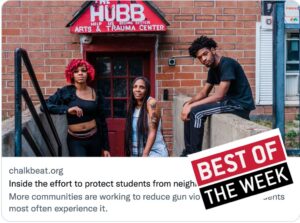
🏆 BEST: The best story of the week is ‘Stop the shooting’: Inside the effort to protect students from neighborhood gun violence by Patrick Wall in Chalkbeat. Most stories about gun violence and its impact on students focuses on tragic but rare school shootings. But Wall puts the focus on gun violence where it should be: on the much more widespread reality of everyday gun violence that takes place in homes and communities. Hundreds of children are killed in gun violence every year outside of schools, with an enormous impact on their peers. In this piece, Wall profiles one teacher in Newark who has lost over 40 students to gun violence and who decided to do something about it, joining one of many community violence intervention programs that have popped up around the country. If you’re reporting on violence in and around schools, these programs shouldn’t be ignored, notes Wall. Community-focused violence prevention programs “will arguably do as much to protect students as ramped up school security.”
See also: Attitudes, routines, hardware: San Antonio schools are preaching and practicing safety in the San Antonio Express
🏆 RUNNER-UP: This week’s runner-up is Schools are going online in disasters, worsening disruption by Brooke Schultz in the Associated Press. Remote learning due to the pandemic seems to be mostly a thing of the past, but in this piece Schultz looks at a new trend in which schools go remote when natural disasters strike. Focusing on Jackson, Mississippi, where schools recently returned to remote learning for a week due to the water crisis, Schultz — and her sources — question whether schools should continue the practice. “There was a time, early in the pandemic, when hopes were high for remote learning,” she writes. “But remote learning’s shortcomings have become more clear.” This piece is extremely relevant as natural disasters strike more often. More reporters should scrutinize disaster-related remote learning procedures in their districts.
See also: Disasters are changing the role of educators in High Country News
BONUS STORIES:
🏆 Teacher shortages are real, but not for the reason you heard (AP/AL.com)
🏆 The case for starting sex ed in kindergarten (hula hoops recommended) (NPR)
🏆 In Hasidic Enclaves, Failing Private Schools Flush With Public Money (New York Times – see also Washington Post)
🏆 Inside the forgotten story of the Chinatown mothers who mobilized during the Boston busing crisis (Boston Globe)
🏆 ‘Jim Crow’s Pink Slip’: How 1954 Brown decision affects teachers today (Christian Science Monitor)
🏆 The Talk: Unwritten rules of being a kid in America (The Emancipator)
🏆 CA Students Are Struggling in Math. Will Reforms Make the Problem Worse? (New Yorker)

THE GREAT RESIGNATION
New commentary from The Grade
Experienced education reporters and editors are leaving permanent staff jobs not just to take another job but also to freelance and spend more time with their families — or because they’ve become disenchanted with the job.In this week’s new column, I asked some of the many reporters who’ve made recent job moves why they left and what they were looking for.
Follow @alexanderrusso for thought-provoking commentary on education journalism all day, every day.
REDUCING SUSPENSIONS
Promising innovations & signs of progress
A new section featuring coverage of school innovation and signs of progress:
💡 School suspensions have declined in Las Vegas, and officials are trying to do even better this year.
💡 Applications to HBCUs have risen dramatically, even as college enrollment falls nationwide.
💡 Schools are using COVID relief dollars to support immigrant students’ mental health.
💡 A program in Providence, Rhode Island, is helping teaching assistants realize their dreams of becoming teachers.
Read more about the importance of including promising innovations and preliminary successes.
PEOPLE, JOBS
Who’s doing what, going where
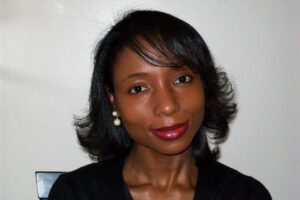
🔥 Appearances: The 19th’s Nadra Nittle (above) was on Oregon Public Broadcasting to talk about teacher strikes in the Northwest and elsewhere. Politico’s Juan Perez Jr. was on NPR to talk about newfound Republican interest in school board races.
🔥 More appearances and segments: The New York Times’ Eliza Shapiro and Brian Rosenthal were on WBUR Here and Now and WNYC’s the Brian Lehrer Show to talk about their blockbuster investigation into the profound failures of New York’s Hasidic schools and state oversight. Former NPR reporter Anya Kamenetz was on WAMU’s 1A show to talk about the teacher shortage in some schools. New York Times personal finance columnist Ron Lieber was on The Daily talking about the college pricing game. The Takeaway featured the debate over universal school lunch on a recent episode. EWA hosted a webinar Wednesday on what to do if you’ve been laid off.
🔥 Some professional news: The Solutions Journalism Network announced its first class of Complicating the Narratives fellows, who will use reporting techniques designed in part by Amanda Ripley (whom we’ve featured on The Grade). We spot at least one education-related project, from J. Brian Charles of Baltimore Beat. And The Washington Post’s Laura Meckler is back from book leave, with her first story since June. Welcome back!
🔥 Job opportunities: KQED MindShift is looking for an editor who’s passionate about education. The Connecticut Mirror is hiring an education reporter. WAMU is also hiring an education reporter. Check previous versions of the newsletter for more jobs that may still be open.
EVENTS, RESOURCES
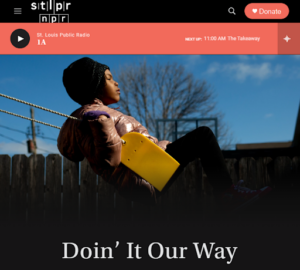
Above: St. Louis Public Radio has a new three-part series called “Doin’ It Our Way,” about Black families turning to homeschooling.
⏰ Upcoming events: Today (yes, today!), URL Media is hosting an event on what to do when you start a journalism job. Also today, Boston Globe Great Divide editor Melissa Taboada will speak with incoming Boston Public Schools superintendent Mary Skipper at the Globe Summit.
⏰ Other events: ProPublica is hosting a virtual event Sept. 20 about their investigation into how police ticket students for minor misbehavior at Illinois schools. Chalkbeat is hosting a virtual discussion on tracking story impact beyond clicks on Sept. 28. Amanda Ripley will speak at a plenary session at the annual Grantmakers for Education conference in Austin Oct. 19. And the Governing Board, which sets policy for NAEP, is hosting an event to discuss the test scores on Oct. 24.
⏰ Poll results: A new Gallup poll shows that parents are just as satisfied with the quality of their kids’ education now as they were before the pandemic. And poll results reported by CT Insider and The Atlantic show that despite media coverage of the influence of CRT in politics, voters don’t cite it as an important issue.
⏰ Research: The Center on Reinventing Public Education rounded up research from the last few years about how the pandemic impacted students in their “State of the American Student” report. Among the findings: only 21% of teachers reported they covered all of the curriculum they normally would in the 2020-21 school year. The COVID-19 School Data Hub has released the first in a series state data briefs documenting changes in ELA and math test scores during the pandemic. Read a thread on the findings from Emily Oster here. For the Fordham Institute, educator Mike Goldstein hypothesized on why “the smart got smarter” between 2009-2019 (hint: private tutoring and more digital learning in class).
⏰ Deadlines: Reporters based in Mississippi, New Mexico, and New Orleans have until Oct. 18 to submit their amazing investigative projects to ProPublica’s Local Reporting Network and get feedback from an editor.
THE KICKER
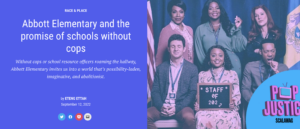
“Our imaginations have been so flattened by media mimicking our reality that we find ourselves asking entertainers to reflect back our violence instead of offering a portrait of a better world,” writes Eteng Ettah in Scalawag. Abbott Elementary won multiple Emmys on Sunday and a new season is coming soon.
That’s all, folks. Thanks for reading!
Reply to this email to send us questions, comments or tips. Know someone else who should be reading Best of the Week? Send them this link to sign up.
Using Feedly or FlipBoard or any other kind of news reader? You can subscribe to The Grade’s “feed” by plugging in this web address: http://www.kappanonline.org/category/the-grade/feed/.
Read more about The Grade here. You can read all the back issues of The Grade’s newsletter, Best of the Week, here.
By Alexander Russo with additional writing from Colleen Connolly.
ABOUT THE AUTHOR

Alexander Russo
Alexander Russo is founder and editor of The Grade, an award-winning effort to help improve media coverage of education issues. He’s also a Spencer Education Journalism Fellowship winner and a book author. You can reach him at @alexanderrusso.
Visit their website at: https://the-grade.org/