Now that kids are back in school, it’s time for reporters to get back into classrooms and hallways. Some have already done so, but much more is needed.
By Alexander Russo
Millions of students and teachers are back to school, in person, full-time – and now it’s time for education reporters to follow suit.
The challenges of gaining access can be enormous, but so is the amount of vivid, memorable information that in-school reporting would uncover.
It’s well worth the effort, as those who have already reported from schools this year can attest.
In-person reporting is “less likely to be filtered by administrators’ or handlers’ assumptions or contacts,” AL.com education lab editor Ruth Serven Smith told me in a recent email. With in-school reporting, reporters get “a sense of the scene and evaluate concerns, successes and incidents in the broader context.”
In-school coverage “is the reporting that lets us tell stories that are real, rooted in actual educational experience,” according to Boston Globe reporter Jenna Russell, “with all its sparks and rough edges, and it is critical to real accountability reporting.”
Now more than ever, we need to see how students and teachers are doing. What are they struggling with? What’s going better than some had feared? Eight weeks into the school year in some parts of the country, we still have too little idea what school reopening looks like from the inside of a classroom.
Eight weeks into the school year in some parts of the country, we still have too little idea what school reopening looks like from the inside of a classroom.
Never easy even before the pandemic, gaining access to schools has become more difficult in some places because of privacy and safety concerns. Still, many reporters found ways to pull it off last year and some reporters are already back at it:
ILLINOIS
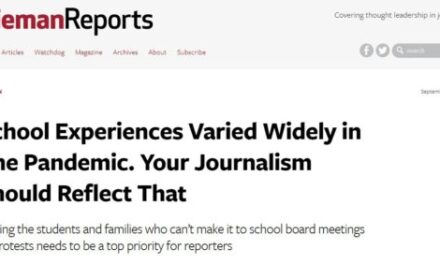
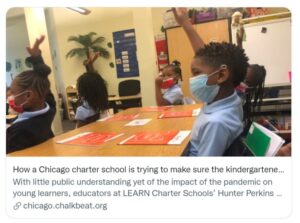
In Chicago, where access to district-run classrooms has been sharply limited, Chalkbeat editor Cassie Walker Burke spent nearly an hour in two kindergarten classrooms at a local charter school and wrote about “whether the kindergarteners were OK” — and it shows.
Full of visual details and telling anecdotes, the resulting story (left) really brings readers into the classroom experience with the kids and teachers and gets very specific about what the kids do and don’t know:
“Veteran kindergarten teacher Tanya Davis held up a sharp No. 2 pencil as if she were about to write a word in the air. Soon, 26 youngsters were following suit, and Room 10 was a sea of little fingers writing imaginary words in the sky.”
OKLAHOMA
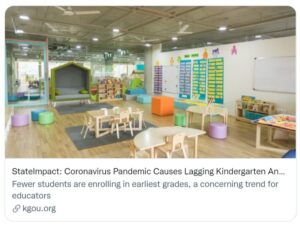
“I’ve been back in schools three times this fall for stories,” said StateImpact Oklahoma’s Robby Korth in an email. The challenges aren’t all that different in terms of gaining access, he told me. But the effort is worth it.
“Listen to the stories and you’ll hear why it was valuable to get into the classroom,” Korth said. “In both, I was able to get phenomenal tape and feeling for what being in school is like, which in turn helps the listener be placed inside the classroom,” he said. “You can’t go wrong with 4-year-olds singing ‘Twinkle, Twinkle’ (left) or a bell and hustle between classes to feel like you’re back in school.”
 COLORADO
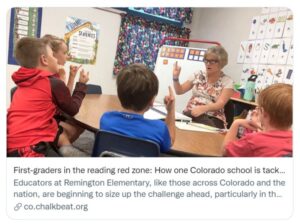
“We haven’t done a school visit in Denver Public Schools (DPS) yet this school year, but school visits in other districts have been much more normal, and we don’t anticipate any problems visiting DPS schools,” says Chalkbeat’s Erica Meltzer, who cites First-graders in the reading red zone: How one Colorado school is tackling pandemic gaps (left) as an example.
“We got really good access at that school, and I think you can tell in the writing,” she added.
The story by Ann Schimke focuses on classroom teaching and learning, gives direct and specific information from teachers, and brings real kids in real classrooms into it: “On a recent morning, it was easy to see the brisk pace of literacy lessons in Remington’s first-grade classrooms. Little time was squandered, with teachers offering pops of encouragement during lessons — and sometimes firm reminders.”
 ALABAMA
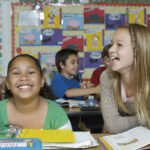
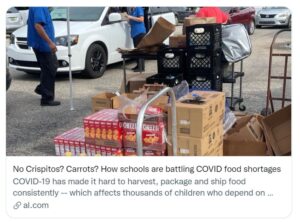
AL.com’s education team covered several first days back and have been doing on-the-ground reporting in multiple districts over the past eight weeks since school started, according to Serven Smith, who cites this recent story about feeding hungry students and families as one that includes a lot of firsthand details.
Without access, the reporter “wouldn’t have known about the warehouse to stash food supplies (totally unusual for our state) and food workers trying to make interesting desserts out of cornflakes if she hadn’t followed a CNP director for a day,” notes Serven Smith.
In another story that featured in-school access, “details that stuck out to me were all the different ways staff worked to calm student and parent nerves, but also that at the end of the day, it was all pretty normal.”
 MASSACHUSETTS
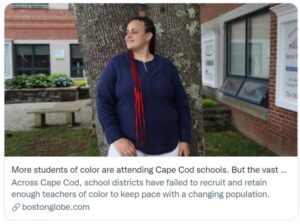
The Globe’s Jenna Russell hasn’t been back into a school this year but she was able to do a classroom-focused story on teacher diversity in July thanks to the openness of the Barnstable Public Schools on Cape Cod.
“The superintendent completely ‘got it’ when I explained why it was so important to observe students and teachers interacting in their classrooms for this piece,” allowing her to visit two schools, Russell told me in an email.
“It was my first time back inside a school since early 2020, and I was so energized and excited by the opportunity to be a fly on the wall again, absorbing the rhythms and tiny epiphanies of a regular school day unfolding.”
“It was my first time back inside a school since early 2020, and I was so energized and excited by the opportunity to be a fly on the wall again, absorbing the rhythms and tiny epiphanies of a regular school day unfolding.” – Globe reporter Jenna Russell
Access is often an issue, and this fall is no different. Reporters covering Boston, Chicago, and several other places described challenges getting into classrooms to see what reopening looks like.
“It was already hard to visit schools before the pandemic, but during this crisis they’ve taken a strict no visitor stance,” the Boston Globe’s Bianca Vázquez Toness told me via email. “For a while, they weren’t letting in the dentists that fixed kids’ teeth! I’m not sure of the exact visitor policy this year except that reporters and photographers still can’t enter schools.”
From the looks of it, Washington Post, Chalkbeat national, and New York Times reporters have had to work around limited access in order to write recent stories about what reopening looks like. The coverage is good, but just imagine how much better it could have been if it included in-class observations and interviews.
“You can’t go wrong with 4-year-olds singing ‘Twinkle, Twinkle’ or a bell and hustle between classes to feel like you’re back in school.” – StateImpact OK reporter Robby Korth
Reporters who enter the classroom cultivate valuable new sources, gain new insights, and often emerge energized by the experience.
But that’s not all. There’s simply no replacing the vivid, visual, firsthand impressions and anecdotes that in-person reporting can provide – or the spontaneous events that you might happen to witness that will take your reporting in a new direction. In-person reporting re-establishes your unique value to readers.
That’s why it’s so important to keep pushing to win access to schools, even if it means switching to a charter, private, or alternative school. Go one district over. Whatever you do, find a way to get back inside., even if it’s not in the main district you cover. You won’t regret it, and your readers will appreciate it.
Previously from The Grade
The importance of finding hard to reach sources (September 2021)
Education reporters back in schools — and newsrooms (June 2021)
Top reporters share pandemic reporting tips (August 2020)
Writing great profiles in the age of remote reporting (April 2020)
Coverage challenges in the coronavirus era (March 2020)
ABOUT THE AUTHOR
Alexander Russo
Alexander Russo is founder and editor of The Grade, an award-winning effort to help improve media coverage of education issues. He’s also a Spencer Education Journalism Fellowship winner and a book author. You can reach him at @alexanderrusso.
Visit their website at: https://the-grade.org/