A Q&A with the Boston Globe’s Bianca Vázquez Toness and Jenna Russell about their much-admired recent story, A year of grit and despair.
By Colleen Connolly
Writing about students who are both immigrants and English language learners is one of the most difficult tasks for education journalists. Maybe they don’t speak their sources’ primary language. Or maybe they find they have to work even harder to earn families’ trust to make up for insufficient or misleading coverage of these communities in the past.
But education reporters should start thinking about how to write about this group of students more often and in new ways. According to the Migration Policy Institute, a quarter of children in the U.S. come from immigrant families — up from 13% in 1990. And the number of English language learners has increased by about 1 million since 2000. This is a trend across the country — from coastal urban enclaves to inland rural areas.
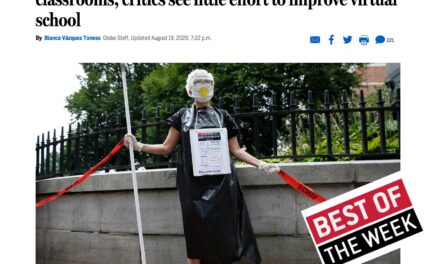
To help editors and reporters take on the important challenge of covering these kids and their experiences in school, we interviewed Boston Globe reporters Bianca Vázquez Toness and Jenna Russell about their recent blockbuster, A year of grit and despair, which features deeply reported and humanizing portraits of kids like Fredy, a gregarious Guatemalan teen who became a star student in school until the pandemic, and Nohemy, whose characteristic vibrancy and bravery diminished in remote learning.
To produce this much-admired story, the reporting duo followed a class of immigrant students learning English for nine months of the pandemic, checking in as often as twice a week with some of them and visiting their homes. The journalism they produced tells a story that pays equal attention to their sources’ lives as immigrants as it does to their lives as students.
The quality is no surprise. The Globe’s education team has turned out a series of much-admired stories, and Vázquez Toness was recently honored by the Education Writers Association for outstanding beat reporting.
The interview below has been edited for length and clarity.

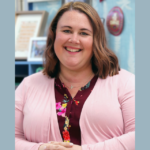
Above: The Boston Globe’s Bianca Vázquez Toness, left, and Jenna Russell.
The Grade: What prompted you to pursue this story in the first place?
Russell: We were interested as a team in writing about these kids going all the way back to the beginning when The Great Divide first got together. We had done a fair amount of preliminary work trying to understand them better as a population, and when the pandemic happened, obviously that had an effect on what we set out to do — and what we eventually did. We were able to illuminate some of those core issues that had been going on for a long time — and certainly were there before the pandemic — in addition to the new concerns and the crisis that started last March.
The Grade: Beyond the statistics, what personal or professional familiarity did you have with immigrant English learners before starting the project – and how did you get up to speed?
Vázquez Toness: My mother is from Puerto Rico and came to the U.S. mainland when she was five. I grew up hearing stories about how she and her sisters were treated in school. That’s where my interest and awareness started. Over the years, I’ve only reported a few stories on the education of English learners, mainly focused on debates about how English learners should be taught. I knew a lot about the pedagogy and the controversies, but in some ways those conversations, while important, can obscure the bigger questions about whether these students have access to school at all. It took doing this story for me to understand that.
Above: Fredy’s comfort level with the reporters reassured classmates.
The Grade: How did you find your sources and how did you get them to open up?
Vázquez Toness: We were very lucky in that we started at a school that was really very interested and understood what we were trying to do and understood that this was a group of students who don’t get a lot of attention. The principal was completely on board from the beginning with the idea of illuminating the challenges that these students were up against, so he gave us a lot of latitude.
We started attending some of their classes when the classes were still remote. I’ve also had the experience where sometimes students, especially immigrant students, are not eager and are scared to talk, but a lot of times it’s because in some school districts they really don’t feel safe. That is not the experience of these students, at least not that they shared with us.
We were going to their homes and seeing them and meeting their families and engaging really pretty closely with them. They saw us over time — a lot of times. I think the fact that we were talking to Fredy and Fredy was comfortable having photographs went a long way with his peers. They would even reach out to him and say, ‘are you talking to Bianca? Does Bianca go to your house?’ And he would say, ‘yep.’
Russell: I just want to jump in quickly to sing Bianca’s praises for a second and say that I do not believe that we could’ve done this project — or at least not done it the same way — without someone like Bianca, who is both bilingual and deeply experienced and invested in covering education. To gain trust with these kids at a moment like this, I feel incredibly fortunate that I was able to partner up with somebody who brings a great depth of empathy to the job and understanding, is able to communicate with them in their native language and is also incredibly persistent in reaching them over a long period of time.
The Grade: For most journalists, there’s a line or moment or statistic (or GIF) that was a favorite, something someone had to fight for or was extra hard to get — but worth it. What are really essential parts of the story for you?
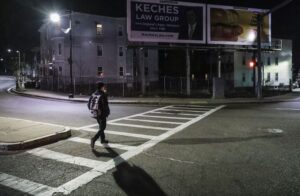
Vázquez Toness: We found out later in the reporting process that when Fredy leaves work he walks home. I felt it really necessary to go with him and to walk home with him from work. He didn’t get out that day until 3 a.m. It just really helped us understand what his life is like. He does that several nights a week. There was no one else out. He tried to rationalize it: ‘Oh this isn’t a big deal, it’s really lovely, it’s great.’ But here’s this slight — he probably weighs like 140 pounds — 16-year-old walking home, working more hours than his father does now to support them.
Russell: It’s easy to generalize, particularly about a group of students that come from afar and speak another language, and this was such a rare opportunity to really make them specific people. In earlier drafts we had a much longer version of the moment when Nohemy commits herself to continuing to pursue her education that was just beautifully reported by Bianca with a lot of really stunning detail. We did hang on to a little piece of that at a later point in the story to refer back to her as that young girl who had refused to accept that she would not continue to pursue her education. I just loved that piece.
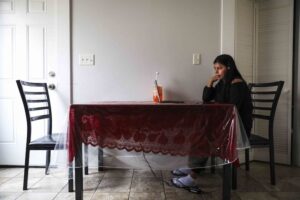
Above: Nohemy struggled with depression. “Inside her remained that headstrong, fearless girl who once stood in a cornfield, under a hot sun, and vowed to find her way back into a classroom. She wasn’t ready, yet, to let that dream go.”
The Grade: What was the reaction to the piece when it first came out, compared to other similar stories you’ve written? How did the kids and others depicted in the piece feel about how they were represented?
Vázquez Toness: Dozens of readers reached out wanting to help Fredy pay off his family’s debt and support him so he wouldn’t have to work. That has happened with other stories Jenna has written, but I had never experienced it to this extent before. The young people in the story were pleased with how they were represented. When I read the story to Fredy, he seemed very touched that we had captured his dilemma and how difficult his life had become. He’s generally not a complainer and is very deferential to his teachers, so his stress wasn’t obvious to his teachers and other staff.
The Grade: What are the benefits and drawbacks of focusing a story on a special population of kids?
Vázquez Toness: I think in Massachusetts, in particular, the state has had a bit of a blind spot when it comes to educating immigrants. That was definitely what informed this story. I think that Massachusetts oftentimes denigrates other states in the ways that they educate students, states like Texas or Florida. But when it comes to immigrant students, oftentimes those states might do a better job. And I think that these students often just aren’t thought about here…This was a deliberate story for me. That’s what animated my interest in the story, and it has animated a lot of my interest working here.
Russell: One thing that made this particular population important to focus on is that they are less and less a minority. Certainly in the Boston schools at this point they’re a solid third of students — I think more than half if you look at kids who are former English learners. It felt more and more like this is a core population here.
The Grade: What tips do you have for education reporters who are trying to do more to cover immigrant English language learners?
Russell: If you’re able to develop relationships with these students over time, beginning in school and then slowly branching out beyond it, that is a good way to build trust and understanding. It also helps to have a teacher they trust as an ally. For reporters who are not bilingual, a skilled interpreter can be a tremendous asset, and if you can develop a relationship with that person over time, too, on multiple stories, it’s helpful in forming a seamless partnership. Overall, patience and persistence are key. Often these students have very limited free time, and heavy responsibilities, and you will need to work around their schedules, as you would with any other valued source. Transparency is also so important — explain why you want to tell their story, why it matters, and let them know you want to hear their questions and concerns. Use the communication platforms they know best, and use most, to maximize their comfort, even if you haven’t tried them before.
The Grade: Reporting a story over such a long period of time, it’s hard not to feel involved in your sources’ lives to some extent. How did you respond during moments when you might have wanted to intervene as more than a reporter?
Vázquez Toness: I felt like I had to get involved when Nohemy shared that she was depressed and wanted to see a therapist. She didn’t know how to find one or that there were people based at her school. I helped introduce her to some people in the district who could help her. I don’t regret doing that.
Related from The Grade:
Including English learners in COVID-19 coverage (Barbara Gottschalk 2020)
How to write smarter stories about English language learners (Barbara Gottschalk 2020)
English-language learners make the front pages – but that’s not enough (Conor Williams 2017)
ABOUT THE AUTHOR

Colleen Connolly
Colleen Connolly is a freelance journalist who covers New England for The Grade. Her work has also appeared in the Columbia Journalism Review, The Guardian, The New Republic, Smithsonian magazine, and the Chicago Tribune. You can follow her on Twitter @colleenmconn or find out more on her website: https://colleenmaryconnolly.com/.