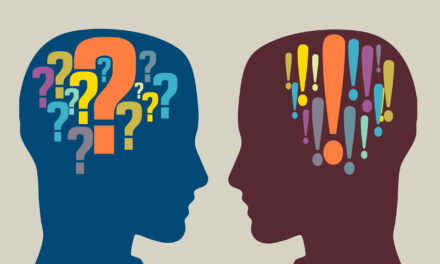
Two opposing archetypes have dominated our understanding of how teachers are managing the COVID crisis.
Seasoned educators know that it’s a fantasy to think they can keep every member of the school community happy all of the time. Still, I’m not sure anyone could have predicted how angry people have become over recent decisions about reopening their local schools.
I suspect a lot of the frustration over the slow pace of reopening is wrapped up in something bigger, the unique love/hate relationship that Americans have developed with their schools. After eight years of writing about the PDK Poll of the Public’s Attitudes Toward Public Schools — which consistently shows that parents rate their own child’s school as excellent, even while they give low marks to public schools in general — I probably should have made sense of this contradiction by now. Sadly, I still can’t explain it. I only know it when I see it. And I can definitely see it in the media coverage of the COVID-19 crisis.
Much of the reporting on efforts to reopen the schools has focused, rightly, on the staggering impact the pandemic has had on students of color. For example, a survey released in March 2021 by the National Center for Education Statistics reported that nearly half of public schools were open for full-time, face-to-face classes and that white students (49%) and students with disabilities (42%) were much more likely to be attending school in person than Black (28%), Latinx (33%), or Asian American (15%) students. That is, students of color are disproportionately affected by the academic, social, and emotional losses that often result from missing in-person school. Those numbers help explain why so many parents and community members are so angry that their schools haven’t reopened yet, which brings me back to Americans’ love/hate relationship with public education.
Heroes or villains?
Two opposing archetypes have dominated our understanding of how teachers are managing the COVID crisis. The first portrays teachers as selfless angels of mercy who work for peanuts and tirelessly support their students; the second portrays them as selfish, clock-punching monsters who care more about their pensions than supporting student achievement and well-being. Apparently, Americans view their teachers as either purely good or purely evil. Even the characters in a Marvel Comics movie are allowed to have more nuance and complexity than that.
The current vilification of teachers is especially shocking if you consider how warmly the public felt toward teachers just a couple of years ago. Back in 2019, when teachers held strikes in West Virginia, Kentucky, Arizona, North Carolina, and a number of other states, citizens of all stripes came out to support their demands for better pay and working conditions, even if it meant their own schools were closed or operating with a skeleton staff. Some teachers even chose to run for public office, their profession serving as a badge of honor. In the early days of the 2020 presidential campaign, investing in teachers seemed poised to become a major voting issue. And then came COVID.
In the early days of the pandemic, when nobody had a clue as to how long Americans would actually need to socially distance, teachers continued to enjoy their newly heightened status. I can’t count how many videos I saw that showed loving teachers comforting their students via computer or driving past their houses to honk and say hello. It seemed that Americans finally understood the kind of commitment it takes to be a lifelong educator. Was this a sign that the profession would finally receive the recognition and respect it has always deserved? Not exactly.
After months of at-home instruction, attitudes soured. Many parents became fed up, accusing teachers and administrators of standing in the way of a return to normal. Conflicting news reports about the relative safety of reopening schools — particularly the low risk COVID-19 posed for those under age 18 — only fueled the flames. Parents in some communities started protesting ongoing school closures. Some voiced anguish over the state of their children’s mental health after months of social isolation. Others had simply reached the end of their rope, exhausted from looking after their children all day, even as they struggled to meet their job responsibilities. Whatever the reasons, the anger grew, and much of it came to be channeled in a single direction: toward the teachers unions.
The union label
When teachers unions in various states and districts started pushing back against plans to reopen schools, they became the perfect villain in our ongoing pandemic drama. Parents and local leaders responded with anger and frustration, not sympathy, and criticized unions for playing politics with their children’s lives and well-being. To counter mounting criticism, union leaders cited health and safety concerns for their members, accurately pointing out that while children may be at relatively low risk of catching and suffering from the coronavirus, that’s not true for the adults who work in schools. Those concerns have fallen on deaf ears, though. In my home state of Maryland, even the governor urged (some say bullied) district leaders to reopen schools by March 1. Whatever warm and fuzzy feelings the public had for teachers during the early days of the pandemic seemed to evaporate as soon as the unions started to play hardball about returning to the classroom.
There is a long history of people blaming teachers unions for every problem in public education. And while former education secretary Betsy DeVos turned teacher bashing into an art form, strong anti-union sentiment has come from both sides of the aisle in recent years, as education reformers have pushed to restructure the nation’s stodgy and underperforming public education system. Already, the Biden administration has been called out for its close ties to leaders of both the National Education Association (NEA) and American Federation of Teachers (AFT).
I would argue that union bashing has always been misguided, and it is especially misguided today. Students, educators, and parents alike have been through the gauntlet during this pandemic, and treating them as adversaries is no way to make things better. Not that we let anyone off the hook — everyone who participates in public education is responsible for its outcomes. As educators, policy makers, and citizens, we have a lot to improve on.
The pandemic, like many crises, laid bare what many of us already knew: For many students and families, public education offers little promise and a difficult pathway. But resolving that problem, and the myriad other problems that grow out of it, will never be possible if we continue to see education through our own eyes and no one else’s. Whether you love or hate public education is irrelevant, as long as you are not getting in the way of making it better.
Reference
National Center for Education Statistics. (2021, March 24). 2021 NAEP: COVID-19 planning and resources. U.S. Department of Education, Institute of Education Sciences. https://nces.ed.gov/nationsreportcard/about/covid19.aspx
ABOUT THE AUTHOR

Maria Ferguson
Maria Ferguson is an education policy researcher, thought leader, and consultant based in Washington, DC.