|
|
| BEST OF THE WEEKThe week’s best education journalism, all in one place. |
|
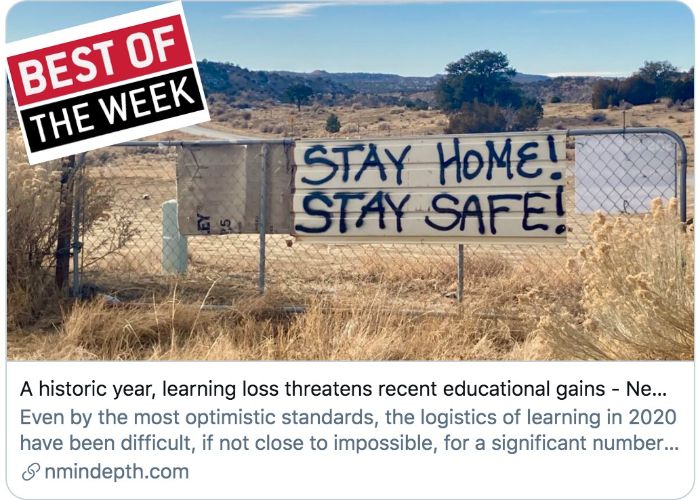
| 🏆 BEST: The best story of the week is Shaun Griswold and Trip Jennings’ A historic year, learning loss threatens recent educational gains, published in New Mexico In Depth. The story offers a deep and nuanced look at the impact of remote learning on the most vulnerable kids in New Mexico, including Indigenous students. While the media paid a lot of attention to COVID-19 outbreaks in the Navajo Nation early on in the pandemic, less attention has been paid to how this impacted education. New Mexico ranks 49th in the nation for broadband access. In one majority Native American county, fewer than half of its residents have high-speed internet, and a third of its students are English language learners. Thanks to Hechinger’s Neal Morton for flagging the piece. 🏆 RUNNER-UP: The runner-up is Hannah Natanson’s What it’s like to learn online from inside a homeless shelter in the Washington Post. We’ve seen this story before, but Natanson goes inside shelters to see firsthand the remote learning services being provided to students who are experiencing homeless. And she explores their myriad challenges, which go beyond reliable access to the internet, including harassment from peers on Zoom and safety-concerned parents who are sometimes unwilling to share their circumstances with teachers who might be able to offer additional resources. It’s well worth the read.
BIG STORY OF THE WEEK: TEACHER VACCINATION
Education Secretary Betsy DeVos resigned in protest against the president’s role in encouraging the attack on the U.S. Capitol. Meanwhile, school systems, teachers, and parents struggled to find a sensible course of action. And vaccinating teachers emerged as a major issue in the reopening debate:
🏆 Moving teachers to the front of the vaccine line might not be enough (SF Chronicle)
🏆 Teachers should be next in COVID-19 vaccine schedule, CDC says (USA Today)
🏆 Teachers in next vaccination wave — but when? (Chalkbeat Chicago)
🏆 Teachers Union Says It Will Plan Its Own Vaccination Effort (NY1)
🏆 Some teachers get vaccinated — but most are nervously waiting. (Washington Post)
🏆 Tennessee teachers move up on the COVID-19 vaccine priority list (Tennessean)
🏆 Teachers Are Already Getting COVID-19 Vaccines (EdWeek)
🏆 AFT’s Randi Weingarten Talks Tying School Reopening to Teacher Vaccine Rollout, Biden’s Ed Secretary Pick and $900B Relief Bill (The 74) |
|
| PROGRESS AND CHALLENGES AT THE WASHINGTON POST |
|
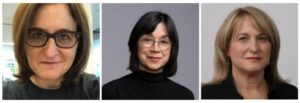
| Above: Washington Post education journalists Laure Meckler, Kathryn Tolbert, and Valerie StraussThere’s been so much great coverage from the Washington Post education team this past year, but a recent stumble is a vivid reminder that there are still some issues. Can a new section editor sort things out? In a column from over the break, I explored the progress the team has made in recent months and the challenges that remain.
Some of my favorite writers are those whose anger seems to fuel their efforts. In this new column, contributor Bekah McNeel explores the somewhat muted role of anger in education journalism and helps explain why it’s so important. “This profession is so steeped in its own ethical juices that the only way to survive as a workaday reporter … is to be conscientious by nature,” McNeel writes. “Anger is how ethical people respond to injustice.”
Want education news and commentary all day, every day? Follow @thegrade_ for daily news clips and @alexanderrusso for commentary. |
|
 |
| MEDIA TIDBITSThought-provoking commentary on the latest coverage. |
|
| 📰 EDUCATION REPORTERS COVER CAPITOL HILL VIOLENCE: At least two education reporters were involved in covering the recent violence at the U.S. Capitol: USA Today’s Chris Quintana and the Washington Post’s Perry Stein. Click the links to see what they saw and said. Others like the Post’s frequent education reporter John Woodrow Cox were also involved, describing one piece he helped write as “the most astonishing four paragraphs I’ve ever written.” Many other education reporters and outlets focused on how the violence affected kids and how teachers were going to address it: Chalkbeat, the Washington Post, The 74, and the Dallas Morning News.📰 COVERING CARDONA: The CT Mirror had the best coverage of Cardona when the news first came out; however, there’s been lots of other good coverage since then — and more on the way, I hope. Rachel Cohen’s How Education Secretary Nominee Miguel Cardona Works With Teachers in The American Prospect is a good example. Dale Chu links out to a lot of coverage in his Fordham Institute piece describing Cardona as a blank slate. Meanwhile, it’s worth noting that Biden recently nominated Gina Raimondo, Rhode Island’s pro-reopening governor, to head the Commerce Department.
📰 ABOUT THAT NYT ARTICLE: Did you feel uncomfortable reading Dan Levin’s late December New York Times story, A Racial Slur, a Viral Video, and a Reckoning? You were not alone. Devorah Heitner (a friend) published an op-ed at CNN noting that the piece focused too much on individual students and too little on adults and systems that let everyone down. “Finding offenders and outing them … allows too many communities to smugly point fingers and not to look at themselves,” she wrote.
Missed some previous editions? You can see the archive of past newsletters here. |
|
 |
PEOPLE, AWARDS
Who’s going where & doing what? |
|
| Above, left to right: Congrats to longtime EdWeek journalist Christina Samuels who is joining the Hechinger Report to help with its coverage of education in the South. “There are just endless stories to be done there and I’m happy to do my part in unearthing them,” she tweeted. And welcome to El Paso Matters’ new higher ed reporter, Jewél Jackson. Beat veteran Linda Lambeck is leaving the CT Post after 35 years and received praise from the CT Mirror’s Jacqueline Rabe Thomas who said Lambeck is one of the best reporters she’s worked with.🔥 Need a job? The Hechinger Report is hiring a D.C.-based higher education reporter. Searchlight New Mexico is hiring an education investigative reporter. And the San Antonio Express-News and Nashville’s WPLN are both looking for education reporters. Last we checked, EdSource is also looking for a new executive director.
🔥 Notable quotable: “It is our job to apply scrutiny to the actions of all the important actors,” tweeted the Washington Post’s Laura Meckler in response to complaints from teachers about her recent story with Perry Stein. Also: “I think school closures are going to do irreparable harm to public education,” tweeted the NYT’s NIkole Hannah-Jones. “We’ve got to be able to have that conversation without being accused of not caring if teachers die.”
🔥 Words of thanks: The Los Angeles Times’ Paloma Esquivel thanked her editor Stephanie Chavez for being “a fierce champion for her reporters who is deeply dedicated to telling the story of education in California.” Esquivel told us that this story about how online learning cheats poor students would not have happened without Chavez’s commitment: “That story required months of work … But Stephanie pushed to ensure that we had the time and resources to do it.”
🔥 Keep an eye out for NPR’s Anya Kamenetz on bookshelves sometime in the future! She tweeted that she started the first draft of a book about children in the pandemic. We can’t wait to read it!
Did someone forward you this newsletter? You can sign up here. |
|
EVENTS
What just happened & what’s coming next? |
|
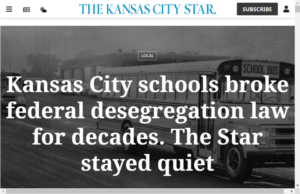
| Above: Kansas City Star education reporter Mara Rose Williams wrote about how the city’s two main papers “failed to take to task the school board whose decisions, despite the law of the land, kept Black and white children apart.”⏰ “Two reporters. One house plant. One Irish sweater. And one education secretary nominee.” How’s that for an opener? Education Week reporters Andrew Ujifusa and Evie Blad chatted about Miguel Cardona, the presumptive education secretary, in a webinar here.
⏰ There is less than a month left to apply for the 2021-22 Spencer Education Journalism Fellowship! Former fellow Casey Parks recommends it highly. “It pays well. It’s flexible, and you get access to Columbia’s insane library offerings,” she tweeted.
⏰ What are you doing to grow as a writer in the new year? Poynter is hosting a free virtual seminar in April called “Power of Diverse Voices” for journalists of color. Instructors include NPR’s Eric Deggans, Trusting News’ Joy Mayer, Poynter’s Roy Peter Clark, and freelancer Fernanda Santos. Only 15 spots are available, so apply now!
⏰ ICYMI: EdSource came out with a documentary at the end of the year called Education Interrupted about pandemic learning. |
|
 THE KICKER THE KICKER |
|
| Education Week reporter Alyson Klein got personal in a column about remote learning and her difficult middle school years. It’s a good reminder that education reporters were also students themselves once. |
|
| By Alexander Russo with additional writing from Michele Jacques and Colleen Connolly. |
|
| That’s all, folks. Thanks for reading! |
|
|
|
|
|
|