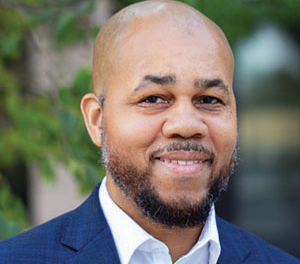
Kappan’s editor talks with Queensland University researcher Anna Hogan about the rapid growth of commercial activity in Australia’s schools and in school systems around the world.
PHI DELTA KAPPAN: In this issue of Kappan, we explore the relationship between private industry and public education, focusing mainly on the selling of goods and services to schools in the United States. But, of course, the U.S. isn’t the only place where the private sector has become a major player in public education. Having studied the influence of big business on school systems in Australia, England, and other parts of the world, do you see a consistent pattern, or does the education marketplace look very different from country to country?
Anna Hogan: I do see a lot of consistency, especially among education policy makers. Today, in most countries, the people who wield the most influence over public education tend to favor a free-market approach to schooling. Whether you talk to government officials, investors, philanthropists, or World Bank economists, you’ll hear them describe pretty much the same set of priorities, emphasizing school choice, competition, deregulation, privatization, standardization, and the teaching of a skills-based curriculum, focusing on literacy and numeracy. And these policies tend to be friendly to commercial vendors.
KAPPAN: So, then, there’s nothing uniquely American about the market-friendly school reforms we’ve pursued in the U.S. over the last few decades?
Hogan: No. Policy makers everywhere have pursued similar reforms, and what many of us call the Global Education Industry, or GEI, has grown rapidly all over the world, not just in the U.S.
Of course, businesses have always sold goods and services to public schools — publishers have been selling textbooks to schools for well over a century, for example — but since the 1990s we’ve seen a dramatic intensification of that activity. A lot of the initial growth was fueled by technology, since every school decided they had to purchase computers and programs to deliver a quality education. But more recently, the whole sector has expanded, and the big companies have reached into every conceivable part of K-12 and higher education. For instance, Pearson — which is one of the biggest education companies in the world — has a finger in every pie: It’s involved in everything from publishing textbooks to creating classroom materials, building and managing interactive learning environments, developing a range of assessment services and certifications, and designing and providing professional development. It doesn’t just contract with governments to deliver “public” education but, increasingly, it’s operating its own schools, too.
KAPPAN: Pearson has done very well for itself in the U.S., especially as a publisher and test developer. What led them to shift their focus overseas?
Hogan: Pearson is actually a U.K. company, so it has had an international strategy for some time now. Often, the products and services it develops for the U.S. market — its largest and most profitable sector — can be exported into a range of different contexts. For example, about a decade ago, the company acquired a set of online schools, rebranded them as Connections Academy, and turned them into a national network of for-profit charter schools. These schools are now one of the biggest providers of virtual schooling in the U.S., but Pearson’s priority is to build this success globally with International Connections Academy.
Instead of dealing with state governments and public school regulators, Pearson is marketing these virtual schools directly to consumers, especially international students who are aiming to go to college in the U.S. and who might want a coveted U.S. course of study and/or an English education. For example, Pearson reported over 60,000 applications to International Connections Academy from students in China during the early stages of school closures from the COVID-19 pandemic. Keep in mind that Pearson is using a platform, curriculum, materials, and assessments that they’ve already developed and piloted in the U.S. In other words, they’ve already paid the up-front costs, so when they enroll international students, they get a great profit margin.
KAPPAN: What overall effect has all of this commercial activity had on the character and quality of schools? In particular, what effect does it have on teaching and learning?
Hogan: There’s no single answer to that question. In general, education policies have become quite market-friendly all over the world. But market-friendly policies can have very different effects on teaching and learning depending on how particular schools are organized, governed, funded, and so on.
For instance, I’m told that in the U.S., district-level administrators make a lot of the decisions about which tools, resources, and programs to purchase for their schools. In Australia, though, we’ve decentralized most purchasing to the local school level, and it is usually principals and teachers who decide what to purchase, which means teachers have a lot of influence to choose the vendors who create products for them. Every year for example, our teachers have to complete 30+ hours of professional development. In the past, they tended to use the free or low-cost training modules their state education departments offered. But in recent years, a lot of teachers have turned to the private sector in the hope that they might receive a more innovative or personalized program. And they’re happy to pay for this from their local budgets if it’s more responsive to their needs. In effect, they’ve invited private vendors to compete with the state to see who can offer the best professional development.
KAPPAN: Speaking of Australian teachers, you conducted a survey, several years ago, to gauge their opinions about commercialism in public schools. What did you find?
Hogan: We found that our teachers, by and large, value the commercial products they use, from books to online learning programs, assessment tools, interactive whiteboards, and on and on. Overall, they say that the private sector has done a good job providing them with tools and resources that are engaging, innovative, and easy to pick up and use in the classroom. Many said that they appreciate commercial programs that help them deal with time pressures, and they’re especially happy with resources they can adapt and use as they like, while maintaining their professional autonomy. In short, they think there’s nothing inherently wrong with education commerce, many of the products and services are pretty good, and it would be hard to imagine a 21st-century school without some of them.
They also had serious concerns, though, some of which are very specific to the way we fund schools in Australia. I doubt your readers want to know all the details of our system, but the basics are that every school — including private schools, which enroll 40% of our students — receive public funds. On top of this, every school — both public and private — has the ability to charge parent fees. This results in an extremely inequitable system, where (similar to in the U.S.) schools in wealthier districts have much larger discretionary budgets. That’s the other side to the story I told you about Australian teachers having a lot of purchasing power: That’s only true in wealthier schools where parents have agreed to pay higher school fees. In lower-income areas, many schools don’t have the money to pay for private goods and services and simply accept the state’s services. It’s no surprise, then, that a lot of the teachers we surveyed said that their budgets simply don’t allow them to purchase expensive professional development or robotics kits or interactive whiteboards for their classrooms. We’re rapidly becoming a two-tiered system, where rich schools have access to all sorts of goods and services on the open market, and poor schools simply can’t participate.
But the main concern that teachers shared in the survey had to do with their fears that the newest generation of commercial products is beginning to threaten their professional autonomy. In particular, they’ve heard a lot of hype around personalized learning, where artificial intelligence (AI) is supposed to provide customized instruction to individual children, and they’re anxious about where this is going. They’re happy to purchase and use tools that they can adapt and use as they see fit, but they don’t want to see those tools take over the teacher’s role, and they don’t want to see big technology companies decide the purpose of K-12 education. Overwhelmingly, the teachers we surveyed said that the curriculum should aim for broader learning for citizenship, self-development, and creativity. The point shouldn’t be to sit children in front of a computer that drills them until they master a progression of skills.
KAPPAN: In other words, the fear is that important decisions about curriculum, instruction, and assessment will have already been baked into the software, right? And that wouldn’t leave much room for teachers to exercise their professional judgment at all, much less use their purchasing power to push vendors to give them the products they want. So, if that’s what teachers are worried about, then what are they supposed to do about it?
Hogan: I’ve written about one grassroots response, the #TellPearson movement that was organized a number of years ago by education unions, teachers, and advocacy groups, mainly from the U.S., U.K., and other parts of Europe. It was basically a social media campaign designed to call attention to Pearson’s business practices, showing that while the company has branded itself as “socially responsible,” the reality is that it is driven by profit making first and foremost. Nobody thought that a social media campaign would force the company to change its practice. The real point was to organize, make noise, share information, empower people at the local level, and encourage teachers to be more critical about the kinds of businesses they invite into their schools. As a way for educators to raise awareness about commercialization, it was fairly successful.
It’s important to keep that conversation going, though, and there’s an even greater need for that kind of networking right now, during the pandemic. Today, we all ought to be keeping an eye on what the big education companies are doing. For example, as soon as the COVID outbreak forced schools to shift to remote instruction, various corporations, especially Google, immediately jumped on the opportunity to expand into new markets. For instance, Google launched a service called Teach from Home to help teachers during the crisis. It consists of the standard G Suite of apps for education with the additional integration of Google Meet videoconferencing. While marketed as a “temporary hub,” it requires schools to subscribe to G Suite for Education and create Google accounts for students, thereby expanding Google’s global user base and opening new opportunities for data extraction.
Part of the argument here is that commercial companies are pushing new ways of imagining the future of public schooling. Hastily adopted online schools — like the government-backed Oak National Academy in England — are likely here to stay. This school provides video lessons and supporting resources to meet the equivalent of three hours a day for primary school students and four hours a day for secondary. Despite its self-presentation as teacher-centered, it’s headed by staff connected to organizations and philanthropies with private-sector links and overtly reformist aims. Already social commentators in the U.K. have voiced the need for “open schools” like this to continue to exist beyond the pandemic to serve disadvantaged students and isolated communities.
So, while these are supposedly short-term responses to COVID, they give us an early indication of how the schooling market is likely to evolve in the next few years. Corporations are now angling to provide full-service online learning platforms for large numbers of students.
KAPPAN: Is that really the long-term plan? Given how unhappy people in the U.S. have been with remote instruction during the pandemic, it’s hard to see how that would be a winning strategy.
Hogan: The strategy isn’t new. For instance, Pearson has been working for years on its business plan for International Connections Academy and other efforts to grow virtual schooling globally. What is new is that COVID has presented an opportunity for what has been termed the biggest edtech experiment in history, and it’s broken down all the red tape and regulations that have prevented the large-scale rollout of privatized schooling. Both Connections Academy and Oak National Academy are clear examples of how the private sector aims to deliver core public services. Similarly, Google shows how the private sector can work in partnership with the public school infrastructures that already exist. These partnerships are proving themselves as a cost-effective way to educate masses of students, and it seems the edtech industry is cautiously optimistic about what the future of schooling might look like after the pandemic ends.
While it may seem dystopian to imagine the future of public schooling as being a totally virtual experience, this is already the reality for many students. Personally, I find this troubling for a number of reasons. First, it represents a very narrow and, to my mind, unappealing view of what counts as good education. There are times when it makes sense to provide individualized instruction meant to help students acquire an easily measured set of skills. But I agree with the teachers I surveyed: Public schools should pursue much broader and more important purposes.
When corporations take over the design and delivery of public education, you have to wonder if the public good will be served.
Second, I worry that we’re creating a new kind of digital divide. A decade ago, the concern was that wealthy kids had access to computers and the internet, and poor kids couldn’t access these great tools and resources. But if you fast forward another decade or two, it’ll be the brick-and-mortar experience that’s most expensive and desirable, while online education will be seen as cheap and low-quality. Wealthy students will get to sit in classrooms with their peers, learning from real live teachers, while everyone else will get some form of hybrid or entirely digital instruction. And students with special needs and disciplinary issues may be particularly vulnerable. For instance, I’ve recently been studying privatized public schools in Canada, the U.K., and New Zealand. I’ve found that kids who struggle to self-regulate, or have other behavior problems, tend to be excluded from school very quickly. The more we consider online schooling to be normal, the more tempted schools will be to kick difficult students out of the classroom and put them online, supposedly for their own good.
Third, the more we see private companies like Google enter into contracts to provide public education, the harder it will become to say what we even mean by “public schools.” Not that we should romanticize what public schools were in the past — in Australia, we had a brief post-World War II period when they were imagined to be fairly inclusive, but we’ve never had the kind of truly equitable school system that we like to idealize. Still, when corporations take over the design and delivery of public education, you have to wonder if the public good will be served.
Finally, I worry that to the extent the private sector does come up with effective new educational tools and practices (which isn’t hard to imagine, given the amount of money and resources they pour into product development), they may just decide to keep those tools and practices to themselves, to ensure their competitive advantage. Or they might sell their “solution” back to the school systems they’ve partnered with, profiting at public expense from the data those schools allowed them to collect.
KAPPAN: Much of your criticism — and the criticism leveled by those who organized the #TellPearson campaign — seems to be directed at private businesses that sell goods and services to public education. But I wonder if that’s misplaced. Businesses simply do what they can to make a profit within the existing market environment. If their actions are harmful to the public, then doesn’t the fault lie with the governments that failed to regulate them? Instead of blaming Google, Pearson, and other corporations for what they do, shouldn’t we blame the policy makers who let them do it?
Hogan: This is the reason I try to distinguish between commercialization and privatization in my work. Commercialization just refers to the extent to which businesses create, market, and sell education goods and services to schools, whoever happens to manage those schools. Remember, public schools have always purchased textbooks. Commercialism has always occurred in public education.
Privatization is what happens when governments decide to favor market-based solutions to education problems, such as when they allow for the private management of public schools — for instance, charter schools in the U.S., Academies in England, and Free Schools in Sweden. Sure, policy makers might set up some regulations to ensure that these private operators are held accountable to the public, but the point is that the government has purposely created the conditions for private-sector interests to flourish in places that used to be run by the public sector.
Again, commercialization can happen without privatization. But when privatization does occur, that’s when commercialization really takes off. Look at Pearson’s Connections Academy, for example. Once a majority of U.S. states made it possible for private corporations to create and manage online charter schools, Pearson saw an opportunity to develop a product it could roll out on a massive scale.
So yes, when policy makers choose to privatize the education sector, they have a responsibility to regulate it, in order to protect the public. And if they fail to do so, allowing a corporation like Pearson to make huge profits by providing a low-quality public education, then those policy makers deserve to be criticized. But Connections Academy also shows us why it’s not just the policy makers who are at fault. When businesses like Pearson shift to a direct-to-consumer model, it becomes easy for them to sidestep government regulations, particularly in developing economies where consumers have few protections.
We have a collective responsibility to keep our governments honest. When they opt for convenient, cheap, seemingly innovative, but potentially harmful approaches to public schooling, we should call them to task. But when governments have no power to stop corporations from taking advantage of students and families with false promises of a decent education, then we also have a responsibility to call those corporations out, demanding that they behave in ways that are more socially responsible. Especially now, given all the promises being made about personalized online learning, education stakeholders need to engage both public officials and corporate leaders in open discussions about the kinds of public schools our children deserve.
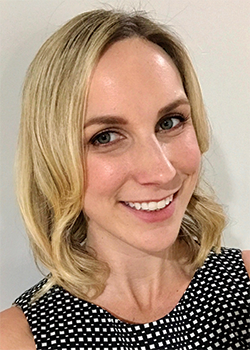
Anna Hogan is a senior lecturer in education at the University of Queensland, Australia. She received her Ph.D .in 2015, and before that was a science teacher at various public high schools throughout Queensland. Hogan’s research interests focus on school privatization and commercialization and teacher well-being. She has received two Australian Research Council grants, one to study global trends in the privatization of public schooling and another to study the effects that commercial education products have on teachers’ working lives. Hogan has published in a number of academic journals, as well as publishing several open-access reports, including Commercialisation and Privatisation in/of Education in the Context of Covid-19. Her forthcoming book, Privatisation and Commercialisation in Public Education: How the Public Nature of Schooling is Changing (Routledge, 2020), brings a number of global policy scholars together to examine how current education reforms are reshaping what might be considered core educational practices in public schooling.
ABOUT THE AUTHOR

Rafael Heller
Rafael Heller is the former editor-in-chief of Kappan magazine.