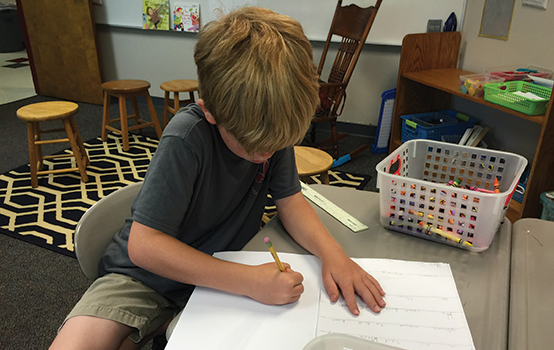
Assessment is not a unit test but a philosophical stance on how one experiences, actively engages, and manipulates his world in an effort to evolve into new spaces and ideals. Assessment is not confined to the realm of teachers but courses through every member of our classroom community. I set up an intentional structure in my 1st-grade classroom to initiate student-driven assessment. I want children to walk into our community space each morning and make decisions about their learning. These decisions are forms of assessment, and I name them as such with the children I teach.
Yesterday, in our closing circle, I ended with this, “OK, boys, tomorrow when you come in, you will make some important decisions right off the bat. You will need to assess your mood. Are you tired? If you select a table in the middle of the room, will that help you generate the energy you need to stay focused? If a child who annoys you sits down at your table, what strategies will you use to see his good? If you know you have a strong grasp of the two-dimensional shapes we studied yesterday, who at your table will benefit from your help? Boys, tomorrow you will use assessment to make decisions that will affect your day and direct your learning.”
You’ve accessed your three free articles for this month.
If you are a PDK member, login to read more.
If you are not a PDK member, join for full access, in addition to other benefits. Complete our membership form to join.
Forgot your password? Visit the Member Portal to reset your password.
Having trouble? Contact our member services team at memberservices@pdkintl.org or 800-766-1156.