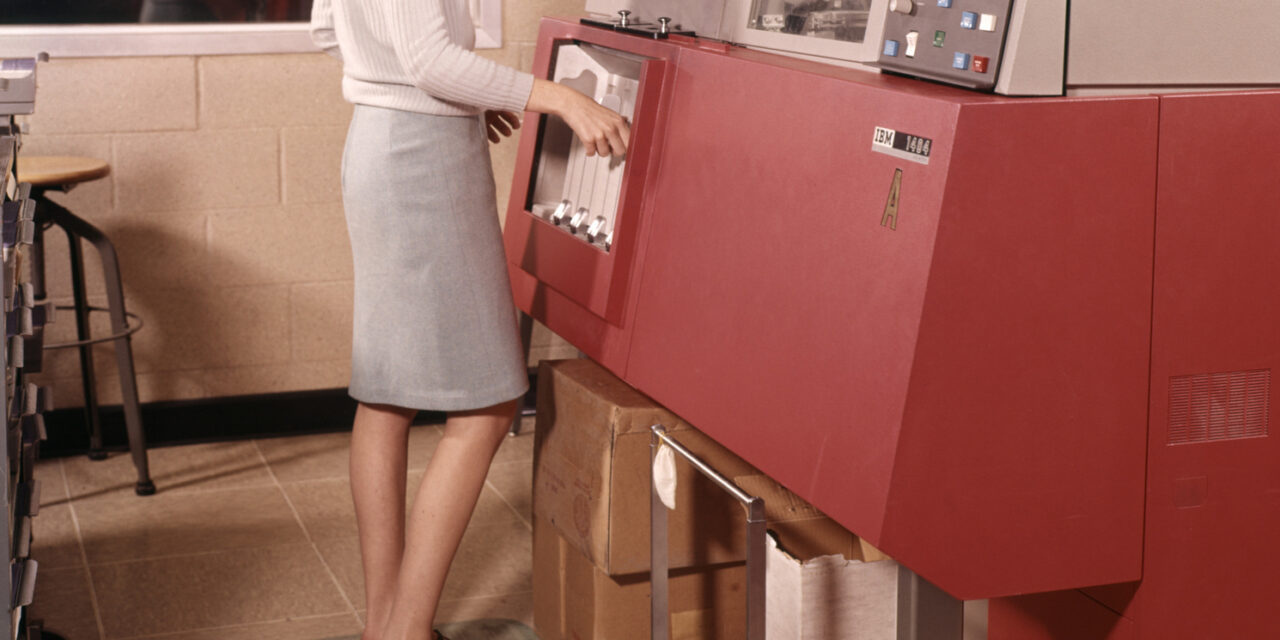
It would be quite easy to offer some optimistic arguments about what education and the blending of technology will produce by, say, 1970 or 1980. One could start with the notion that computer-assisted instruction (properly and educationally initialed CAI ) will replace teachers and solve most of our educational problems. That such a pursuit has become a popular pastime can be best demonstrated by reviewing some of the current professional literature. But panaceas do not work. Yes, the new technology has discovered that education is big and a rapidly changing business; no, the impact of technology on education will not be as rapid as many people suppose.
Change in education is more apt to be evolutionary than revolutionary because:
- Technology is in competition with the role of the
- -Education and technology promise more than they deliver
- The majority of existing educational institutions have been designed for stability of operation and not for rapid adaptation and
- The commitment in dollars required to accelerate the pace of change appears to be more than we are willing to
For these reasons, most of the schools of 1970 through 1980 will still look much like they do today.
Competition with the teacher
The prophets of the new technology in education promise a revolution in the teaching-learning process. The same marvels of efficiency and speed which automation has brought to industry and business operations can, they say, be translated into the educational enterprise. The computer, the teaching machine, the talking typewriter, video tape, closed-circuit television, and goodness knows what other marvels will finally bring the schools into the bright light of the mid-twentieth century. Perhaps they will, but my guess is that they will not do so until some way is found to deal realistically with a seemingly impenetrable element — two million teachers.
There has been some technology for a long time, and those of us with some long memory in education can remember when the prophets promised that radio would revolutionize the classroom. It did not. And the reason it did not is the same as the reason why movies and television have not.
Those of us with some long memory in education can remember when the prophets promised that radio would revolutionize the classroom. It did not.
What the prophet of the new technology has always missed, it seems, is that the teacher is a captive of an administrative and instructional strategy which depends upon him to enact the role of dispenser of information. He perceives himself to be, because in fact he is, the controller of the learning process and the primary input mechanism for each of the learners who sit before him. To such a teacher who has these well-founded perceptions of himself and who, more importantly internalizes the “rightness” of the role he performs, any machine can be, and usually is, a threat. Can the disembodied voice in the language lab speak French more fluently than he? Well, if it can, who needs it? Does the teaching machine have more patience than he? Who needs it? Can the computer assist instruction more tirelessly than he? Who needs so “human” a machine? Technology is a threat because technology is in conflict with the fondest perceptions of self and the most fiercely determined aspirations of the human teacher. The teacher brings warmth and understanding and love. He brings patience in the right amount and an accent that is good, if not perfect. He brings efficiency, which though not perfect is suffused with the warmth of the human relationship.
The teacher worries about the technology, and he should. The technology is in conflict with him and all of the assurances of the neatly dressed, bright boys from IBM will not reassure him.
Education needs the technology, as it does anything that can make teachers function better and learners learn better. There is only one way out of the bind. As long as the teacher retains the primary role as dispenser of information, or, in fancier terms, as long as the instructional strategist maintains the teacher role as information giver, the technology must be a threat. Adaptation by the schools to the new technology will be slow. Some observers may argue that the new technology is so dramatic and effective that it will somehow override the reluctance of teachers to accept it. But this does not give adequate weight to the calculated “no power”1 of a determined opposition.
The point is that a new instructional strategy has to be involved which, in Paul Mort’s old phrase makes “the teacher an observe; and guide.” If the teacher can become an organizer of a system for instruction, a diagnoser of learning problems, a prescriber of instructional remedies, a coordinator of educational “helps to the learner,” then there is a chance that the teacher will become the most eager of receptors to the blandishments of the marketeers of the educational technology. Such is the hope and challenge.
More promise than delivery
A case in point is the computer, an exciting but “threatening” new technology. Unlike any previous invention, the computer not only holds the promise for fulfilling the dream that each learner can receive individualized materials of instruction, but it also has the capability of becoming an observer and guide, as well as a dispenser of information.
One use of the computer, computer-assisted instruction, represents an excellent example of more promise than delivery. A realistic appraisal of CAI would tend to indicate the following:
- Computer-assisted instruction currently utilizes hardware that is a synthesis of the digital scientific computer, the data processing or business computer, the process control computer, and the communication control At the present time the synthesis of these four approaches demands a software package which is greater than the sum of its four parts. To date this software capability has not been developed.
- The author languages necessary for writing instructional materials o be .used in the computers are too To date a flexible language has not been developed.
- Too few CAI experimental studies are under way. The half-dozen exciting studies currently being conducted are encountering many difficulties with both the hardware and the For example, . the audio capability of CAI is still fraught with problems.
- The research dealing with learning theories and the behavior of the learner is quite Too little is known about the potential effects of CAI on the learner.
- The bulk of the instructional materials being used for CAI experiments are no better and often not as good as existing
- Curriculum makers have not developed the ability to state learning in terms of specific behavior or
- The technologists ( including our large companies ) have not provided much help in evolving a new systems approach to instruction in which the teacher is the manager of the system.
Existing educational institutions
The majority of our educational institutions have been structured for stability of operation and not for rapid adaptation and change. Typically, this has resulted in the classic time gap of 35 to 50 years between the invention and mass adoption of a new educational practice.
The majority of our educational institutions have been structured for stability of operation and not for rapid adaptation and change.
For more than 200 years our schools operated on the theory that a local school system ought to make its own curriculum. A leading educational argument for local home rule has always been that children differed in different places, and that local educational authorities could study local needs and prescribe what was best locally. In less than a decade the argument for stability of operation and local control has been seriously challenged by a number of intervening forces some of which include: the reorganization of school districts, the federal government, the merger of publishing houses and electronic firms the National Science Foundation’ research and development centers: and the latest creation-a national network of 20 regional educational laboratories.
What the total and combined effects of the intervening forces will be is still untested. The National Science Foundation, one of the older of the new institutions, has had considerable experience in promoting an increase in the adoption of new educational ideas. Some NSF curricula, created by combinations of scholars and teachers, have been widely adopted. It must be remembered, however, that teachers have always been ready to buy new instructional aids which posed no threat to them —papers, magazines, exercise books, textbooks, and the like. Compare the above readiness to their reluctance to use the radio, television, video tape, programmed learning, and some of the more threatening media. No clear-cut answers are emerging.
The money commitment
Superintendents who operate the public schools are caught in the position of deciding what alternatives to select when they make decisions about the new education and technology. Should they develop a minimum educational program for all children? Should they begin “innovative” programs without being concerned about a minimal program? Or should they elect to follow a revolutionary process and change the whole structure of education? Any decision will cost money.
An inescapable truism is that it will take a heavy dollar commitment to accelerate the pace of change. The facts about money are:
- The tax rates in many communities are quite high. New state and federal funds must be found to increase the local base of funds.
- Superintendents are confronted with restrictive money from both state and federal sources. Title I of the Elementary and Secondary Education Act is an example of restrictive How does the superintendent operate programs started under these funds if funding is later withdrawn? What programs does he delete?
- Generally, salaries account for 75 percent of the total school In some cities the figure is close to 90 percent. Where does the superintendent get the necessary money for massive program reform?
- The average instructional expenditure per pupil attending the average school in America is approximately 45 cents per The average estimated cost of computer-assisted instruction per pupil per hour is $1.50. How will the initial difference in cost be met? How can the costs of education be reduced and still meet the challenge of providing individualized instruction?
These are but a few of the facts that superintendents face when planning for new programs.
Within our grasp is the individualization of instruction for the learner, thus making it possible to achieve maximum opportunity for all of the learners in our schools.
The challenge
Humanizing individuals is what education is about. For the first time man has the capacity of using technology to achieve this end. Within our grasp is the individualization of instruction for the learner, thus making it possible to achieve maximum opportunity for all of the learners in our schools. It can be done, and at a much faster rate, if teachers can be brought to see and accept the revolutionary aspects of a new and exciting role, if the gap between promise and delivery is closed, if existing institutions begin to cooperate with intervening forces, and if they are willing to commit more dollars to the cause.
Yes, technology will have an impact. We can wait for tomorrow but our children cannot. Some of us are already deeply involved. Our experimental classrooms already reflect tomorrow. Others will follow, some soon, some later. The change is inevitable. How long it will take us to meet the challenge depends largely on educators like those who comprise Phi Delta Kappa.
1”No-power,” a phrase coined by Leon Ovsiew, implies that the superintendent has no power if his staff says “no” to his decision.
Originally published in The Phi Delta Kappan, Vol. 48, No. 5 (Jan., 1967), pp. 237-239
ABOUT THE AUTHOR

James W. Becker
JAMES W. BECKER is executive director of Research for Better Schools, Inc., one of the regional laboratories supported by the USOE, at 121 S. Broad St., Philadelphia, Pa. Research for Better Schools disseminates conclusions reached by researchers on the Oakleaf Project for Individually Prescribed Instruction operated by the University of Pittsburgh’s Learning Research and Development Center.