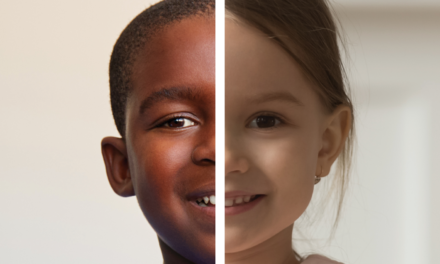
A more expansive view of what learning looks like can help us create good schools for today’s students and today’s society.
In City Schools and the American Dream (2003), Pedro Noguera notes that:
Rather than serving as the “great equalizer” as envisioned by Horace Mann, one of the early architects of American public education . . . schools in the United States more often have been sites where patterns of privilege and inequality are maintained and reproduced. (p. 42)
This paradoxical legacy — schools serving both to promote equity and reproduce inequities — was on full display in spring 2020 as COVID-19 forced schools online (while, at the same time, the murder of George Floyd ignited a national reckoning with anti-Black racism and violence). On one hand, educators all over the country made superhuman efforts to continue their work. On the other hand, large numbers of students — Black and brown students, especially — were unable to participate in their newly virtual K-12 classrooms, their absence serving as yet another painful reminder that not every child has secure access to computers and Wi-Fi, much less to food, housing, and other necessities that would allow them to stay focused on school during a national emergency.
In light of these stark inequalities, the question of what defines a “good” school seems particularly timely right now. Today, with the pandemic still raging, and with demands for racial justice continuing to ring out across the country, many education stakeholders — including students, parents and caregivers, teachers, district leaders, and policy makers — have begun to raise serious concerns about the public schools’ preoccupation with test scores and graduation rates. They’re asking, shouldn’t the goodness of a school be defined not by students’ academic performance, but by factors such as classroom climate; opportunities for social-emotional development; responsiveness to the needs of parents, families, and communities; the availability of nutritious meals, effective special education programs, health care services, and other school-based supports; the diversity of the teaching force, and how and what those teachers choose to teach?
Such questions push us to rethink what we want our schools to look like and what we want them to offer and do for young people. But on a deeper level, they also require us to define the kinds of learning we value. The choices we make about organizational structures, standards, curriculum, resources, classroom tools, teaching practices, student services, professional development programs, master schedules, and on and on — even our decisions about whether to provide online, hybrid, or in-person instruction — reveal our assumptions and beliefs about what children should learn, how learning happens, how adults can support it, and who is capable of such learning. In this historic moment, then, as we make consequential decisions about public education, we must be careful to say not just what a good school looks like, but also what it means to learn.
20th-century assumptions about learning
Much of what goes on in K-12 education today is grounded in past beliefs about how children learn, particularly the idea that learning is an individual cognitive process that occurs mainly in the head and in the classroom. But, in fact, humans taught and learned from one another long before they ever decided to create classrooms and schools. In recent decades, researchers from various disciplines have arrived at much richer and more sophisticated understandings of how people acquire new skills and knowledge in all sorts of contexts — both in and out of formal classroom settings — and their discoveries have challenged many of the teaching practices that we’ve come to take for granted. In short, what we’ve come to think of as a “good” school has very little to do with how children actually learn and much more to do with our changing assumptions about children, society, and learning. For instance, consider the wildly different theories of learning that have guided American educators over the last several decades.
Learning is an essential life function that involves all aspects of what it means to be human.
In the early 20th century, compulsory enrollment for all children became one of the defining features of K-12 education in the United States (Cremin, 1988). Since that time, three main perspectives on schooling have wielded major influence over education policy making and practice across the country: behaviorism, cognitivism, and sociocultural perspectives (Greeno, 1998). Each was grounded in its own assumptions about who should learn what, how, and why; each suggested particular modes of instruction, and each offered its own criteria for deciding what constitutes a good school. And while each perspective has been prominent in particular eras, all three have been present (though waxing and waning) over the past several decades. In short, public education has been like a house in a state of continual reconstruction, always combining these disparate design elements.
In the early to mid-20th century, American public discourse teemed with concerns (much of it explicitly grounded in white supremacist views) about youth malaise and moral decay, the influx of Eastern European immigrants, and the need for Black racial uplift (Anderson, 1988; Tyack, 1976). In turn, that prompted urgent debate about what the country’s young people (or some of them, at least) needed to learn and what role schools should play in promoting specific societal goals (such as the assimilation of new immigrants and the formation of “character” in those who seemed to lack it). Grounded in biological determinism, theories of behaviorism came to the fore during that period. Behaviorism posits that learning occurs through the making of associations between particular stimuli and responses (or, in some cases, the use of reinforcement and punishment) that, in turn, shape behavior. According to this view, learning occurs through a sequential, predictable accumulation of facts and skills, mainly by way of rote exercises, drill and practice, and basic skills development (Thorndike, 1962). Presumably, then, a good school is one that provides direct, teacher-centric instruction, designed to transmit a predetermined set of concrete ideas. Student activity is highly regulated and controlled through behavior charts and rigid disciplinary expectations and practices that are presumed to facilitate and benefit the child’s learning (Thorndike, 1906).
In the latter half of the 20th century, a new view of learning — cognitivism — gained some prominence, offering an alternate view of what constitutes a good school. In this era of rugged individualism and the race to prove that the “American experiment” yielded a more egalitarian and productive model for human society than was possible in other countries, human learning began to be understood as a mental (rather than behavioral) process wherein symbolic representations of information (much like those computers use) are constructed, stored, retrieved, and adapted (Greeno, Collins, & Resnick, 1996). Within this perspective, learning is defined by active exploration and individual sense-making. This view of learning can be seen in classrooms characterized by real-world tasks, project-based learning, and pedagogical approaches that emphasize developing habits of mind that encourage critical thinking and student-directed learning (Bransford, Brown, & Cocking, 2000).
At the end of the 20th century, scholars began to view learning as something more than individual sense-making and the active construction of knowledge, and the perception of the good school changed yet again. Questions about the roles of contexts and relationships in learning ushered in a more sociocultural perspective in which learning is defined by situational, social, and ultimately cultural processes (Brown, Collins, & Duguid, 1989). This view of learning emphasizes respect for cultural differences and the various “repertoires of practices” used in different communities (Gutiérrez & Rogoff, 2003) and seeks to foster students’ sense of belonging and identity in schools and classrooms. In this view, teaching considers not only the individual learner but also classroom processes, activities, and interactional dynamics; thus, a good school offers engaging instructional units and inclusive classrooms that connect to students’ everyday linguistic and cultural experiences and that function as culturally sustaining communities where everyone can learn (Alim, Paris, & Wong, 2020).
Toward a holistic view
Over time, it became clear that while each of these perspectives has value, each is incomplete and offers only a partial view of learning based upon their respective units of analysis (i.e., behaviors, sense-making, cultural practices), narrow assumptions about learners and what the future holds for specific learner populations, and the kinds of preparations particular learners require. In this way, proponents of each view were like medical specialists who could only see what they were trained to see and diagnose.
What is needed now is a holistic perspective that takes into account the complexity and diversity of social, cultural, economic, and political life in the 21st century and that allows for more nuanced insights into how our schools can and should serve all of our children.
In the Handbook of the Cultural Foundations of Learning (Nasir et al., 2020), we reach across various scholarly disciplines to support such a perspective, weaving together a number of complementary strands of research into the cognitive, physical, emotional, and social dimensions of learning. Central to this view is a recognition that learning is an inherently cultural process. Culture doesn’t simply provide the context in which learning occurs; it is not a separate variable to be layered on top of the study of how people learn. Rather, learning is an essential life function that involves all aspects of what it means to be human. Just as it always involves biological and neurological mechanisms, and just as it is always shaped by economic and political forces, it is also always a cultural practice. The scientific study of learning, then, must be attuned to the full complexity of human life — including the diverse ways in which culture influences what, why, and how people learn, who we consider to be learners, and what we consider to be a good school.
In short, we argue that a 21st-century science of learning must rest on four key propositions. Learning is:
- Rooted in our bodies and brains, which (according to a growing body of scientific evidence) can never be separated from our social and cultural practices.
- Integrated with every other aspect of human development, including emotion, cognition, and the formation of identity.
- Shaped through the culturally organized activities of everyday life, both in and out of school and across the life span.
- Experienced in our bodies and coordinated through social interactions with the world and others.
Much like the behaviorist, cognitivist, and sociocultural theories that shaped U.S. public education in the 20th century, these RISE principles have important implications for the design of schools and school systems and the assessment of those schools and the instruction that takes place within them. A science of learning built on these principles requires us to reconsider our assumptions about what learning is, how it happens, how to support it, how to assess it, and even who is doing the learning. This framework provides a more nuanced, holistic, and accurate perspective than did those previous theories — one that is much more useful for our historic moment, when large numbers of Americans are asking probing questions about the purposes and ideals of K-12 education, the services and supports schools ought to provide, given pervasive inequities, and the kind of society for which they want their children to be prepared.
Redefining good schools
Given heightened concerns about the deep structures of racial and social inequality in our schools (Alim, Paris, & Wong, 2020; Love, 2019; Warren et al., 2020) and the increasing mismatch between the ways schools teach and the ways young people learn (Darling-Hammond, 2010; Mehta & Fine, 2019), the aforementioned understandings have become especially urgent. But what would taking up this holistic approach to the science of learning actually mean in practice? How might such a perspective change our image of a good school? How might it lead us to create schools that support the equitable and inclusive development of all children, rather than simply reproducing systemic inequities?
Schools, like the theories of learning that ground them, have complicated histories. They can perpetuate and deepen inequities, while also disrupting them by creating opportunities for social change and justice. Their curricula, reading lists, teaching practices, resources, and tools can become instruments of racial, colonial, and patriarchal oppression (Warren et al., 2020), but they can also reflect the richness of students’ everyday linguistic, cultural, and familial experiences (Yosso, 2005), perhaps even turning the classroom into what bell hooks (1994) memorably described as “a place where paradise can be created” (p. 207).
What, then, would good schools look like if we, as a society, took seriously the robust science of learning suggested here?
Diversity in good schools
First and foremost, our schools would show much greater respect for the complexity and diversity of human learning by, for example, allowing students to make use of multiple linguistic repertoires (i.e., the differing ways of speaking, writing, and reasoning that they bring with them from their home communities) as they wrestle with intellectually complex problems (Bang et al., 2012). Further, they would give much higher priority to providing culturally sustaining instruction, and they would offer many more opportunities for youth to strengthen their sense of agency and belonging.
Consider the kinds of learning possible at the Chèche Konnen Center in Cambridge, Massachusetts, which not only teaches a rich curriculum in the sciences, humanities, and other fields, but also invites students to draw upon their own linguistic repertoires to help them make sense of academic material, while inviting them to analyze their own and each other’s differing ways of using language (Warren & Rosebery, 2004).
For instance, in one study of teaching and learning at Chèche Konnen, researchers observe a Black 2nd-grade boy’s obvious sense of comfort, during a science lesson, in using a kind of metaphoric reasoning — a common practice within Black discourse communities in the U.S. — to help him make sense of the life cycle of a pumpkin: He thinks of the pumpkin as a spider, he explains, “because when the mom dies it lays eggs before it dies” (Nasir et al., 2006, p. 498). The boy and his classmates go on to discuss how the metaphor illustrates the way a pumpkin creates seeds before it decays (e.g., like the spider, it creates new life as it hangs on the brink of death), as well as discussing how pumpkin seeds and spider eggs differ. In short, this school has created an environment, curriculum, and teaching model that asks students not to leave their cultural identities at home but to use their diverse linguistic practices as resources, both in the classroom and throughout their lives.
Teachers in good schools
Relatedly, if we took seriously a robust science of learning, we would view teaching not as a set of scripted “best practices” and instrumentalist approaches, but as a work that is both principled (based on specific methods) and improvisational, requiring them to know how to adapt their instruction to the students before them. This would require us to respect teachers as human development professionals (i.e., professionals tasked with cultivating human life and society) who must be provided with the support, materials, and compensation needed to prepare for and engage in this complicated and intellectually challenging work. And to support their instructional efforts, we would bring parents, caregivers, families, and community members on as team members with educators, establishing invaluable home-school connections.
For instance, we see such practices at the African American Male Achievement (AAMA) Initiative in the Oakland Unified School District (Nasir, Givens, & Chatmon, 2018), where families and caregivers learn together with young people in community math and science workshops, as well as activities and celebrations that reaffirm students’ identities, culture, and accomplishments (e.g., talks, poetry readings, musical performances). This focus on learning as involving support, engagement, and culturally relevant spaces for families is mirrored in the professional development for AAMA teachers, in which their identities as Black male teachers are explored and affirmed, their identities and expertise as educators are supported, and they have regular opportunities to wrestle with classroom tensions and challenges together. Research has shown that the AAMA approach has been highly effective in supporting the retention and performance of students (Dee & Penner, 2019).
Social-emotional development in good schools
If they were to adopt a holistic view of learning, schools would also place much greater emphasis on social-emotional development, treating it as a core part of the curriculum, not as an add-on to academic instruction or as a special program meant only for children experiencing adverse childhood experiences. Whereas academic learning has traditionally been viewed as a purely cognitive process (or perhaps as a chain of stimuli and responses) by which individuals acquire knowledge and skills, the RISE principles build on more recent sociocultural theories to make clear that every kind of learning — from practicing long division to writing an analysis of a historical document — has cultural and relational dimensions. Educators often pretend that the learning of math or history or other subjects has little to do with students’ relationships to their peers and teachers, but in a good school, as we’ve defined it, educators would have to acknowledge that academic learning is always, also, a moment of intense human drama. Some students feel entirely at home in the roles their teachers expect them to play, but many others need help repairing their feelings about and relationships to their teachers, their peers, and the academic material they’re asked to study.
Supporting student’s identities and social-emotional development is a central facet of the work of the AAMA Initiative — they routinely build in class time for honest and potentially risky interpersonal exchanges and connections as well as intrapersonal reflection, both of which support the development of the classroom as a learning community. Scaffolding students’ sense of belonging is understood as fundamental to learning, students’ emotional needs are taken seriously, and students’ strengths and identities and intentionally affirmed. Similarly, in equity-oriented math classes that we have studied (Nasir et al., 2014), teachers spend significant time helping students who have had negative experiences in mathematics classes to come to think of themselves as math learners, with a key part of this work involving building relationships with students and ensuring students have agency and feel heard and seen for who they are.
Assessment in good schools
And finally, if learning is integrated with other aspects of development, then assessment must be an ongoing process that helps us understand youth holistically and in all of their complexity. If learning always occurs in the culturally organized routines of life in and out of schools, then assessment should also be contextualized within these routines and sensitive to the learning that occurs within and across contexts. In other words, assessment would be for the teacher and student and thus a more local everyday endeavor.
Achieving this aim will involve incorporating more formative assessments in which teachers honor what students know and identify areas for future growth while offering feedback that teaches students to monitor and guide their own learning. This approach likely requires less focus on standardized testing and grading (meaning global, end-point assessments) and instead embraces a growth model that documents learning and development along the way. How we assess learning is a key component for the kinds of transformations we envision in good schools.
What good schools don’t do
This rethinking of what constitutes a good school is fundamentally connected to thinking about learning in a more holistic way, one that requires us to be explicit about the elements and practices of schools that detract from the learning process. For instance, if schools alienate and shut out parents, caregivers, families, and communities from decisions about how and what students are to be taught, then they will miss important opportunities to align what goes on inside the school with what they do and value in the rest of their lives.
Likewise, punitive accountability measures presumed to foster school improvement have proven to be much more harmful than useful: They push educators, students, and parents to think of learning as little more than the accumulation of knowledge, and they shift attention and resources away from valuable goals (such as social-emotional development and the teaching of civics and art). Punitive measures give teachers, students, and families little information about how instruction and learning can be improved and instead harm children physically and psychologically, result in students’ missing instruction to take tests, and create unnecessary barriers to students’ learning and teachers’ success.
Finally, the process of rethinking schools and learning means that we must disavow one-size-fits-all approaches to instruction (e.g., “teaching to the middle”) and the kinds of teaching that view academic disciplines in narrow and historically constrained ways. Learning settings must provide multiple entry points and diverse pathways for learners and consider the histories of knowledge systems and practices other than those that have become normalized and privileged in the United States and the Western world (for specific examples, see Bang et al., 2012).
Good schools: A snapshot
A good school should be informed by an expansive understanding of human learning and development, one that embraces the extraordinary complexity and diversity of our population and the full range of academic, social, personal, and civic goals that we want K-12 education to pursue. We have distilled this new science of learning into the RISE principles: Learning is rooted in our biology and in our brains and inseparable from our social and cultural experiences; integrated with developmental processes that involve the whole person; shaped through culturally organized activities of everyday life, and experienced as physical and social interactions. Schools that take these principles into account will honor diverse cultural repertoires, partner with families and communities, and promote deep engagement with the disciplines, with one’s identities and communities, and with equitable social change. This is the vision of good schooling that is needed today and into the future.
References
Alim, H.S., Paris, D., & Wong, C. (2020). Culturally sustaining pedagogy: A critical framework for centering communities. In N. Nasir, C.D. Lee, R. Pea, & M. McKinney de Royston (Eds.), Handbook of the cultural foundations of learning (pp. 261-276). New York, NY: Routledge.
Anderson, J.D. (1988). The education of Blacks in the South, 1860-1935. Chapel Hill, NC: University of North Carolina Press.
Bang, M., Warren, B., Rosebery, A.S., & Medin, D. (2012). Desettling expectations in science education. Human Development, 55 (5-6), 302-318.
Bransford, J.D., Brown, A.L., & Cocking, R.R. (Eds.). (2000). How people learn (Vol. 11). Washington, DC: National Academy Press.
Brown, J.S., Collins, A., & Duguid, P. (1989). Situated cognition and the culture of learning. Educational Researcher, 18 (1), 32-42.
Cremin, L.A. (1988). American education: The metropolitan experience, 1876-1980 (Vol. 3). New York, NY: HarperCollins.
Darling-Hammond, L. (2010). The flat world and education: How America’s commitment to equity will determine our future. New York, NY: Teachers College Press.
Dee, T.S. & Penner, E. (2019, October). My brother’s keeper? The impact of targeted educational supports (CEPA Working Paper No. 19-07). Stanford, CA: Stanford Center for Education Policy Analysis.
Greeno, J.G. (1998). The situativity of knowing, learning, and research. American Psychologist, 53 (1), 5-26.
Greeno, J.G., Collins, A.M., & Resnick, L.B. (1996). Cognition and learning. Handbook of Educational Psychology, 77, 15-46.
Gutiérrez, K.D. & Rogoff, B. (2003). Cultural ways of learning: Individual traits or repertoires of practice. Educational Researcher, 32 (5), 19-25.
hooks, b. (1994). Teaching to transgress. New York, NY: Routledge.
Love, B. (2019). We want to do more than survive: Abolitionist teaching and the pursuit of educational freedom. Boston, MA: Beacon Press.
Mehta, J. & Fine, S. (2019). In search of deeper learning: The quest to remake the American high school. Cambridge, MA: Harvard Education Press.
Nasir, N., Cabana, C., Shreve, B., Woodbury, E. & Louie, N. (2014). Mathematics for equity: A framework for successful practice. Reston, VA: National Council of Teachers of Mathematics.
Nasir, N., Givens, J.R., & Chatmon, C. (2018). We dare say love: Supporting achievement in the educational life of Black boys. New York, NY: Teachers College Press.
Nasir, N., Lee, C.D., Pea, R., McKinney de Royston, M. (Eds.). (2020). Handbook of the cultural foundations of learning. New York, NY: Routledge.
Nasir, N., Rosebery, A.S., Warren, B., & Lee, C.D. (2006). Learning as a cultural process: Achieving equity through diversity. In K. Sawyer (Ed.), Cambridge University handbook of the learning sciences (pp. 686-706). New York, NY: Cambridge University Press.
Noguera, P. (2003). City schools and the American dream: Reclaiming the promise of public education. New York, NY: Teachers College Press.
Thorndike, E.L. (1906). The principles of teaching, based on psychology. New York, NY: A.G. Seiler.
Thorndike, E.L. (1962) Psychology and the science of education. In G.J. Clifford (Ed.), Selected writings of Edward L. Thorndike. New York, NY: Teachers College Press.
Tyack, D. (1976). Ways of seeing: An essay on the history of compulsory schooling. Harvard Educational Review, 46 (3), 355-389.
Warren, B. & Rosebery, A.S. (2004, February). “What do you think Keenan means?” Exploring possible meanings of explicitness in the science classroom. Presentation at the Center for the Scholarship of Teaching, Michigan State University, East Lansing.
Warren, B., Vossoughi, S., Rosebery, A.S., Bang, M., & Taylor, E. (2020). Multiple ways of knowing: Re-imagining disciplinary learning. In N. Nasir, C.D. Lee, R. Pea, & M. McKinney de Royston (Eds.), Handbook of the cultural foundations of learning (pp. 277-294). New York, NY: Routledge.
Yosso, T.J. (2005). Whose culture has capital? A critical race theory discusson of community cultural welath. Race, Ethnicity, and Education, 8 (1), 69-91.
ABOUT THE AUTHORS

Maxine McKinney De Royston
Maxine McKinney De Royston is an assistant professor of curriculum and instruction at the University of Wisconsin–Madison. She is a coeditor, with Carol Lee, Na’ilah Suad Nasir, and Roy Pea, of The Handbook of the Cultural Foundations of Learning.
Carol D. Lee
Carol D. Lee is the Edwina S. Tarry Professor Emerita of Education in the School of Education and Social Policy at Northwestern University, Evanston, IL. She is coeditor, with Na’ilah Suad Nasir, Roy Pea, & Maxine McKinney de Royston, of the Handbook of the Cultural Foundations of Learning.
Na'ilah Suad Nasir
Na’ilah Suad Nasir is president of the Spencer Foundation. She is a coeditor, with Maxine McKinney de Royston, Carol Lee, and Roy Pea, of The Handbook of the Cultural Foundations of Learning.
Roy Pea
Roy Pea is David Jacks Professor of Education and Learning Sciences at Stanford University. He is a coeditor, with Maxine McKinney de Royston, Carol Lee, and Na’ilah Suad Nasir, of The Handbook of the Cultural Foundations of Learning.