
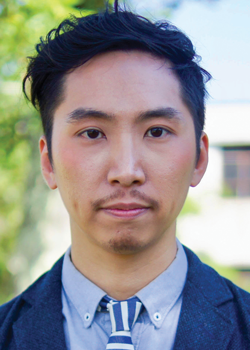
In the high school where I work, with its student body of more than 2,000 kids, you can count the Asian students on two, maybe three, hands. As the resident Asian teacher, I should know: Virtually all of those Asian students are active members of my after-school Film Analysis Club.
I highlight this fact to raise two points. The first is that identity matters. I have no doubt that my race plays an important role in the demographic makeup of this club. In an environment with few educators of color, especially those of Asian descent, my Asian students are hungry for adult role models who look like them.
My second point concerns the diversity of the U.S. Asian population. For example, a freshman in the film club, Minh, is the son of war refugees who escaped by boat from Vietnam. In contrast are the Yang siblings, first-generation Chinese Americans whose parents emigrated as scientists in the 1980s. The parents of another student, Jin, are also from mainland China, but they resettled as restaurant workers, not professionals. Unlike the Yangs, Jin speaks Fujianese, not Mandarin. Finally, Jonah, a biracial student with an Asian father, doesn’t like to talk about his heritage at all and speaks only English. These children have complex identities that intersect in various ways — by socioeconomic class, national origin, immigration stories, and the lived impact of colonial and imperial legacy — so it takes an awareness of intersectionality to capture their full humanity.
I often wonder where I fit in this tapestry of Asian representation, too. I am a first-generation Japanese American. My parents emigrated to the suburbs of New Jersey during Japan’s bubble economy era. As professionals, they afforded me the privileges of dual citizenship, frequent trips to Tokyo, and an education that included private tutoring and a bilingual Saturday school to help me retain my linguistic heritage.
Yet, despite the multiple ways in which my students and I differ and intersect in our identities, people who visit my Film Analysis Club tend to see only a classroom full of Asian kids with an Asian teacher. They miss our rich diversity of history, culture, language, and diaspora. Even when educators make it a priority to put discussions about race at the center of their work, they often neglect to think about such dynamics. For instance, I’ve witnessed teachers and school leaders emphasize unity among supposedly “similar” students, while ignoring the nuances of their identities. That makes for shortsighted policy and practice.
For instance, in my high school, English language learners account for one-third of the student body. The majority are from Latin American countries, but district policy tends to homogenize them all under the “Hispanic/Latino” umbrella, despite measurable gaps in the students’ access to power and privilege. A typical English as a Second language class represents an array of complex identities, ranging from undocumented Chicanos, to climate refugees with U.S. citizenship from Puerto Rico, to white-identifying Colombians who speak fluent Spanish, to darker-skinned Indigenous K’iche who emigrated from Guatemala but who don’t speak Spanish.
Yet, we tend to generalize the students’ lived experiences solely along racial lines. For example, Massachusetts’ state policy on standardized testing treats all language acquisition experiences the same, despite the wide range of political and linguistic obstacles that our English learners (ELs) face. This disadvantages my Indigenous K’iche students, many of whom have limited exposure to English (and, at times, to formal education) in comparison to other EL populations.
Even well-intentioned diversity curricula and culturally responsive pedagogy tend to use a U.S.-centric racial discourse that seldom transcends the Black-white binary. For example, the cultural heritage of many Black Cape Verdeans living in the United States does not entirely overlap with the legacy of slavery that affects most African Americans. In my school community, many Cape Verdeans are recent immigrants or descendants of whaling ship migrants in the 19th century. Thus, my student Maria, a proud first-generation Cape Verdean American, might not share the same understanding of “blackness” that most U.S. history textbooks describe. It’s clear that approaching our students through race alone can render other core identity experiences less valid or even invisible.
From an instructional point of view, an intersectional lens can help students understand and navigate their world, which is one of the reasons I lean on it as pedagogy. When we push our students to reflect on their identities, we encourage them to examine their lives vis-à-vis the various social and cultural frameworks and broader systems of the world. Similar to the intellectual work conducted in psychology and sociology, thinking with an intersectional framework is cognitively demanding and builds skills such as cultural competence, self-awareness, and critical reasoning.
Consider the cognitive unpacking I use to talk about my identity to students. I always begin with the premise that, like many people, I stand at the crossroads of power, privilege, and oppression. My East Asian heritage, for example, makes me perpetually “foreign” to many in white America, yet being light-skinned insulates me from racial profiling by the police. I’m openly gay but generally fear holding my partner’s hand in public. However, being able-bodied and cisgender means that I seldom worry whether my doctor can provide me with adequate health care.
As these examples reveal, an intersectional lens shows my students the nuanced ways in which identity and power are connected, helping them become more aware of the implications for their own lives. Bringing to light the interplay of our identities engages them in higher-order thinking that feels relevant and teaches them to be authentic. Above all, an intersectional lens fosters quality social and emotional learning experiences. When students are encouraged to acknowledge the nuances within their identities, especially in relation to other people, they often become more willing to recognize our shared humanity.
When educators lean on trust and honesty to forge spaces that explore all identities, especially those hidden or less visible to others, they foster empathetic communities of allyship and liberation. When I first came out as gay to students, it opened up channels to freely explore issues of gender with them. As those who have historically lived outside the margins of gendered expectations, queer folk (and queerness) can impart to students novel ways of reconciling their gender with its stereotypes. Whether straight or not, students can find this insight liberating.
In this way, intersectionality helps me foster nuanced dialogue that challenges dominant narratives of oppression. In embracing the authenticity and vulnerability we share across our different identities, my students and I find empathy in our common struggle and commit to improving the world in solidarity.
Even equity-conscious spaces can be afflicted with myopia about identity. Each of us is multifaceted — not just in how we identify ourselves but in how we relate to our students, our schools, and the broader institutions of which we are a part. Let’s make sure our teaching practices reflect that.
ABOUT THE AUTHOR

Takeru Nagayoshi
TAKERU “TK” NAGAYOSHI , the 2020 Massachusetts Teacher of the Year, teaches AP English, writing, and research at New Bedford High School, New Bedford, MA.