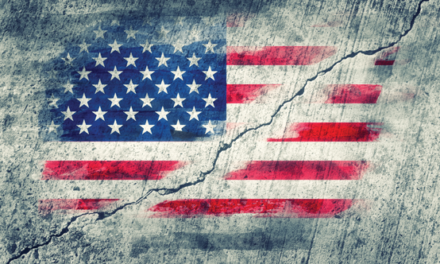
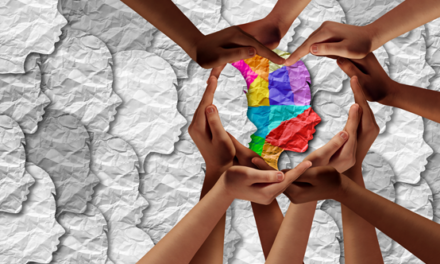
As a nation, we shouldn’t have to wait until we are under siege to think and act collectively.
Since the earliest days of the republic, Americans have fought incessantly over how and what their schools should teach their children. In the last 30 years alone, we’ve had the reading wars (whole language vs. phonics), angry protests over the Common Core, and countless small-scale conflicts over everything from teaching the theory of evolution to sex education, bilingual instruction, and the status of career and technical training. Today, even as educators have begun to emerge from the COVID pandemic, hostilities continue to simmer.
The conflict du jour has to do with teaching students about systemic racism. Conservative news outlets and a variety of Republican politicians have for months waged a full-throttled attack on both the 1619 Project and critical race theory, accusing teachers unions, liberal educators, and the U.S. Department of Education (DOE) of “weaponizing diversity” and promoting “leftist ideologies.” As of this August, at least 26 states have taken steps to restrict the teaching of critical race theory and other issues deemed controversial. On the surface, this outrage, like so many conflicts in education, may seem like more noise than signal (see Robert Kim’s column in this issue), but the impact is very real for educators. When emotions run high in a school system, things can turn ugly really quickly.
I’ve recently been reminded, however, that it doesn’t always have to be that way. For the last few months, I’ve had a unique window into how we can turn something highly political and deeply disturbing into a positive and teachable lesson that can actually unite, not divide, a community.
Remembering 9/11
Working with the organization that created and now oversees the 9/11 National Day of Service and Remembrance (www.911day.org) has been a remarkable experience for someone who is well versed in, and perhaps a bit jaded by, conflicts over K-12 education. This small organization has managed to transform the legacy of 9/11 — which for so many of us was a moment of collective pain, horror, and grief — into a shared experience that is instead focused on kindness, compassion, and unity.
To begin with, you need to know a few things: This year will mark the 20th anniversary of the Sept. 11 attacks. For anyone who lived through that fateful day, it’s almost impossible to believe that 20 years have passed. Even more amazing is that there are now more than 100 million Americans young enough to have no living knowledge of 9/11.
In 2009, 9/11 was officially named a National Day of Service and Remembrance after a sustained effort made by many members of the 9/11 community. 9/11 Day, as it has been known since 2002, is one of only two federally registered national days of service; Martin Luther King Day (observed on the third Monday in January) is the other. The 9/11 community expressly wanted to encourage acts of service on the anniversary each year to honor both the memory of those killed and injured and the spirit of selfless unity that arose in the aftermath.
The idea that you could get past the anger, loss, and utter destruction caused by the 9/11 attacks and make the day about something else entirely must have initially seemed impossible, maybe even ridiculous, but the cofounders of this day of service were able to flip the narrative and turn memories of unspeakable grief into a day focused on kindness, good deeds, and service.
Finding a collective focus
To fully understand the significance of this accomplishment, it’s important to remember that, like the 1941 attack on Pearl Harbor, the 9/11 attacks were a complete shock to the American psyche. Throughout the day and for many weeks after, the graphic footage of the event was a constant presence on television screens across the world. Every person over the age of 25 has at least one vivid memory of that day, some indelible image that is implanted in their mind’s eye. And 20 years later, we are still feeling the impact of 9/11 and the actions taken in its aftermath.
That kind of shared memory, laden with strong emotion, could easily become a locus for partisan drama. But the country’s recollections of the tragedy have inspired so many schools and communities to participate in 9/11 Day that it is now the nation’s largest annual day of service. So how did this come together without any major conflict or controversy? As I observed the organization’s work, I found that some specific beliefs and practices have kept it focused on its goals:
Find common ground, no matter how elusive it may seem. After 9/11, the range of emotions ran the gamut. Along with the fear, anger, sorrow, and disbelief came a sense of profound helplessness. The cofounders of 9/11 Day used that feeling of helplessness as a catalyst to encourage Americans to “take back the day” from the terrorists by focusing on the bravery, compassion, and selflessness that saved so many people in the immediate aftermath of the attacks.
Take the focus off yourself. Nothing promotes empathy more than walking in another person’s shoes for a while. Engaging in service activities helps us better understand the needs of others. After the 9/11 attacks, many Americans felt compelled to do something, anything, to support those who were suffering. During difficult times, we actually gain a greater sense of control when we put the needs of others above our own and promote the greater good.
Acknowledge your anger, but don’t let it control your actions. The anger and resentment that so many Americans felt after the 9/11 attacks were understandable but had to the potential to make a bad situation even worse. (Let’s not forget what happened in Washington, D.C., on Jan. 6 of this year.) Channeling that anger into something positive, like service activities to support victims, first responders, and individuals or groups affected by 9/11 helped calm a nation that felt helpless.
Engage in productive and positive unified action. Working together on a project or activity that enriches the fabric of a community or any aspect of our fragile democracy can help build both understanding and unity. For many members of the 9/11 community, the early days of the COVID pandemic, with its celebrations of health care workers and community food distribution efforts, felt strangely familiar because, when faced with an overwhelming crisis, Americans banded together to help one another cope and survive.
As a nation, we shouldn’t have to wait until we are under siege to think and act collectively. And while identifying a real or presumed common foe may be the easiest way to unify people, it doesn’t have to be the only way. The 9/11 Day of Service and Remembrance was created on the belief that individuals can come together and find common cause in something greater and more important than themselves. That belief, which was once at the very foundation of public education, is hard to find amid the political grandstanding that has become so familiar in education. The good news is that unity and selflessness will be front and center on Sept. 11, 2021, as schools and communities across the country honor the day with acts of kindness and service. I would argue that’s exactly the kind of lesson we all need to learn.
ABOUT THE AUTHOR

Maria Ferguson
Maria Ferguson is an education policy researcher, thought leader, and consultant based in Washington, DC.