
This month, I’m interviewing Luvelle Brown, the award-winning superintendent in Ithaca, New York. Last year, AASA: The School Superintendent’s Association named him as the AASA Effie Jones Humanitarian of the Year. He joins us to share his insights on leadership, equity, and transforming instruction.
Q: What was the moment that you knew you wanted to be an educator?
A: I remember the day, the moment, the smell of the room, the space I was in, the people in that space with me. I was 10 years old and in the 5th grade. I had just been selected to be in the gifted and talented program. I had moved from the classroom I had been in with all of my friends. And in that new space, no one looked like me. No one came from the same neighborhood. I had a different teacher. I felt different, and I felt excluded.
Most importantly, no one was asking or looking for my friends. From my perspective, my cousins and my brother were much smarter and more talented, so my question at the time was, “Why isn’t the teacher asking where they are?” From that moment on, I knew I was going to be the teacher who was going to ask where all these young people are who look like me.
Q: Last year, you were awarded the Effie Jones Humanitarian Award, which is an honor for AASA members who have “advanced the status of women and/or minorities in education.” That identifies you as one of the top leaders in the nation on an important facet of education. What are the main initiatives that led your colleagues around the nation to identify you as the top humanitarian in education?
A: My journey has been about equity and excellence. I grew up in a college town just outside of Charlottesville, Virginia. I’m now living in Ithaca, New York, another great college town. In towns like Charlottesville and Ithaca, school districts expect the highest level of academic excellence — and they say words like equity and inclusion and diversity. My job as a leader has been to make that equity and inclusion and diversity come alive in schools and help folks mitigate their own biases, whether implicit or explicit.
You cannot have excellence without equity, and you cannot have equity without excellence. I want young people who have been traditionally marginalized in our schools to have access and opportunities to be the best. We can continue to advance academic rigor and excellence for everybody. And when everyone in the community, regardless of their cultural backgrounds, has that opportunity to enjoy and to achieve, they will achieve. Some folks’ assumptions and beliefs about this have been challenged, but once you see it, you can’t unsee it. All of our young people are geniuses, and they deserve to have a joyous experience. We the adults have built the systems that have put in place barriers to elevating that genius.
Q: What programs are you putting in to reach every last child in your community?
A: First, I encouraged leaders from marginalized backgrounds to assume leadership positions. I’m one of the few superintendents of color in our state. And I’ve always been one of the few leaders of color working as a teacher or principal. My career has been committed to supporting women and people of color who aspire to top leadership roles. I’m proud that in a small school district like Ithaca, close to a dozen folks from my team have become superintendents, and many of those are women and people of color.
A big part of this has been to identify young people, colleagues, and educators in our school district and elsewhere, tap them on their shoulders, and encourage and mentor them. I’ve started scholarship programs so young people who are seeking to be educators have funds to go to college and to earn those degrees and certifications. We enhanced and revamped our hiring process to make sure we elevated our commitment to diversity. Everyone who sits on an interview committee must go through confirmation bias and implicit bias training. We’ve targeted our efforts around hiring to make sure we’re attracting a diverse pool of candidates.
Second, I focused on shifting our instructional model to be more inclusive and representative of the great diversity that exists in our schools. Many school districts do project-based learning. We have taken projects to a different level and created projects with young people that solve problems that are relevant to their local communities. Our curriculum model and our teachers have been trained on it. Our teachers are building out this curriculum each and every day. We’ve been very specific around our grouping practices here, and we have done much to interrupt and disrupt tracking, particularly in mathematics. Now we’re seeing our achievement skyrocket, and our teachers love it.
Q: If you were a new superintendent or a new principal, just getting into this innovative curriculum work, where would you start?
A: Start on yourself first with your journaling, your readings, your reflections, and your therapy. Understand who you are, where you come from, how you show up in what you’re engineering, the conversations you’re conducting, and the people you hang out with. That will lead to you making decisions each and every day that support your goals.
Everyone has those moments when they decide what kind of educator they’re going to be. Are you going to be the kind of leader who just tinkers around the edges? Are you just going to host optional and voluntary book studies and stop there? Are you going to just work on statements when egregious things happen in our communities or on TV? Are you going to just work on changing the names of holidays and removing statues? That’s good work, but authentic work is a different journey and is much harder. It’s about changing the instructional model, the pedagogy, the curriculum, and the policies that have been traditionally marginalizing and oppressive. Most school leaders don’t get around to changing the policy because the work leading up to the policy change is so hard.
If you are going to be that loving leader who truly commits to loving every one of the young people we serve, this is your life’s work. You commit. You don’t miss an opportunity to disrupt an oppressive act or policy or to step in and do something when you see that there are inequities. You do something actively. You don’t embrace neutrality. You don’t push it off to someone else. You don’t wait until next year. You’re actively doing something at all times.
Q: This is difficult work, and you’ve led through tough times like COVID. How did you care for yourself?
A: I found joy. I found joy at the perfect time in my life, and I truly know what it’s like to be joyful. That’s why I always tell our educators to cultivate joy and genius for all of your young people. It took me 40-plus years to find joy, and now that I found it, it feels and looks and sounds different.
I found joy by finding time with my family and then finding an affinity group. Young people come to us and ask for opportunities to be with young people like them to engage in conversations, to support one another, and to learn with one another. That’s important. Throughout the pandemic, my affinity group supported one another in deep ways. We found laughter, and we found love for the work.
I found joy in the commitment to the work because I now know what journey I’m on, and I see the power of that journey. I see young people who did not have access before achieving at the highest levels. There is the resistance, the negativity, the pushback — they matter. But I ignore the noise that doesn’t matter because I have joy. I want young people to know joy early on. I don’t want them to wait 40 and 50 years to find that joy because once you have it, it changes everything.
Q: The other big issue that we’re dealing with in education is a lack of educators in the pipeline, and a number of educators choosing to leave the field. What should we be doing to build a robust and thriving and diverse pipeline of educators?
A: We’re losing people and we’re not attracting people because the work is hard and we don’t pay enough. Any one of the educators I interact with daily, whether it’s a teacher or superintendent, can do something easier for more money. Every time I hear people talk about teacher shortages as this new issue we’re facing, I cringe a little bit because from my perspective, it’s always been here.
We need an educated workforce that is representative of the population we’re serving. We need to attract folks from different backgrounds in ways we have not before and make sure they stay. The young people or adults who come into our profession from those marginalized backgrounds tend to feel very uncomfortable because of the colleagues they’re with and surrounded by. It’s been hard to be one of the few Black superintendents in our state and in the country.
The work is always going to be hard. But we can be more welcoming and more inclusive. Every state needs to be funding us differently and better. If you appreciate us, then appreciate us with the funding. It may not be popular, but it can help.
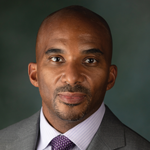 Luvelle Brown has held positions as a teacher, assistant principal, principal, school chief information officer, and superintendent of schools. Currently, he is serving as the superintendent of the Ithaca City School District (ICSD) in Ithaca, New York. Brown has received various awards and recognitions. He was the 2017 New York State Superintendent of the Year and has been listed by TrustED as one of the nation’s top educators and thought leaders. In 2022, he received the prestigious Dr. Effie H. Jones Humanitarian Award. He has also been recognized by the National School Boards Association, the Center for Digital Education, and the U.S. Department of Education. Additionally, he has served on the New York State Council of School Superintendents (NYSCOSS) Executive Committee, the School Superintendents Association (AASA) Digital Consortium, The Center for Digital Education Advisory Council, and the Consortium for School Networking’s Empowered Superintendent Advisory Panel.
This article appears in the April 2024 issue of Kappan, Vol. 105, No. 7, pp. 58-59.

ABOUT THE AUTHOR

James F. Lane
James F. Lane is CEO of PDK International.