The first time I was accused of corrupting young minds was in October of my first year of teaching. After reading several Halloween-themed picture books, students could work on puzzles in the classroom puzzle center. One of these was a word search, the source of my condemnation. Nestled among words like “pumpkin” and “candy” was the word “witches.” The next day, I received a scathing letter from a parent accusing me of promoting witchcraft and Satanism among my students. It was stunning.
Now, almost 30 years later, I stand accused by a group of parents and “concerned citizens” who have voiced their concerns and accusations at a town meeting, as well as to members of my school’s board of education. They claim that I am corrupting my students’ minds with books that feature characters who are gay and transgender and forcing conversations about gender and sexuality on my students. Along with these accusations comes a strongly presented supposition that I might even be encouraging kids to become transgender.
That’s the accusation. Now for the facts.
What we read
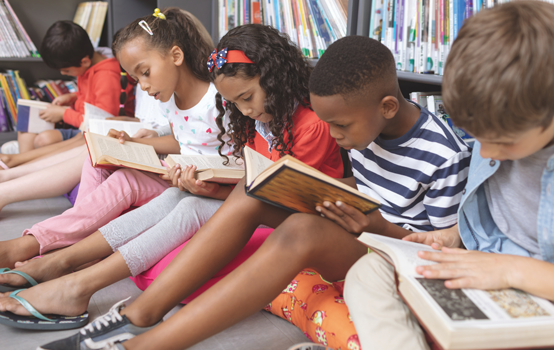
I do, in fact, have a large selection of books in my 7th-grade classroom. Some of these have characters who identify as LGBTQ+. I also have books featuring characters of different races, nationalities, religions, and abilities. I have books about people who live in the country and books about people who live in cities. I have books about people in traditional family units and those in nontraditional families. I have, in other words, books about people. All people in various situations and circumstances who are trying to navigate life as best they’re able.
I don’t, in fact, force any child to read any of the books in my classroom with three exceptions. We read three class novels a year: Stargirl, a realistic fiction book by Jerry Spinelli published in 2000; Fever 1793, a historical fiction book by Laurie Halse Anderson, also published in 2000; and The Giver, a dystopian fiction book by Lois Lowry published in 1993. I use these books to give students a common literature experience and to address various teaching standards. I believe there is power in shared book experiences, and students refer back to these shared experiences as they read books of their choosing in small-group book clubs, in partnerships, or alone.
With almost 2,500 cataloged books in my classroom, there are plenty to choose from. All books are labeled with genre codes (realistic, historical fiction, fantasy, etc.). I also use a rainbow sticker to designate books that feature an LGBTQ+ character and a yellow dot to indicate mature theme/language. If a student does not want to read a book from these categories, they don’t have to.
When children read books about people like them, they feel seen and heard. They feel like they belong.
As for conversations, yes, we do have them. Many of them. An entire section of our standards for teaching centers on speaking and listening. Discussions are a major part of deep reading because they allow us to dig into a text and understand it. Sometimes discussions arise when students say things that are unkind or harmful or that make others feel marginalized. Conversations about gender identification or sexuality are not initiated or forced in my classroom, but sometimes students raise these topics themselves. When that happens, we talk about the importance of respect and about everyone’s right to feel safe in their classroom. And finally, no one, to my knowledge, has decided that they are transgender or gay because they have been in my class, although a few of my students have come out as transgender or gay while in middle school.
Why we read diverse books
I make a variety of books available in my classroom because I recognize that books can help us understand people who don’t share our religion, race, sexual orientation, or socioeconomic status. Diverse books allow us to see and value that which makes us different, unique, and special. According to the Children’s Defense Fund (2020), there are more than 73 million children in America, almost half of whom are children of color, one in six of whom are food insecure, and 7-9% of whom identify as LGBTQ+. Every child deserves to see themselves represented in the books they read, and every child needs to read about people who aren’t like them. When children read books about people like them, they feel seen and heard. They feel like they belong. Conversely, when we read books about people whose experience differs from our own, we understand them better. They are no longer “other.” And when there is no other, we are all free to learn and grow together.
I’m a white woman who recognizes her own inability to adequately speak to every child’s experience. I rely on folks like Jason Reynolds, a Black author currently serving his third consecutive term as National Ambassador for Young People’s Literature; Joy Hargo, of the Muscogee Nation, and a former U.S. poet laureate; and Matt de la Pena, Gene Luen Yang, and Reta Sepetys, all authors of various backgrounds and ancestries. They help me make available a variety of experiences for the variety of students in my classroom. Despite this, or likely because of this, there are people in my town who are having trouble sleeping at night for fear I’m corrupting their children with the choices in reading material in my classroom.
At the end of the day, I’m not worried about their sleep. I’m worried about the sleep of the children who feel alone, threatened, and unsafe. Unless we share experiences and truly empathize with others, people can become dehumanized.
Practices like book banning and censorship promote insular thinking and enable us to cast aside those who look or feel differently than the majority — or the perceived majority. Once we have decided that there are people we need to keep at arm’s length and stay away from, it’s easy to dismiss and marginalize them. It is this very marginalization that we must fear. It is what keeps me up at night.
Reference
Children’s Defense Fund. (2020). The state of America’s children. Author.
This article appears in the November 2022 issue of Kappan, Vol. 104, No. 3, pp. 66-67.

ABOUT THE AUTHOR

Mary Archambault
Mary Archambault is a 7th-grade language arts teacher and reading specialist in northeastern Connecticut.