I am in my seventh year of teaching and am a founding elementary teacher at Mission Achievement and Success, a Title 1 charter school located in one of the most high-needs areas of New Mexico. According to U.S. News and World Report, “Less than a third of all New Mexico students are proficient in reading and only about one-fifth are proficient in math” (Contreras, 2019). In Albuquerque, where I work, some schools have single-digit proficiency numbers.
When I look around my classroom, I see mostly Latinx students, many of whom live in financially strained circumstances. As a proud Chicana woman, I can also see myself, my father, and even my grandmother sitting in one of those seats.
I recently participated in a community engagement meeting hosted by my state’s education department. I sat with teachers from other high-needs, high-minority schools. One white teacher made a comment about how our students cannot be expected to learn to the same level as students in more affluent and less diverse areas of our city. This comment hurt me deeply. I immediately thought of her students sitting in a classroom where their main champion didn’t fully believe they were capable of greatness. It was a harsh reminder that teachers who struggle to identify with their students can also struggle to believe in their students’ ability to succeed.
As a native New Mexican, I always struggled with school projects assigned by well-meaning teachers who asked me “where my family came from.” I struggled because we were always here. People who expect me to identify my country of origin as Spain or Mexico simply don’t understand my heritage.
I have seen my own family become successful in the face of adversity, so I know that my students’ background is not a deficit. Like many other People of Color, my parents faced hardships and had to break down many barriers for my sister and me. Generations of my family members have made difficult decisions to make life a little easier. For instance, my grandparents and parents chose not to pass on their Spanish language to my sister and me because, when they were growing up, they were punished for speaking Spanish in school. They grew up afraid to be themselves; they felt forced to hide their heritage.
My dad relocated to Albuquerque from Chihuahuita, an area of Roswell, New Mexico, for more opportunity. He describes where he came from as poor in money but rich in family. He eventually became a college graduate. Most of his friends didn’t finish school because they died or went to jail. His parents are the reason he was successful, he said, because they believed in him when his teachers did not. I imagine his teachers resembled the lady I met during my community engagement meeting — teachers who don’t think their students are capable of much.
The students at my school face a lot of the same adversity my dad did. We have students whose primary language isn’t English. We have students who have grown up not having enough to meet their basic needs. Yet, my school and my students are continually described as “beating the odds” for academic achievement. In fact, Mission Achievement and Success Charter School was one of only 13% of New Mexico schools that earned an “A” rating in the 2017-18 school year.
My students have made even more meaningful strides that tests can’t measure. I have heard brave students’ first declarations in the English language. I have seen the eyes of my young students shine with joy. I have heard them proclaim, “I am going to college!”
My students differ from my dad in one major way. They know that their teacher believes in them. Many of my students form an instant bond with me as a Teacher of Color. They have an inherent trust in me. I’m their role model. I embody the potential they feel inside themselves, and I challenge the negative narrative they have heard and believed about themselves. Maybe they can sense that my family has also struggled with hardship. Maybe they can sense that we’re more alike than different.
After having proved that my majority-minority students can achieve at unprecedented levels, I now have a fire in me to advocate for all Students of Color. This enables me to stand in classrooms and see students “at potential” rather than “at risk.” I know my students can and will achieve at the same levels as other students. Their struggle behind them pushes them to achieve at even higher levels.
I support diversifying the educator workforce because research shows that Teachers of Color tend to have a positive impact on Students of Color. This is reflected in my own experience. I have seen firsthand that when students identify with their teachers, they connect at higher levels and achieve at higher levels. More important, I have seen that when teachers identify with their students, they tend to have a greater belief in their students’ potential and ability. As the population of Students of Color continues to increase, we must take action to increase the diversity of educators. Our students’ future — and our nation’s future — depends on it.
Reference
Contreras, R. (2019, July 26). Less than a third of New Mexico students test proficient. U.S. News and World Report.
ABOUT THE AUTHOR

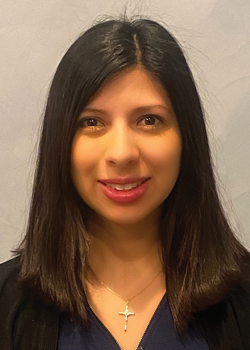
Julia Burrola-Ortiz
JULIA BURROLA-ORTIZ is a 2nd-grade teacher at Albuquerque Collegiate Charter School in Albuquerque, NM.