In this week’s newsletter: Equity grading gets an “F” in San Francisco — and increased scrutiny in other places. Education reporters say that May was their first chance to dive into deeper coverage. Critics slam the speaker lineup, programming, and awards results at the Education Writers Association conference. Three education editor jobs are open — at the same time. Don’t mess with Sacramento Bee education reporter Jennah Pendleton!
AN ‘F’ FOR EQUITY GRADING
The big education story of the week
The big education story of the week is San Francisco’s sudden withdrawal of a proposed “equity” grading pilot program (San Francisco Chronicle, SF Standard, Fox News), combined with recent scrutiny about the approach in other places (Chalkbeat Chicago, Wall Street Journal, Real Clear Education, EdWeek).
Under the pilot SFUSD plan, about 10 percent of the district’s high school teachers would grade students based on learning rather than attendance, participation, or other factors.
The proposed changes were subject to widespread scorn online: “It’s hard to see the difference between this policy and what you’d get if a bunch of 10 year olds locked the teachers in a closet and rewrote the rules,” quipped The Atlantic’s Derek Thompson.
But at least one well-known teacher doesn’t see what all the fuss is about: “The vast majority of students who aren’t going to do their work aren’t going to do it” no matter what system you use, writes Sacramento high school teacher Larry Ferlazzo. “Non-zero grading provides incentive to few students on the bubble.”
It’s not entirely clear how widespread these practices have become. Equally unclear is how effective they are at helping kids learn skills and finish school. But the approach is facing scrutiny and is an emerging school politics lightning rod.
Other big education stories of the week include ICE’s apprehension of a 20-year-old New York City high school student, the seeming lack of progress on ECCA, and the interminable back-and-forth between Harvard and the Trump administration. Follow The Grade for daily education news and commentary.

KEEPING STUDENTS SAFE FROM SCHOOL STAFF
The best education journalism of the week
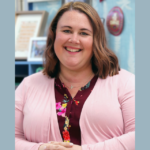
The best education story of the week is the Sacramento Bee’s three-part series How reports of Sacramento High coach partying with kids led to teacher’s firing by Jennah Pendleton.
According to the investigative series, Sacramento High School withheld records on allegations that a football coach partied with students, but the Bee was able to obtain them. You can also read a history of the probe into student parties.
The story signals a welcome return to robust schools coverage from the Bee in the aftermath of Sawsan Morrar’s 2023 departure. It’s also a great accountability story and features an important — and under-covered — education topic: inappropriate behavior by adult educators around their students.
Safety from school staff should be covered as thoroughly as any other threat to students’ well-being.
Other education coverage we liked this week includes an interview with Rick Singer, the mastermind behind the Varsity Blues college admissions scandal (Chronicle of Higher Education), a year-end profile of Colorado’s teacher of the year (Colorado Public Radio), a look at open enrollment in the Twin Cities (Axios Twin Cities), the perils students experience going to and from school in Los Angeles (Boyle Heights Beat), a local story about ICE agents arresting a student that won credit in the New York Times (ChalkbeatNY), and a close look at the deep divisions among students at a diverse Cambridge, Mass., high school (Harvard Crimson).
‘ROOM TO BREATHE’ – THE MONTH IN REVIEW
Our latest columns and commentary
In the latest edition of Covering Schools During Trump 2, WBEZ Chicago’s Kate Grossman, K12 Dive’s Kara Arundel, and Chalkbeat’s Kalyn Belsha seemed to agree that something of a slowdown in Trump education proposals in May gave them time to turn to feature stories and investigations.
“I actually felt like May was a chance to breathe,” said Arundel, who took the opportunity to write stories about Head Start’s anniversary and the economic costs of student absenteeism.
During the half-hour discussion, the trio of reporters highlighted successful stories that they or their colleagues had written — as well as admirable stories from other outlets. They discussed which education stories were being missed and flagged stories that will likely be big in June.
Arundel said she was going to look into the idea of school deregulation that’s bubbling up from the Trump administration. Belsha suggested that the Trump literacy initiative deserved closer scrutiny. Grossman highlighted the impact of lost COVID funding on districts like Chicago that have staffed up to meet student needs, but now face budget deficits. I complained a lot about the over-focus on Harvard. Replay. Transcript. Clips: Arundel, Grossman, Belsha, Russo
This week we also published a Denise-Marie Ordway piece on how to cover private-school choice, urging reporters to, among other things, explain how families pick schools — and remind readers that private school choice is actually nothing new. As you may recall, Ordway penned a powerful essay re-examining her Pulitzer-recognized investigation into a an HBCU hazing death five years ago. It’s really quite something.

PEOPLE, JOBS, & EVENTS
Who’s going where and what’s happening
Above: In case you didn’t get the memo, voters moved towards Trump in nearly every part of the nation. Support for school choice among teachers is much higher than it may seem. Many educators voted for Trump!
📰 Conference Controversy: I was not particularly outraged that EWA featured a clearly labeled NEA-sponsored session titled When the People Choose, Vouchers Lose and produced a left-coded program and speaker lineup. But maybe I should have been, given the moment we’re in. “The nation’s largest teachers union just paid to host a session attacking school choice at an ‘education journalism’ conference,” blared right-wing influencer Corey DeAngelis. Fordham’s Michael Petrilli noted, “I can only spot 4 people on the program who might be considered right of center.” The award honorees also show a clear ideological tilt, according to AEI’s Rick Hess. For myself, I’ve long held that the EWA awards process is broken, and I was surprised not to see anything about David Zweig’s blockbuster COVID book — or school cellphone bans — on the conference agenda. There’s strangely little explicit programming around Trump education efforts, given four months of wall-to-wall media coverage. Still, congrats to all the 2024 Education Writers Association Awards Winners including friends and favorites like Houston Landing’s Asher Lehrer-Small and the Boston Globe’s Mandy McLaren. Read more about the conference at #EWA25.
📰 Innovations and emerging approaches: Chalkbeat is among a handful of outlets using AI to track school board meetings and suggest story ideas. It’s getting increasingly hard to deny that we live in a YouTube world when the New York Times has a reporter covering nontraditional and emerging media. Speaking of which, there are lots of traditional reporters who’ve left newsrooms for SubStack and even YouTube — but so far none that I know of from the education beat. Former education reporters Anya Kamenetz and Jenny Abamu are the closest I can think of. Anyone else? Twitter was back to its old self this week, featuring debates over NPR, EdWeek, and Chalkbeat stories, the EWA conference, EdChoice polling results — and of course the uproar over San Francisco’s equity grading pilot program. Today I learned about Montgomery Perspective, which is covering proposed boundary changes.
📰 Appearances: Over the weekend, the Washington Post’s Laura Meckler appeared in an NPR story on how the Trump administration’s battle with universities will play out in the long term. NPR ran a candid segment about the backlash against Black Lives Matter in the five years since George Floyd’s death. WBUR featured a segment about the push to eliminate honors programs in schools. Veteran New York Times reporter Dana Goldstein will chat with AEI’s Rick Hess on Friday, June 6 at 3PM Eastern about “what’s next for education reform.”Goldstein recently praised Mike Petrilli’s response to her essay on the lamentable state of school reform.
📰 New Jobs & Projects: There are 3 education editor jobs open all at the same time, including a WBEZ Chicago public radio opening to replace Kate Grossman, who’s moving up to Assistant Managing Editor overseeing education, crime, immigration, and other topics. EdSource is looking for an executive editor. The Baltimore Banner is coming to Montgomery County, Md., and will feature coverage of schools.
📰 People: New York Magazine profiled Katherine “Katie” Kingsbury, the former education reporter who now heads a much-expanded New York Times opinion section that’s increasingly publishing work that news would otherwise cover. Columbia Journalism School professor Samuel Freedman received much-deserved New York Times attention for 35 years of teaching and 95 student books published — including mine.
THE KICKER
We saved the best for last.

Chalkbeat’s Eric Gorski in a recent Nieman article about the network’s experiments with new ways of reporting: Local newsrooms are using AI to listen in on public meetings.
That’s all, folks. Thanks for reading!
Reply to this email to send us questions, comments or tips. Know someone else who should be reading Best of the Week? Send them this link to sign up.
Using Feedly or FlipBoard or any other kind of news reader? You can subscribe to The Grade’s “feed” by plugging in this web address: http://www.kappanonline.org/category/the-grade/feed/.
Read more about The Grade here. You can read all the back issues of The Grade’s newsletter, Best of the Week, here.