Kuleana is a Hawaiian term that brings together the concepts of rights, privilege, concern, and responsibility. This idea best expresses why I’ve chosen the educator’s path.
I am a Native Hawaiian woman raised on the rural island of Kauaʻi in Hawaiʻi. I come from a small community on our North Shore and an even smaller Native Hawaiian community that persists despite a luxury real-estate boom that is pricing most locals out of the area. Families here continue to practice subsistence farming, fishing, and hunting, maintaining long-standing ancestral relationships with the generous reefs and lush green uplands of our coastline. I was brought up in what is often referred to as a “country” lifestyle, living off the land and ocean, and it has been my greatest privilege to be rooted in these practices and the Hawaiian culture that informs them.
Though neither of my parents have more than a high school diploma, they instilled in me the importance of education. Along the string of small towns that dot Kaua‘i’s North Shore, there are only two small public elementary schools. After sixth grade, children must either commute to a public middle and high school in town (30-60 minutes away by car without traffic), attend one of a handful of private schools scattered across the island, or move to the main Hawaiian island of O‘ahu. My parents chose the last option. At the age of 11, I boarded a plane for an elite private boarding school in Honolulu.
Learning for my community
Although I went away to school, my worldview, values, and mission in life stem directly from the years spent learning from my family. My mother was a source of constant love and support so I could attain what no one else in my family had: a college degree. My father gave me a boundless love of the ʻāina — our natural environment. Together with him and my three older brothers, I spent countless hours cultivating and stewarding the land through traditional Hawaiian practices like fishing, hunting, and farming.
My father and brothers, whom I admire and consider among the most brilliant people I know, were a constant reminder that I had undertaken my educational journey so I could eventually return home to take care of our ʻohana (family) and community. All my academic achievements have been the means to that end. Sadly, those who choose to pursue a university degree away from home rarely return to the limited professional opportunities in Kaua‘i’s tourism-based economy.
After high school, I obtained a bachelor’s degree in computer science and math from the University of Portland, a master’s in educational administration from the University of Hawai‘i, and a Master of Arts and a doctorate in higher education and organizational change from the University of California, Los Angeles. Along this journey, I often asked myself, “Would people from my community thrive in the educational environments that I’ve been exposed to?” Sadly, my answer was often an unmistakable no. Looking at my parents and brothers, my cousins, aunts, uncles, and our close-knit rural community, I understand why so few choose to pursue higher education. There is an enormous chasm between the everyday cultural reality of our home and the one in most formal educational settings.
A model of education for Kaua‘i
My doctoral dissertation explored the process of developing higher education models to better serve rural and Indigenous communities. This study brought my professional mission into focus. My dream is to build ‘āina-based educational institutions in my community, so that future generations of children won’t have to experience the deep psychological disconnect that I did when pursuing their intellectual curiosities and passions. These institutions will also give young people on Kaua‘i role models who are academically engaged, professionally successful, and actively stewarding the home they love.
What is ‘āina-based education? It’s an approach to learning deeply rooted in the reciprocal relationship between people and land. The word ʻāina literally means “that which feeds” — not just physically, but spiritually, emotionally, and intellectually. In ‘āina-based learning, students engage in an extended process of inquiry in response to observations, complex questions, or challenges directly connected to the natural resources and communities of Hawaiʻi.
My goal is to educate the students of Kaua‘i’s North Shore in a way that connects them to their geographical home and affirms the Hawaiian culture that contains so much knowledge and wisdom about this area. This does not mean education for Native Hawaiians or locals only. In the highly cosmopolitan former Kingdom of Hawai‘i, citizenship boiled down to one key question: How do you contribute to your chosen community? As such, ‘āina-based education is open to anyone with a desire to contribute to our shared home.
Creating the Namahana School
In 2019, I was blessed with the opportunity to facilitate a community-wide engagement process on Kaua‘i’s North Shore. A local foundation had initiated the project with the goal of developing a public middle and charter school here — something families up and down our 25-mile coastline have been begging for since before I was born. The process gave birth to the Namahana School.
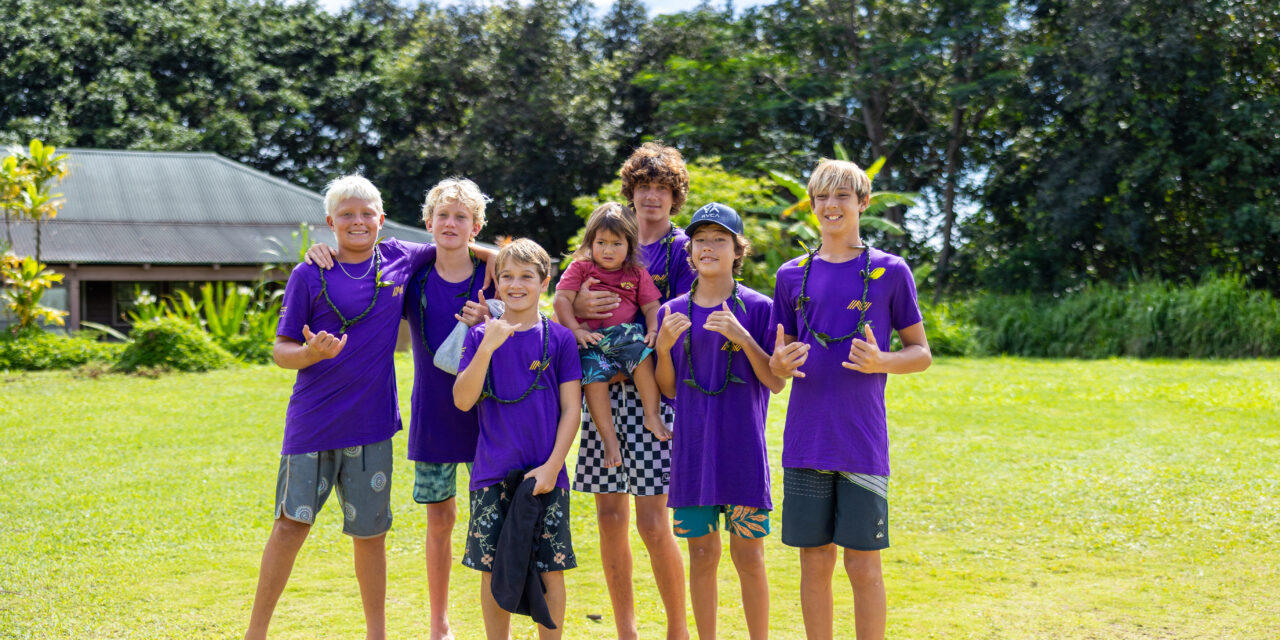
Named after an iconic mountain peak that stands watch over our community, Namahana was granted its official state charter in 2022, and I was selected to be its first school leader. Since then, we’ve united a diverse coalition of community stakeholders around a vision to cultivate students who are active caretakers of their island home and who become leaders seeking solutions to the greatest challenges facing their communities.
The results have reinforced the widely felt need for a school like Namahana. We’ve assembled an incredible governing board and administrative leadership team. We’ve purchased our own 11-acre property and raised more than $7 million toward building a state-of-the-art campus that expresses our values and pedagogy — something few charter schools achieve in Hawai‘i, where state per-student allotments are low and affordable real estate is nonexistent.
But the achievement closest to my heart is the ‘āina-based education we’ve designed. The learning our students experience affirms the cultural knowledge unique to this area while being connected to rigorous evidence-based competencies that not only meet Hawai‘i’s Department of Education requirements but have proven successful around the world. This is thanks to our partnership with Big Picture Learning (BPL), which helped us develop our teaching framework. The BPL model is a student-driven, personalized approach to education that emphasizes meaningful, real-world experience over traditional rote learning. The BPL model is currently being implemented in more than 140 schools across the U.S. and another 100+ around the world, with superlative results in college and professional preparation.
Rigorous student-driven learning
There is a widespread perception that environmental, cultural, or place-based education is somehow less rigorous than “traditional” education built around core subjects like math, science, and language. Yet my own highly rigorous academic journey has only affirmed what I always suspected: Master practitioners in my community are essentially doctoral graduates in multiple subjects. In the case of a fisherman like my father, these might be geography, marine biology, meteorology, environmental science, and history, to name a few. They just don’t have a diploma to prove their knowledge on paper to a stranger.
In partnership with BPL, we’ve built a program that covers all the 21st-century core competencies needed to thrive in higher education and professional settings. The learning goals embedded in the BPL model (quantitative reasoning, empirical reasoning, social reasoning, communication, knowing how to learn, and personal qualities) are all central to Namahana’s design. But the context in which we pursue these goals will often be defined by our geographical environment and local community.
Namahana is the first start-up school in the world where the entire staff is being trained from the beginning to use the International Big Picture Learning Credential — a personalized form of student assessment developed in collaboration with Australia’s University of Melbourne. Using algorithms to map traditional exam-based assessments to the Big Picture Learning Goals, this credential offers a more complete profile of students’ abilities and helps students successfully graduate to work or college. At Namahana, this credential will be used in addition to traditional exams and standardized tests.
Different methods, same outcomes
Namahana is “translating” these scientific measures of 21st-century learning to a geographically unique context that integrates both old and new wisdoms in pursuit of a new approach to education.
Two sites we are cultivating for our ʻāina-based education are Waipā Foundation and Limahuli Tropical Botanical Gardens. At Limahuli Gardens this past summer, Namahana School piloted a field study program that focused on the Limahuli Valley watershed. We used a six-verse ancient Native Hawai’ian chant, “Aia i hea ka wai a Kāne? (Where are the waters of Kāne?)” as a cultural lens through which to study the island’s water cycle. Each week students learned one verse and explored its meaning in relation to the Limahuli watershed. Students employed 21st-century tools to calculate water flow, gather plankton, measure turbidity, and test water quality, including bacteria and ammonia levels. Guided both by the chant’s traditional wisdom and their own scientific observations, students mapped Limahuli Valley’s water cycle from the highest mountain peaks to the ocean and back through the freshwater springs.
The learning at Namahana may look different on the surface from that at a BPL school, say, in New York. For example, we make outdoor, on-site learning a priority whenever possible, which is harder to accomplish in an urban or temperate environment. But we are striving for the same outcomes: self-aware, confident, and highly prepared students who know who they are, where they come from, and what they care deeply about.
Namahana School welcomes our first cohort of students in grades seven and eight this fall. Even though we’ve been working around-the-clock for five years to make this possible, I know that this is just the beginning.
I love my home unconditionally — there’s no place in the world I would rather be. To me, this coastline’s folding cliffs and crystalline streams, its complex reefs, and its diverse human stories are all part of my family. And I would do anything for my ‘ohana.
Today, I see my role as a bridge-builder, with the goal of helping everyone in our community to discover, understand, and steward our incredible and increasingly fragile home. In Hawaiian culture, stewardship is the natural outcome of knowing and caring deeply about your home — a principle that applies not just to the North Shore of Kaua‘i, but to our entire planet.
Photo by Annie-Hart.
This article appears in the Fall 2025 issue of Kappan, Vol. 107, No. 1-2, pp. 72-74.

ABOUT THE AUTHOR
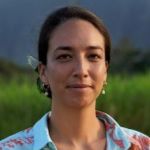
Kapua Chandler
Kapua Chandler is the school leader at Namahana School in Kauaʻi, Hawai’i.