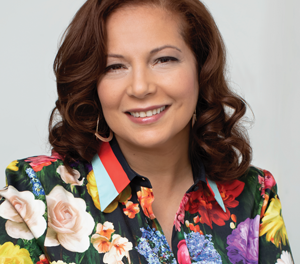
This month I interview Shaun Nelms, vice president for community partnerships at the University of Rochester and the former superintendent of Rochester Public Schools in New York. As Rochester’s superintendent, Nelms helped build a partnership with the University of Rochester to turn around one of the city’s lowest-performing schools. That work was the subject of an October 2023 Kappan article that Nelms co-authored. Today, he shares what he learned from his work in the Rochester Public Schools and how it informs what he’s doing now.
Q: The work you did as superintendent of Rochester is well-known, but I know you’re in a new role. Can you share a little background on your work in Rochester and catch us up on your new role?
A: In Rochester, I specifically focused on East High School, a school with a graduation rate of 29%. We implemented a model focused on capacity-building and distributed leadership, and the results were excellent. The graduation rate surpassed 85% without changing any teachers or redistricting to change the community of kids. We focused on getting the right resources and putting the right people in the right structures.
After my eighth year as superintendent, I decided to allow someone else to take on that work. Distributed leadership requires that you build capacity for others to own it. I was so proud to see one of our principals selected as superintendent to carry that work forward and show that succession planning works.
The University of Rochester, our partner in the work at East High, wanted me to stay local and created the position of vice president for community partnerships. It’s my responsibility to bring the resources from the university into our entire enterprise, locally, nationally, internationally. But, more important, my job is to learn in those spaces and to bring back what I learn to influence what the university does.
Q: Your October 2023 article for Kappan was titled “How a University and a School District Made Change Together.” You wrote that article from the perspective of the district, and now you’re at the university and supporting that work. But for those who aren’t familiar with the Rochester story, tell us how that university and district partnership made a difference.
A: It has been probably the most rewarding yet challenging experience of my life. East High was the lowest-performing school in the lowest-performing district in New York state. You can imagine the type of culture and climate that existed there. The problem wasn’t the kids or the parents or the teachers or the unions. The system itself put the parents, teachers, administrators, and students alike in a situation where they were forced to try to survive but were not thriving.
The state was going to close the school. But it is the oldest school in the community, so symbolically, it would have been devastating. The university got involved, reluctantly, because the history and the reputation of the school district was that they weren’t able to continue initiatives from start to finish. The university said if they could plan for a year, they’d take this on.
That planning meant interviewing almost every student, parent, staff member, or committee member who was involved with the school and asking, “What type of school do you want?” We were able to have the standard defined by the people, then our job was to create a system to meet those demands. And once the people understood that we were committed to that work, they continued to walk that journey with us.
Our issues included making sure we had a viable curriculum, an active and engaged parent group, and alignment among teachers and administrators with our direction. By midyear in year five, we surpassed the 60% graduation rate. The challenge became preparing our kids to be college- and career-ready. And our focus became trying to establish the right partnerships, scholarships, and workplace development. When we had a 29% graduation rate, colleges weren’t coming to recruit our kids. When we had a 60% graduation rate, we had colleges coming. We had athletic scholarships being offered. We had job placements right out of high school. So the culture shifted.
There’s an African proverb that says, “There’s nothing for us without us.” Any transformation process has to include the people you are trying to support. Eventually you should see yourself being supported by them. This partnership is bidirectional. The university has had just as much of a reward out of this partnership as the community. School and university leaders gained as much as our students and our parents. We better understand how to support students’ behavioral health. We better understand the conditions that our students and families face. We better understand our obligations. When we started, it was probably us trying to do something to the community. And now it’s truly where it should be.
Q: It’s amazing how movements like that can affect both sides of the partnership and how the momentum can grow. As a basketball coach, I’ve seen that if you go in every game feeling like you’re gonna win, you’re more likely to win. But if you get in this mindset that we’re going to lose, that feeling can be contagious. That happens to districts as well, where they see a few things go bad and the next thing you know, they believe everything’s horrible when it’s not.
A: I think you’re absolutely right. My hardest challenge was getting the parents to understand that this is a season. It’s not a single game. We’re building toward something. When I coached my daughter’s team, our tallest player was 13 years old. Her dad wanted us to focus on her shooting, but I had to say to him, “You don’t know how she’s going to grow. She might be the tallest now, but the shortest later. She needs to try to do everything, and the time to try it is when she’s younger, while she’s still developing.”
It was the same in Rochester. We tried to make sure that everyone in the system was versatile and able to shift and pivot based on the unknown conditions that they were going to face. I think it’s why we survived in COVID. When we had to pivot to an online setting, connecting and collaborating with colleagues and a culture of academic and professional success were already embedded. COVID was an opportunity for us to really test our systems. We did not crash like many systems did, because people understood that it was a long season. You can’t over-celebrate victory or dwell on the losses. You have to understand that you’re gonna continue on. I think that’s the difference between schools that thrive and schools that are forced to just survive.
Q: I want to turn to your book, Leading with Purpose: Empowering Others to Create Lasting Change. In chapter four, you talk about the proverb, “Smart is something you become, not something you are.” Our job as educators isn’t to educate the kids to what we know they’re going to be, but to educate them for the impossible dreams that they have. Tell me how you think about kids and growth.
A: That chapter talks about the system becoming smarter and people becoming smarter. Smarter doesn’t have a defined end. We both have gotten smarter over time doing something that we weren’t doing five years ago. We do that all the time. Why do we think a 13- or 14-year-old kid has reached their peak? We have to give kids space and grace to have the opportunity for growth.
When I say smart is something you become, it is a call to action and acknowledgement that growth is iterative, for both people and systems. The moment we put a fixed value on someone or something, that person or that system will never flourish. It’s important for us to address the systems. A lot of school transformation has been introduced or demanded in school systems with very little investment in making sure leaders are ready for that type of transformation. So we have to focus on the system before we focus on the people.
Q: Turning from what you’ve done, I’d love to know what’s next. What’s the big thing you’re working on? When we talk to leaders about the vision of what they’re doing now, the most innovative leaders tend to be a couple of years ahead of the rest of us. So what are we all getting into in a couple of years?
A: I really want to focus on university to school pipelines. Next to every failing school system, even at times embedded in their own communities, are highly successful universities and colleges. If we were to do a better job connecting universities with the community, I think the opportunities are endless.
If you look at most P-12 conferences, you don’t see universities anywhere on the agenda. And if you attend large research conferences, you don’t see anyone from P-12. We treat those two systems as two completely separate entities. The research is being done, so how do you coordinate that work meaningfully? PDK is part of that continuum. It is a bridge between theory and practice. And I think that is critically important. I just want to work with the top people who really want to do this work and then allow them to build capacity into distributed leadership within their own ecosystem.
Shaun Nelms is the vice president of community partnerships at the University of Rochester, in New York. He previously served as the superintendent of East Upper and Lower Schools, formerly East High School in Rochester, New York — a position created through a unique partnership between the New York State Education Department, Rochester City School District, and University of Rochester. As the Educational Partnership Organization (EPO) superintendent for East, Nelms was charged with creating a school reform model that could be replicated in urban settings throughout the United States.
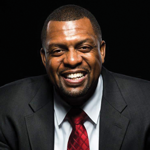
Shaun Nelms
In 2018, he was named the first William and Sheila Konar Director for the Center for Urban Education Success (CUES) at the Warner School of Education at the University of Rochester. He is also an associate professor at the Warner School, where he teaches courses in human resource management, school governance, and leadership in urban schools. Prior to his superintendency, Nelms served as chief of schools for the Rochester City School District. He also worked as a principal in the Rush-Henrietta School District and as an assistant principal and social studies teacher in the Greece School District, both in the state of New York.
This article appears in the March 2024 issue of Kappan, Vol. 105, No. 6, p. 58-59.

ABOUT THE AUTHOR
James F. Lane
James F. Lane is CEO of PDK International.