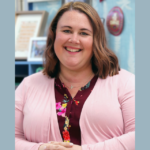
This month, we welcome Melvin Brown, the superintendent of Alabama’s Montgomery Public Schools. He is a dynamic leader with a unique vision for Montgomery, and we have an exciting opportunity to learn about the amazing work going on there.
Q: I know mental health has been a focus for many schools, including those in Montgomery. Have you had to deal with any of your teachers facing increased mental health needs, especially coming out of the pandemic?
A: Yes. I think our teachers, our staff, and our professionals are showing attributes that we have to be cognizant of, not only in the classroom, but also in administrative offices, and even in my seat. I think prior to the pandemic, we just assumed educators would muddle through. Now, we have a better understanding of who we are and what we want out of life and what a fruitful, happy life looks like. And we’re more aware of what professionals’ mental health needs might be.
From a school district standpoint, we’ve had to make sure we have a strong employee assistance program, that we have mental health professionals who serve both our kids and our adults, and that we listen to people when they say they’re struggling instead of just telling them to pull themselves together and get it done. We can’t have that frame of mind anymore.
Many more educators are looking at their situations and making the decision to leave the profession. And while it hurts the profession drastically, I understand it. We’re dealing with a lot of political issues that have clouded our work, and some folks just have decided they don’t want to deal with it anymore.
Q: When I was state superintendent during the pandemic, I remember that there was a big group of superintendents who were getting together all the time and taking care of each other. Did you have any networks like that to help you make sure that you got what you needed as a superintendent?
A: Absolutely. A group of about 20 to 25 current and former superintendents from across the country started a thread on a social media app so we could talk. And then, we decided we would get together every Friday afternoon on Zoom and just have conversations. I can honestly say, without that group of people, I’m doubtful I’d still be in education. In 2021, I thought that I didn’t want to be a superintendent anymore, and that group of individuals got me through it. I’m fortunate that they were there.
Q: I attended one of these Friday sessions, and I remember the power of it and wished I had a network of people in the same role as me. We had regular meetings with state chiefs, but it was very work-focused. I love how you all focused on self-care.
A: It was tough sledding there for a while because we were fighting so many battles that had nothing to do with kids. It felt as though we’d lost our way in terms of what we were supposed to be doing. But that group gave me hope and inspiration and made me realize that I’m supposed to be in this, whatever it looks like.
We need support to make sure we can continue to do this work because it gets more and more daunting every year.
And we’ve continued to be dedicated to one another. For example, one of the individuals in the group has left the superintendency but has stayed connected to education and to us. I gave my state of schools address a few weeks back, and he actually traveled here just to support me. The following day, we went around and toured schools. Those gestures make it all worth it because, honestly, this job is thankless. We do things well, but no one really pays attention to them. They just accept them. But if we do things that are even slightly off, all the blame comes toward us. So we need support to make sure we can continue to do this work because it gets more and more daunting every year.
Q: When you walked into Montgomery in 2022, what did you do on day 1 to start taking care of your staff and students?
A: There’s a lot of history of great things in Montgomery, but also great hurt. Listening to people’s stories, to get their perspectives on what they actually want out of a school district and want for their kids helps us to create a road that gets us to where we want to go. So I was very intentional to listen to everybody. My first six months, I probably had 1,200 meetings.
My first year (2022-23) was about getting a feel for who we are, who we were, and who we want to be. And now this year, we’re putting some rubber on the road and putting in place some systems and processes that allow us to function as a school district in appropriate ways. We are building principal leadership so they can be great managers of their buildings who also understand what instructional leadership looks like. We are giving teachers some autonomy to bring about innovation, individuality, and creativity.
I want kids to understand that it doesn’t matter what your situation looks like, you too can achieve anything you want to achieve.
Like many other districts across the country, we’re dealing with a shortage of teachers, student absenteeism, urban strife, and our fair share of violence in our community. So there are a lot of things that we’ve had to address and we’ll continue to address. Poverty is at the top of the list. I’m willing to speak on that because I was a product of a single-parent household. My mom gave birth to me when she was 17. We lived in a trailer with no running water until I was 16, and we were on public assistance. I knew what struggle looked like, and I didn’t use that as an impediment or an excuse. I was very fortunate to have some teachers who also didn’t allow me to use this as an excuse. They are one of the reasons I was able to survive the environment. If I can do it, anybody can. I’m not special. I want kids to understand that it doesn’t matter what your situation looks like, you too can achieve anything you want to achieve.
My personal goal is for every kid who leaves high school to have options. That could be to go to a two- or four-year college or university, go into the work world, go into the military, or become an entrepreneur. If every kid has all four of those choices at his or her disposal, we’ve done our job. Right now, we’re not there. We have kids who have limitations — whether it be ones they placed on themselves or that their families placed on them or that we placed on them as a school district. We need to clear out those impediments. We can’t be the reasons kids don’t achieve. We have to be willing to say we’ve created these barriers for kids and knock them down.
Q: What are you most excited about in Montgomery today?
A: I’m most excited about the opportunity to really transform our career opportunities across all of our schools. We have a series of magnet schools, which tend to attract our best students academically. I want to make sure all of our kids have those opportunities. That work requires us to bring business folks to the table to help us determine what that looks like. Because as an English major, I don’t know what it looks like to be an architect, for example. We want to build programs that our kids are interested in and that can transform what their lives look like on the other end.
We have some schools that are underutilized in terms of building space. We want to find new ways to use that space, potentially consolidating some schools and finding new ways to use that space. For example, we want to create some agricultural programs that people in the rural parts of our community are invested in and that can help the economy. We’ve talked about aquaponics and things like that in those buildings.
We also have a partnership with the Equal Justice Initiative, founded by Bryan Stevenson. We’re looking at what we can do to build a career academy that focuses on equity and social justice. That, too, is extremely exciting to me.
Q: The No. 1 thing we’re focused on at PDK is eliminating the teacher shortage. What’s the one thing you think we can do as a nation or in Montgomery to help achieve this?
A: I certainly think it involves funding. We need to pay teachers a salary commensurate to their credentials and what they have to do daily. Education is probably the most important piece of what our country looks like and how we develop into who we’re going to be, but we don’t invest nearly enough in it.
I would also invest in how we market and discuss our work. Schools tend to always hit the news when negative issues come to the forefront. If we can change the narrative and get our media outlets and other folks to celebrate and uplift our work, I think if we could change people’s perception. By doing that, we could eliminate a lot of things, including the disparities between richer, better resourced schools and poor, less resourced schools. We’d be creating a brand-new society that we could all be proud of. It feels like an impossible task, but it’s important that we chase perfection, even knowing that we’ll never get there.
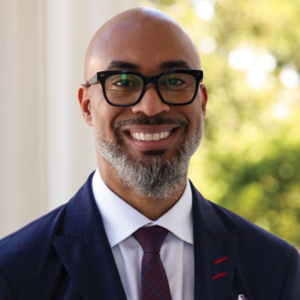
Melvin Brown
Melvin J. Brown is the superintendent of Montgomery Public Schools in Alabama. He has 25 years of school administrative experience, including as the superintendent and chief executive officer of the Reynoldsburg City Schools District in Ohio, superintendent in residence and visiting professor at The Ohio State University, deputy superintendent for the Cuyahoga Falls City School District in Ohio, and associate superintendent for Prince William County Schools in Virginia. He has also worked as an elementary and middle school principal. His non-administrative experiences include teaching middle school language arts, teaching high school English, and coaching track and boys’ basketball. Brown holds an Ed.D. from The Ohio State University, a master’s degree from Virginia Commonwealth University in Richmond, and a bachelor’s degree from James Madison University in Harrisonburg, Virginia. As a member of Alpha Phi Alpha Fraternity Inc., he dedicates time to serving the community. He is a 2021 honoree of central Ohio’s A Tribute to African Americans Committee, Inc. and is co-author of STEM Century: It Takes a Village to Raise a 21st Century Graduate (Soul Excellence, 2022).
This article appears in the February 2024 issue of Kappan, Vol. 105, No. 5, p. 58-59.
ABOUT THE AUTHOR

James F. Lane
James F. Lane is CEO of PDK International.