
Getty Images
This month’s guest in the Learning from Leaders series is Angélica Infante-Green who has served as the Rhode Island Commissioner of Elementary and Secondary Education since April 2019. She was inspired to teach after reading Savage Inequalities (1991) by Jonathan Kozol in a college anthropology class.
“The moment I put that book down, I happened to be in the cafeteria at my school in Buffalo, New York. And there was a table there for Teach For America. I joined because I really wanted to make a difference because the kids in that book were kids from my neighborhood,” said Infante-Green. “This is how I grew up. And I know what education did for me. I saw it as a social issue. I was going to change the world and go to Teach For America for two years, and here I am almost 29 years later. It was the best decision of my life. My anthropology professor doesn’t know that he changed my life and neither does Jonathan Kozol, but they did.”
Q: You began your career as a bilingual classroom teacher in the South Bronx, and you are passionate about multilingual learners. What do you think our readers should know about educating these students?
A: Our country continues to change, and this is a population that’s growing, particularly here in Rhode Island, but across the nation. We have always struggled to meet the needs of this population, but in my prior job in New York state and New York City and here in Rhode Island, we have found that when these students are given the opportunity in the right programs, they will thrive and even outperform kids whose primary language is English.
There’s always sort of a deficit mentality, like these students are coming in with some needs that we can’t provide the support for, and that is not true. We are capable of doing it, we’ve done it. And the kids really rise to the occasion when we believe in them and give them and their teachers the support that they need.
Q: What are you doing in Rhode Island that you are most proud of?
A: Most state departments of education are primarily focused on the regulatory and compliance requirements. One of the things that I really wanted to do when I came here was to balance that need for regulation with a sense of responsibility for what’s happening on the ground and for making sure that districts are successful. I see our job as removing obstacles, providing support, and making sure that we create equitable pathways that lead to different and better student outcomes.
We just passed our secondary regulations last year, which really changed the landscape of what a graduate in the Rhode Island school system looks like. Everybody has to take civics, financial literacy, and a world language, but we no longer have different pathways. Kids have to take a math pathway, and we really have an emphasis on career and technical education (CTE), not just for some kids, but for everyone. We’ve done away with the Carnegie units and seat time, so we can look at time with students differently.
The other piece that I’m proud of is the focus on the science of reading. Our teachers are well on their way to meeting our expectations for proficiency in the science of reading. It’s a massive endeavor, but necessary for our teachers when we’re asking them to do things that they weren’t prepared to do.
Finally, we created the Blueprint for Multilingual Learner Success, which affirms the assets of multilingual students and sets priorities for improving how we’ll serve them. It was modeled on something that I did in New York, but we took it to the next level in Rhode Island. We got everybody involved from politicians to teachers, students, and parents.
Q: Let’s dive a little more deeply into these accomplishments. When it comes to eliminating the Carnegie unit, one of the things that I get asked a lot is what it will look like. Are you changing high school transcripts or the way students earn credits?
A: We have this nice 8 a.m. to 3 p.m. structure for our schools. But who says that we have to have that? We do not focus on hours in the classroom. We ask our students to show that they’ve mastered the content through different assessment projects. You don’t have to go to high school for four years if you’re able to finish earlier. The school day could be three hours or two hours, as long as we figure out a way to really get in the necessary content and for students to show us they’ve mastered that material.
We want to look at assessment differently and make sure that students have the skills that the business community is asking for. And we’ve given ourselves a two-year deadline to really get to that place and work out all the kinks. Last November, we passed the regulation to make the change official. We had been working on it for two years, making sure that everybody was on board with this.
Q: You mentioned getting all teachers to meet science of reading expectations. What does that mean in this context? Is that an extra credential? Did you pass legislation? And how did you get that done?
A: The Rhode Island legislature passed this legislation setting expectations for Rhode Island, and we worked with them and school districts to figure out what implementation should look like. First, we needed to determine which teachers needed to demonstrate proficiency and which should demonstrate awareness. Then, we needed to identify quality professional learning offerings that would ensure people had the proficiency they needed. We reviewed many submissions for professional learning and approved a list of providers. We also are working with all preparation programs (not only those in higher education) so that anyone coming into the profession through a Rhode Island preparation program has met the expectations, beginning in 2025. We’re very explicit with the expectations. So, it’s a game-changer across the board. We learned that we never really taught teachers how to teach reading, and now we do.
Q: Incredible. You’re making sure that your existing staff knows how to teach reading in the most effective way, and you’re making sure that the new teachers coming out of a preparation program or college can teach reading as well. I love the fact that it’s not just reading teachers and that every teacher has to have the basic skills in teaching reading because every teacher requires students to read at least in part.
I think of you as an innovator, so what’s next in Rhode Island? What are the next big things you want to go after?
A: Right now, we’re trying to tackle chronic absenteeism because we’ve all felt it during the pandemic. And we’re taking an all-state approach. We’re working very closely with the governor, and we have our first convening next month, which will include business owners, health care, and the state government to rally around the kids. We have this big leaderboard that isn’t just for educators, but also for municipal leaders, mayors, pastors at faith-based organizations, even people at the supermarket. It’s a whole-state approach around chronic absenteeism.
I think the next step is really reimagining what career and technical education looks like in our state. Rhode Island is a very small state, and part of our CTE programs’ work is to help solve some of the major industry issues that we have here. We have aquaponics programs to bring back the salmon that have disappeared. We are focused on harnessing wind energy, improving cybersecurity, and building our naval industry. We are trying to find solutions locally and globally in the work that we’re doing in our CTE programs.
This is not the run-of-the-mill CTE program. We’re thinking out of the box. We brought back our graduates and asked them to tell us how to improve. We used their feedback and created online courses at the state level. These are courses that we manage as a state agency. We saw that the kids who took these courses scored 50 points higher on math SATs, so that’s pretty impressive, and we are proud of it.
Q: I’ve always said that if you can get kids engaged in learning, you are going to get the best outcomes. Fifty point increases just by building a more engaging curriculum for students is incredible. As we wrap up, I want to talk about the teacher shortage. At PDK, we are focused on eliminating the teacher shortage and creating a teacher pipeline starting in middle school and high school. What if you could wave a magic wand? What would you do to ensure we have a great teacher in every classroom?
A: Pay teachers more! It’s important, their work is valuable. But I also think that we need to make sure that we elevate the profession. I think we spend a lot of time talking about the things that are not working in education. And I think people feel that. I think teachers shouldn’t have to pay for housing, especially the ones working in the urban sector who are moving into a different community to teach. We should be able to provide housing or a stipend for housing, in some way, shape, or form. And I think the federal government should do it.
We think about this issue a lot. Check out educate401.org to learn more about what we are doing to build a robust teaching pipeline in Rhode Island. It has everything you’d want to know about how to become a teacher here.
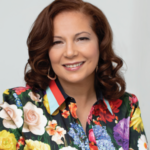
Angélica Infante-Green
Angélica Infante-Green has served as the Rhode Island commissioner of elementary and secondary education since 2019. As commissioner, she instituted several major efforts to improve K-12 education across the state, most notably a comprehensive review of the Providence Public School District. A board member for both the Council of Chief State School Officers and National Assessment Governing Board, Infante-Green regularly engages a national audience, sharing her experience and insight on topics such as high-quality curriculum, equity, and reimagining the high school experience.
This article appears in the December 2023/January 2024 issue of Kappan, Vol. 105, No. 4, p. 60-61.

ABOUT THE AUTHOR

James F. Lane
James F. Lane is CEO of PDK International.