The most recent Nation’s Report Card showed sweeping declines in students’ math achievement, with 8th graders hitting historic lows on the National Assessment of Educational Progress (NAEP). Thirty-eight percent scored below the NAEP Basic level on the gold-standard test, a far cry from the goal of getting all kids to the NAEP Proficient mark.
One common rallying cry to address this crisis is to give students more instructional time. It’s true some students need more time on task to fill specific knowledge and skill gaps, and some districts are offering targeted in-school interventions to address students’ specific areas of need.
That makes good sense. But just adding more time for all kids — if it’s more of the same — probably won’t get the job done. The hard truth is even before the pandemic our students weren’t performing that well. Long-term NAEP trend data showed students’ growth flatlining and a widening of the achievement gap between high- and low-performing students in the years before COVID disrupted education. We need to think about more than just recovering from the pandemic and find new ways to innovate learning, improve schools, and raise achievement.
In the April Kappan, Frederick Hess discusses some of the problems with treating more time in school as the answer to students’ performance declines. In particular, he notes that “tuned-out students aren’t learning” and “students spend a lot of school time feeling bored and disengaged.” This aligns with my own observations.
I’ve spent a lot of time in K-12 classrooms, and it’s clear that students learn more when they’re deeply engaged and interested in what they’re learning. You can see a child light up when they’re excited about a concept, know how to apply it, and feel proud of their work. Creating more of these kinds of learning experiences is vital for students from historically marginalized groups who have had less access than their peers to approaches that foster deep engagement and also who were hardest hit academically by the pandemic.
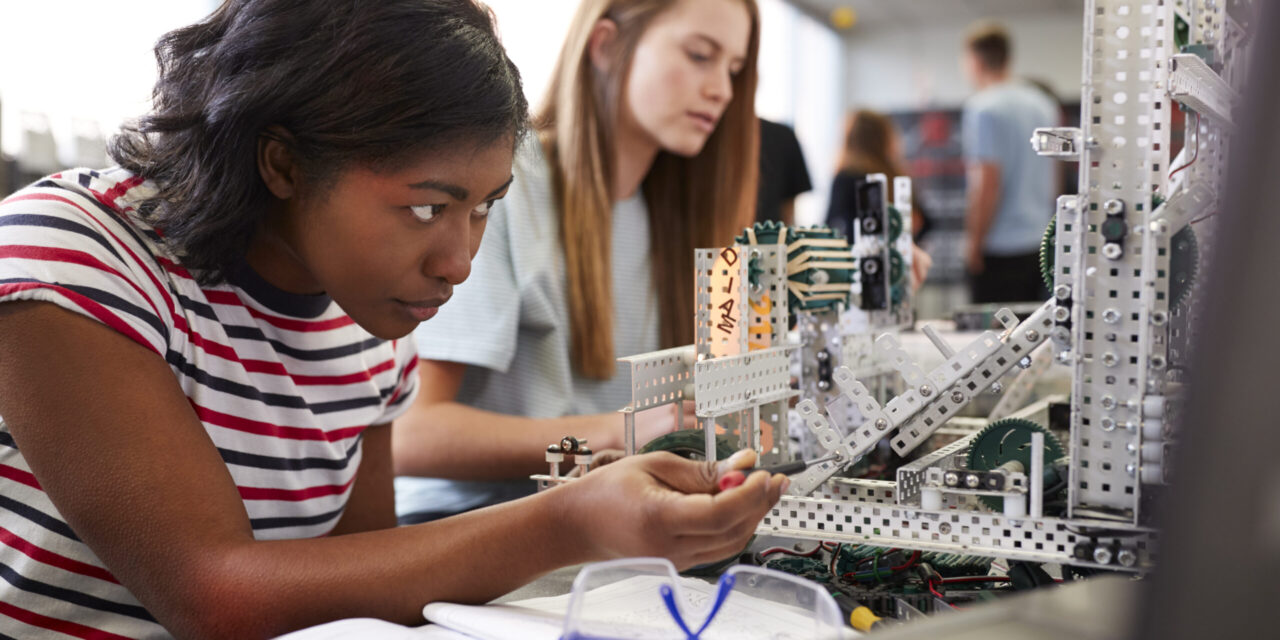
Approaches I’ve seen increase engagement in math include adding cross-curricular, hands-on engineering and STEM lessons or classes into the school day. I’ve seen K-12 engineering programs help students learn core content and how to analyze, think critically, and problem solve — skills that help children thrive in and outside of school. As effective as these programs are, they aren’t as common as they should be.
In engineering programs, students can engage in mathematical thinking and build skills as they work on hands-on projects. For example, measurement might come alive if you have a goal of ensuring that the shoe you’re engineering in class fits your foot. Working through the relationships between radius, diameter, and area might be more meaningful if you are trying to engineer a parachute that is both small and slow. Rates become more important when you are trying to insulate a medicine cooler to prevent heat from entering.
So, while an engineering class shouldn’t replace an algebra or geometry class, it can extend and deepen the learning that happens throughout the school day. Research studies, including four randomized trials, show well-designed project-based learning approaches improve student achievement across grades and content areas.
This all became clear to me when I was a graduate student helping develop environmental science and engineering challenges for high school students. The students had to design and build a device to monitor water quality in a local stream or pond. One student was over-age, under-credit, and at risk of not earning his diploma. But the challenge sparked his interest. He created the best monitoring device and regained his motivation for school.
If there ever was a moment to try new things that re-engage students, it’s now. The U.S. is in the midst of a youth mental health crisis. While many policies and programs are needed urgently, building more effective, engaging, and joyful learning environments can help.
Teachers also say they’re dealing with include poor class behavior and disagreements among students. When students work in groups in engineering and project-based learning environments, they not only deepen their understandings of STEM but they also learn how to collaborate, communicate, and problem solve — all skills needed in school and life.
As we work to rebuild from the pandemic, let’s think creatively about how to improve schools and help students make progress. The 8th graders who posted those steep score declines in math on the 2022 Nation’s Report Card are in high school today. Helping them make up lost ground is vital, but let’s do that in ways that bring new excitement and energy to schools. Let’s develop students’ problem-solving abilities and help them connect math, science, and engineering to their lives. As students engage with tasks, they can learn STEM skills and content in meaningful ways, recognize their untapped potential, and consider possible STEM pathways.
ABOUT THE AUTHOR

Christine M. Cunningham
CHRISTINE M. CUNNINGHAM is a professor of education and engineering at Pennsylvania State University, State College. She is a member of the National Assessment Governing Board, which sets policies for the Nation’s Report Card.