For the last eight years, I’ve used this monthly column to analyze and (hopefully) explain the policies and politics that have the greatest impact on the nation’s education agenda. Taking the “Washington view” of things means maintaining a heavy focus on presidential administrations (I’ve been through three since I started writing this column: Obama, Trump, and Biden) and being fair about what they get right and where they go astray.
The Joe Biden administration came into office in the middle of a global pandemic, on the heels of Donald Trump, and under the limitations of the Every Student Succeeds Act, which reined in much of the federal government’s influence over local school systems. Laying out an ambitious education agenda was all but impossible. Transformative, systemwide change had to take a back seat to health, safety, and day-to-day operations. Biden’s team played it safe and gave public schools exactly what they needed: a huge influx of funding with very limited federal oversight. And, until recently, his education team has maintained their steady repose.
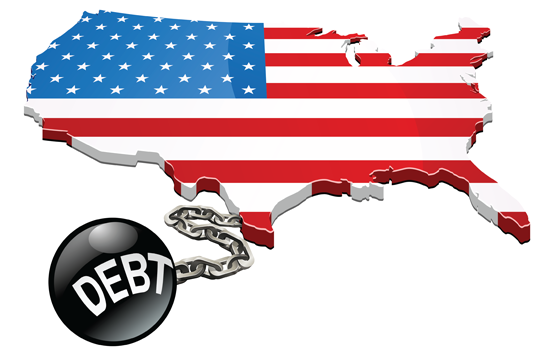
However, in mid-March, under increasing pressure to do something bold about the huge amount of student loan debt Americans are carrying, the Biden administration announced that it had newly identified 100,000 borrowers who are now eligible to have their student loans canceled under the Public Service Loan Forgiveness Program (Lobosco, 2022). Created in 2007 as part of the College Cost Reduction and Access Act, the Public Service Loan Forgiveness Program allows qualifying federal loan borrowers who work in public service, government service, or the nonprofit sector to have their student loans forgiven after 10 years (120 payments) working in public service. Last fall’s changes to the program allowed many more borrowers to become eligible, and the canceled debt of these newly identified borrowers adds up to a whopping $6.2 billion. (Keep in mind, however, that this figure is dwarfed by the total federal student loan portfolio, estimated to be about $1.58 trillion; Center for Microeconomic Data, 2022).
The administration also announced in April that it will extend through August the student loan payment pause that was enacted in March 2020 to provide debt relief during the pandemic. (It was previously scheduled to expire on May 1.)
According to the Federal Reserve Bank of New York, around 37 million federal loan borrowers have not been required to make their loan payments, which adds up to about $195 billion through April 2022 (Goss, Mangrum, & Scally, 2022).
The debate ensues
With so much money at stake, you can bet there is heated debate going on in Washington right now as to whether the administration should extend the loan payment pause. The Biden administration, clearly feeling the pressure from all sides, is trying to figure out the best next move in terms of both policy and politics.
On a personal level, it is hard to find fault with any effort to make college more affordable or to forgive student loans for those who devote their time and talents to public service. But on a policy level, not everyone agrees that canceling huge amounts of student debt (or eliminating debt entirely) is the right thing to do. The least-sympathetic detractors are private student loan companies, who have been lobbying the Biden administration to not extend the May 1 deadline for student loan payments. These companies claim that the ongoing suspension of monthly loan payments and interest collection has deeply affected their profit margins by lessening demand for the student loan products they sell. Politico reported that SoFi, one of the biggest student loan refinancing companies, told investors that the freeze on student loan payments could “reduce the company’s profits by $20-25 million” in the first quarter of 2022 alone (Stratford, 2022). These companies are too smart to focus their advocacy efforts solely on profit margins, so they have instead focused on the need for better policy to support “the neediest borrowers” by lobbying both Congress and the administration to limit loan forgiveness to low-income borrowers only and reinstate loan payments and interest accrual for everyone else.
The debate about the student debt crisis is only one part of a much larger conversation about how federal policy can most effectively address social and economic disparities in postsecondary education.
Private loan companies aren’t the only ones who feel a more targeted approach to student loan forgiveness may be a better way forward. Some economists and policy makers have also challenged the cost-benefit analysis of debt forgiveness for so many borrowers. They say that in the aggregate, offering student loan forgiveness to so many borrowers ends up benefiting better-educated, mostly white individuals with greater income levels and not the borrowers who need the most economic assistance.
Adam Looney, a nonresident senior fellow at the Brookings Institution and executive director of the Marriner S. Eccles Institute at the University of Utah, has written extensively about the economic impact of both modest and large-scale student loan forgiveness. In a paper published earlier this year, Looney challenges the idea that student loans are a major indicator of social and economic wealth gaps and warns that policy decisions based solely on that premise will have a limited impact on reducing racial wealth gaps. Using medical school graduates as an example, Looney argues that although these graduates may leave school with huge amounts of student debt, they will nonetheless accrue substantial wealth over time. The benefits they receive through debt forgiveness will have virtually no impact on the social and economic disparities that federal assistance programs target.
To fully understand Looney’s position on this, it is important to look at the numbers. In a 2021 blog post, Looney compared the costs of student loan forgiveness programs to other poverty relief programs administered by the federal government. For example, U.S. Sen. Bernie Sanders’ 2021 proposal to forgive all student loans would cost the federal government roughly $1.6 trillion. Other, more modest, proposals from Sens. Elizabeth Warren and Chuck Schumer would cost less, but still amount to trillions and/or billions of dollars, which is far more than the federal government spends on targeted assistance programs such as unemployment insurance, the earned income tax credit, and food stamps. Looney’s point is fairly simple: If the federal government is going to spend huge amounts of money, wouldn’t some of that money be better spent on targeted poverty-reduction programs that directly support those most in need of economic support?
Considering the politics
Some argue that the administration’s focus on student loan forgiveness is about politics more than policy (Cadelago & Barrón-López, 2022). Young voters are an important voting bloc for Democrats, but they appear to be losing faith in the Biden administration, which could have implications for the midterm elections. A CBS News poll released in January showed Biden’s approval rating with Americans under 30 had dropped from 70% in February 2021 to 42% early this year (Khanna, 2022). Most experts agree that the likely reason for this drop is a generally pessimistic view of the world (and who could blame them?) and the feeling that the administration is not adequately addressing the issues they care about (climate change, student loans, race relations). Biden’s announcement will no doubt please this important demographic, but is it the right thing for the country writ large?
In the big picture, whether or not the administration’s action on student debt is based on sound policy or savvy politics isn’t really what matters. The debate about the student debt crisis is only one part of a much larger conversation about how federal policy can most effectively address social and economic disparities in postsecondary education. Canceling student loans may be the topic du jour, but there is still a lot more to be done. Both the president and first lady have been longtime advocates for more accessible and affordable postsecondary education opportunities, so there is good reason to hope that real progress can be made. The Biden administration is clearly trying hard to leave its mark on public education, and with the midterm elections approaching, time will tell how well they manage both the policy and the politics.
References
Cadelago, C. & Barrón-López, L. (2022, March 19). Dems fret Biden’s inaction on student debt will burn in midterms. Politico.
Center for Microeconomic Data. (2022, February). Quarterly report on household debt and credit. Federal Reserve Bank of
New York.
Goss, J., Mangrum, D., & Scally, J. (2022, March 22). Student loan repayment during the pandemic forbearance. Liberty Street Economics.
Khanna, K. (2022, January 21). Biden approval has sunk most with young Americans and independents. CBS News.
Lobosco, K. (2022, March 9). Public service loan forgiveness: 100,000 borrowers are eligible so far under new rules. CNN.
Looney, A. (2021, February). Putting student loan forgiveness in perspective: How costly is it and who benefits? Up Front. The Brookings Institution.
Looney, A. (2022, January). Student loan forgiveness is regressive whether measured by income, education, or wealth (Hutchens Center Working Paper #75). The Brookings Institution.
Stratford, M. (2022, March 18). Private lenders lobby to restart federal student loan payments. Politico.
This article appears in the May 2022 issue of Kappan, Vol. 103, No. 8, pp. 62-63.

ABOUT THE AUTHOR

Maria Ferguson
Maria Ferguson is an education policy researcher, thought leader, and consultant based in Washington, DC.