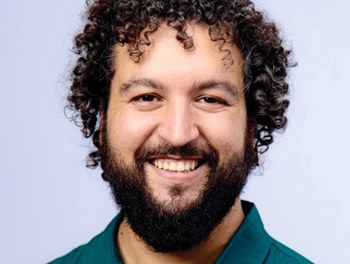
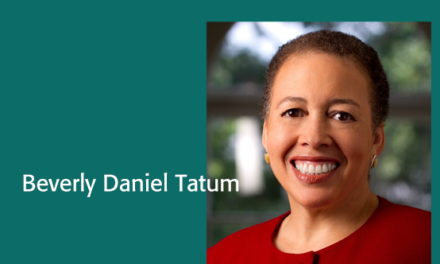
Rorie Fitzpatrick is a senior managing director at WestEd, leading the Special Education Policy and Practice Team and the Resource Planning Team, and she also serves as director of the National Center for Systemic Improvement (NCSI), funded by the U.S. Department of Education’s Office of Special Education Programs (OSEP). One of OSEP’s largest technical assistance investments, NCSI plays a leading role in supporting state education agencies, actively serving all 60 states and territories to transform systems to improve results for children and youth with disabilities.
Prior to joining WestEd in 2013, Fitzpatrick served as the governor-appointed interim superintendent of public instruction for the state of Nevada, having worked with the Nevada Department of Education for a total of 15 years collectively. Other roles during that tenure included serving as the deputy superintendent and the director for special education and federal and state school improvement efforts. As part of her state education agency leadership, she guided efforts to develop and oversee implementation of state regulations; supported the creation, adoption, and implementation of legislative and governor-driven priorities; and worked to ensure effective and efficient operational systems within the agency.
Previously, Fitzpatrick served as a faculty member at the University of Nevada, Reno, in the College of Education, where she focused on increasing positive outcomes for people with disabilities from birth through adulthood.
Phi Delta Kappan: To begin, tell us a bit about the National Center for Systemic Improvement. What kind of work do you do?
Rorie Fitzpatrick: NCSI is one of a number of centers funded by the U.S. Department of Education (DOE) to help schools, districts, and states get better outcomes for kids with disabilities. Our mission focuses specifically on capacity-building at the state level, which means that we work closely with state education agencies, providing advice and support on how to transform systems to meaningfully improve family engagement, data literacy, systems alignment in policy and practice, and the use of evidence-based teaching practices.
As many of your readers are no doubt aware, the special education bureaucracy has always been criticized for focusing too little on effectiveness and too much on compliance (and I understand that this issue of Kappan includes an article on this topic by Catherine Voulgarides). Since the 1970s, state agencies have been attentive to monitoring schools and districts to make sure they meet the guidelines spelled out in the Individuals with Disabilities Education Act (IDEA). But states are also keen to improve the quality of special education services provided — putting research into practice. That’s where NCSI comes in: We support state education agencies to play a leadership role for teaching and learning that helps schools and districts improve results for students receiving special education services, while ensuring systems are aligned with long-standing federal requirements.
Kappan: But isn’t the states’ watchdog role baked into IDEA, to some extent? Doesn’t the law itself emphasize legal compliance, over and above the quality of the services and supports students receive?
Fitzpatrick: Yes and no. The goal of improving outcomes for students with disabilities is actually prioritized in IDEA. Section 616 of the 2004 amendments to the IDEA states (and I’m reading directly from the text): “The primary focus of Federal and State monitoring activities . . . shall be on (a) improving educational results and functional outcomes for all children with disabilities; and (b) ensuring that States meet the program requirements . . . with a particular emphasis on those requirements that are most closely related to improving educational results for children with disabilities.” In other words, the spirit of IDEA is first and foremost about improving student outcomes.
The law is the law, and states have a responsibility to make sure schools and districts follow it. But they also have a lot of freedom to determine how they want to use the resources IDEA provides. Over the years, many have come to spend most of those resources on monitoring and compliance, but they can also incentivize change through strategic resource allocation both within the agency and with districts and other collaborative partners. And now, increasing numbers of state special education directors are coming to understand that they can play a much more productive role than they may previously have thought.
At this point, a lot of schools are just trying to find somebody — anybody — to cover their classes.
After so many years focusing predominantly on compliance, it’s not easy to find the right balance. But some states are making good progress. For example, in Washington state, the special education director has done a lot to build relationships with local policy makers and legislators and secure more than $800 million in new resources for training, teacher recruitment, and retention to support inclusive practices that better serve students in general education.
It’s interesting to note that in the states that really get it, a lot of the people in leadership positions have experience as special education teachers and staff, and they understand the needs of kids with disabilities. So, they have pretty good ideas about how to use their resources, such as by focusing on things like teacher development, inclusive practices, and formative assessments of students’ needs. For example, South Carolina has been doing some exciting work. In their efforts to move to greater results-based accountability, rather than compliance alone, the agency has identified four focus areas for improvement that they believe will improve outcomes for students with disabilities. They have built their accountability systems to monitor and support districts in the areas of early childhood learning, academics, social-emotional learning, and postsecondary outcomes. They provide supports to districts based on various data points, including compliance and results data.
Kappan: Do you find that the priorities for improving special education vary from state to state, or does every state face more or less the same set of challenges?
Fitzpatrick: They’re pretty much the same challenges all over. Most state agencies are trying to figure out how to shift from a strong historical focus on monitoring IDEA compliance to actually promoting improvements in teaching and learning for special education students. Every state is struggling with recruiting and retaining special education teachers and staff; scaling up the implementation of evidence-based practices, such as Universal Design for Learning and the use of a multitiered system of supports (MTSS); and a growing number of states are trying to figure out how to address racial inequities in special education.
But at the moment, the staffing shortage is certainly the biggest and most pressing challenge. It has been a huge problem for years, but the pandemic has made it much worse and more obvious. And that’s true in every part of the country. Staff are hard to find in big states and small states, rural areas and cities, in the early grades and in secondary schools . . . At this point, a lot of schools are just trying to find somebody — anybody — to cover their classes.
But certain kinds of special education staff have always been particularly hard to find. For example, it tends to be difficult to recruit teachers to work with autistic students, especially those who have significant behavioral challenges. It has always been very difficult to find speech-language pathologists, too — when they finish their training, they often gravitate toward higher-paying jobs in medical settings. And all kinds of special education jobs come with some burdens that make it harder to retain people, such as the huge amount of documentation that special education teachers are required to file, which completely wears people out.
Before COVID hit, I was optimistic that we might be able to help states make some improvements in this area. For instance, the DOE created some grants for states to pilot new approaches to easing special education teachers’ workload, such as by cutting down on paperwork, rethinking job assignments to let teachers cycle in and out of the classroom, recruiting more classroom aides, and so on. But the pandemic put that work on hold. I am hoping we can coach states back to this kind of thinking when the pandemic settles down more significantly.
Kappan: You said that states have also been trying to figure out how to get more districts and schools to implement evidence-based practices. What sorts of progress have you seen in this area?
Fitzpatrick: One of our priorities has been to support state special education directors as they choose a number of districts and work with them to implement federally required state systemic improvement plans — basically, to help them assess their special education programs and practices, identify their major weaknesses, and define concrete steps to address them. And we have solid data showing that in the districts that state agencies have supported in this way, educational practices have, in fact, improved. In other words, when states make it a priority to partner with districts — and not just ding them for being out of compliance with IDEA — they see real progress.
The challenge is that it’s hard to scale up this approach quickly. Until state education agencies develop more capacity to provide technical assistance to their districts, they end up having to pick and choose which districts they can help more intensively. Arkansas provides an example for how this works in practice. They have been strategically aligning supports and resources for all students through their State Systemic Improvement Plan (SSIP). Their work has centered on embedding MTSS for academics and behavior through collaborative structures, response to intervention (or RTI), inclusive leadership, and high-leverage and evidence-based teaching practices to ensure that schools operate as highly reliable and functional systems for all students. As measured by the state’s end-of-year statewide assessment (ACT Aspire), students with disabilities in SSIP-targeted schools are demonstrating moderate to high growth scores in literacy at rates that are higher than peers who are nondisabled.
Kappan: What else do state leaders see as the most important things districts can do to improve special education?
Fitzpatrick: Right now, a lot of states are struggling to figure out how to address the needs of dually identified students, meaning those students with disabilities who are also English learners (ELs). We’ve seen rapid increases in the numbers of English learners in school districts that haven’t had large EL populations in the past, so a lot of states are confronting this for the first time. In Nevada, for instance, trying to create better integration of special education and English language services is an urgent priority right now.
But most state special education directors would probably say that their top priority is to get more districts to implement a multitiered system of supports. In a MTSS, you assess students early and often, screening them for academic, behavioral, and emotional needs, so you can set them up with appropriate services (rather than steering them into programs they don’t actually need, including, sometimes, special education, as can too often happen to kids of color). MTSS models also call for a lot of professional development and coordination among teachers, counselors, and other staff; better communication with parents and family members; consistent use of evidence-based teaching strategies and interventions . . . So, from the perspective of a state leader, if you can help a district implement a MTSS effectively, then you get a lot of bang for your buck: more accurate identification of students’ needs (which cuts down on biased placements and wasted resources), lots of teacher collaboration and support (which improves instruction and reduces teacher attrition), better relationships with families, and so on. This one systemic improvement strategy allows you to touch a whole range of buttons.
For instance, the state education agency in Kansas has a long-standing technical assistance network to support local districts, and they’ve been focusing on MTSS for years, with really encouraging results. The initiative supports 192 school districts and more than 140,000 students. And the evaluation data from 60 administrators, representing 47 schools, shows that 89% saw improvement in students scoring at benchmark on a universal reading screener and 87% saw improvement on the math screener.
Kappan: But MTSS isn’t a special education model, per se, right?
Fitzpatrick: That’s right. MTSS is meant to promote school system improvement writ large. The point is to make sure that every student, whatever their individual needs, is getting appropriate instruction and the right level of support, whether that means special education services, general education interventions, and/or opportunities for advanced or accelerated studies. But the assumption is that MTSS will have an especially positive effect on students with disabilities.
For instance, we’ve been partnering with the special education director and team in Arkansas to figure out how to improve the state’s low-performing districts. Why, you might ask, is the special education director focused on the overall improvement of low-performing districts? Well, the working hypothesis is that in the lowest-performing schools, it’s common for students with disabilities to receive the lowest-quality services, or for special education to be the presumptive solution for students who need help — even when that need isn’t related to a disability but is really about poor instruction. Presumably, then, when you implement a systemic reform like MTSS, which benefits all students, the students with disabilities will benefit the most. It’s early in the process, but so far, Arkansas has seen some good early indicators of progress. Alaska, too, has focused on coordinating resources for its lowest-performing schools, drawing on community supports through vocational rehabilitation, tribal organizations, and parent organizations to better support both teachers and students.
Kappan: Earlier, you said that one of the states’ main priorities is to address long-standing patterns of racial inequity in special education. What, exactly, are you hearing from state agencies about their efforts to promote equity in this area?
Fitzpatrick: We’ve known for many years that students of color tend to be assigned to special education at disproportionately high rates. And, for states, the easiest way to identify this issue is to do a technical analysis of assignment patterns. If a district or school has a history of over-identifying kids from a particular racial background, or under-identifying kids from another background, then the state can flag it, support the district to review its evaluation and identification practices, or launch an inquiry of its own.
But the thing is that you don’t need more than a sniff test to realize there’s a problem. It’s helpful to focus on the data, but if it’s obvious that Black students are dramatically overrepresented in special education (as they are in much of the country), then state leaders ought to be asking tough questions about why that’s happening and how they can address it. Over the last 15 or 20 years, that’s been the challenge for a lot of state agencies: How can they shift the conversation from a focus on technical solutions (such as requiring districts to meet specific numerical benchmarks) to efforts to address the underlying beliefs and systemic biases that skew these numbers in the first place?
When it comes to tackling these issues, some states are more ready than others.
When it comes to tackling these issues, some states are more ready than others. For instance, in California (where most students who are learning English are also labeled as having a disability), the state legislature and administration have made significant investments in school districts’ capacity to assess children’s needs more accurately and provide better services to students who’ve traditionally been underserved or mislabeled. Another promising example is Washington, which has started working with NCSI to design and conduct an equity review of its special education system, in order to come up with actionable recommendations for advancing equity statewide.
Having a strong MTSS in place should certainly help, too. If schools screen kids early and do high-quality formative assessments, then they shouldn’t misidentify so many students as needing, or not needing, special education services. But, again, technical solutions address only half the problem. If state leaders really want to address the racial biases that are baked into the misidentification of students for special education, then they have to build relationships with people at the local level, talk with them about the problem, and try out some solutions.
Another challenge is that the many local advocacy groups pushing for change in special education tend to be dominated by white (and typically middle- and upper-middle-class) parents. By and large, parents of color have not been represented in local conversations about how to make special education more equitable. I know of a few local efforts to create authentic interracial dialogues about improving education for kids with disabilities, but we still have a long way to go.
Kappan: Final question: If you asked your state contacts what they’d like to see in the next iteration of IDEA, what do you think they’d put at the top of their wish list?
Fitzpatrick: The first thing everybody would say is that they want IDEA to be fully funded — the federal government promised to cover 40% of what it costs to educate children with disabilities, but it actually covers somewhere around 16%.
After two years of pandemic, they’d also say that something desperately needs to be done to support the mental health of special education students and their teachers. But I can’t imagine many state leaders would want this to be addressed through the law itself, because flexibility to guide resource decisions is better left at the state and local level, rather than having the federal government do so. Along the same lines, they might also call for a redesign of IDEA’s approach to addressing the disproportionate identification of students of color for special education. Under the existing model, students and resources are moved out of special education and back into general education — but general education is where students were misidentified and underserved in the first place, so it’s hard to see how this approach supports good decision making.
But if we’re talking about an effort to reauthorize and improve IDEA, then I think the first and loudest call from state leaders will be to please make the bureaucracy less onerous. Everybody wants the law to generate a lot less paperwork and a lot more flexibility to adapt programs to students’ needs.
This article appears in the March 2022 issue of Kappan, Vol. 103, No. 6, pp. 32-35.

ABOUT THE AUTHOR

Rafael Heller
Rafael Heller is the former editor-in-chief of Kappan magazine.