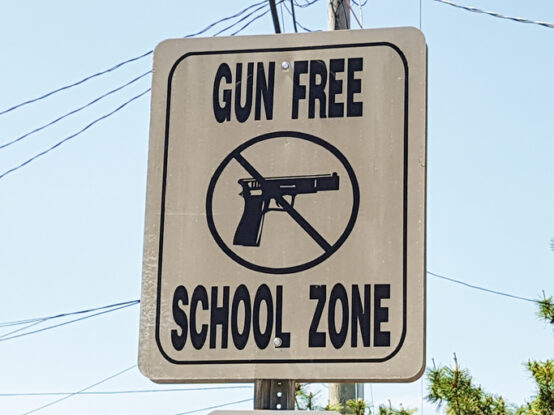
The institutional review board model could supply a basic ethical foundation for evaluating schools’ safety practices.
In February 2020, the National Education Association, the American Federation of Teachers, and Everytown for Gun Safety called on schools to take a hard look at how their active shooter drills are affecting students (Everytown Research, 2020). As these organizations explain, there is a balance between preparing staff and students and traumatizing them. But there are well-established processes available for finding this balance.
One place to look is the world of research, in particular the National Research Act of 1974, which required that human research subjects must be protected. In turn, this led to the 1976 publication of the Belmont Report, which identified three fundamental ethical principles for all human research: (1) that it show respect for the people involved, (2), that it do no harm to subjects, and (3) that procedures be administered fairly.
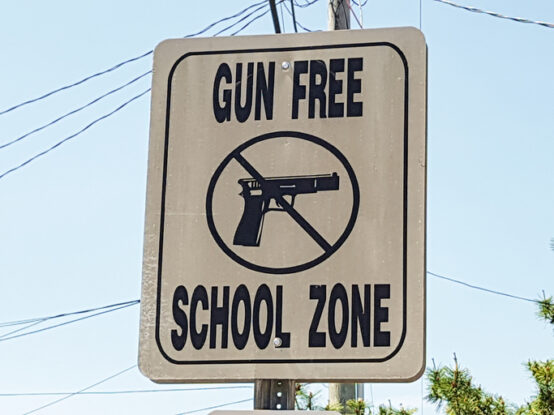
Getty Images
To ensure adherence to these principles, all U.S. research involving human subjects has to be reviewed and approved by an institutional review board (IRB). An IRB is an independent committee consisting of members of varying backgrounds, including at least one nonscientist, each of whom brings unique expertise to the discussion of how to best protect research participants.
A lack of standards
The federal government has overwhelmed schools with thousands of recommendations for improving safety, while reactive state legislatures frantically propose hundreds of safety bills each year. In response, schools scramble to craft plans and conduct drills. The result is a hodgepodge of processes, with no clear standards for schools to follow. Some schools announce drills ahead of time, while others unleash a pretend gunman to pound on classroom doors and pop blank gun rounds to “test readiness.”
According to Everytown Research (2020), “The enormous variety of types of drills makes it difficult to measure and compare effects.” Further, few drills have clear learning objectives, and it’s likely that the drama of the drills themselves will “distract and detract from the core skills you are trying to teach: How do I get out of this building? What alarms will signal a crisis somewhere in the school?” (Perrodin, 2019a, p. 64).
The most terrifying simulations, such as those painting kids with fake wounds to simulate gunshots, may compel parents and teachers to exempt students from participating — a decision that denies students, often particularly those with special needs, access to crucial safety instruction (Perrodin, 2019b).
An IRB for safety drills
Although school safety drills are not a form of human research, the IRB model could still supply a basic ethical foundation for evaluating schools’ safety practices. And we don’t have to wait for a federal recommendation or state bill to act. Any school board can and should approve a policy requiring an IRB for safety drills.
The IRB would place K-12 stakeholders at the table so they can advise on practices intended to keep them safe. A representative committee might consist of an administrator, teacher, counselor, board member, parent, student, police officer, municipal emergency manager, and community member. This group would preview (not create) school safety drills; make recommendations to protect participants; ensure clear objectives are in place; monitor drills, and follow up with staff and students. The U.S. Department of Education’s Readiness and Emergency Management for Schools Technical Assistance Center (www.rems.ed.gov) could serve as a resource to inform the school’s emergency planning team and IRB.
Using an IRB that follows the Belmont criteria is a sensible way to reduce the reliance on unannounced and hyperrealistic “safety” activities. It will help schools deliver essential, appropriate safety instruction and protect the well-being of students and staff, without unnecessary trauma or exclusion of students.
References
Everytown Research. (2020, February 11). The impact of school safety drills for active shootings. New York, NY: Author.
Perrodin, D.P. (2019a). School of errors: Rethinking school safety in America. Lanham, MD: Rowman & Littlefield.
Perrodin, D.P. (2019b). Backtalk: Why no safety drills for students with disabilities? Phi Delta Kappan, 101 (2), 72.
ABOUT THE AUTHOR

David P. Perrodin
David P. Perrodin is a professor in the School of Education at Viterbo University in Lacrosse, Wisc. He is the author of The Velocity of Information: Human Thinking During Chaotic Times and School of Errors: Rethinking School Safety in America.