One thing that is clear is that the news media don’t cover education very often, and that coverage is especially rare at the national level.
Kappan: Over the last few years, the two of you have teamed up to examine the ways in which network television news programs have covered preK-12 education. That includes an initial quantitative study (Coe & Kuttner, 2018) that maps out the range of education topics that have been covered over the last 35 years. And more recently you’ve taken a mixed-methods approach — both quantitative and qualitative — digging deeper into how the news programs have framed those topics. Before we get to your findings, though, can you tell us what brought you to these issues in the first place?
Paul Kuttner: Media representations of schooling matter to both of us on a personal level. I’ve been a teacher in K-12 schools, and my work now focuses on parent and community engagement in education. Kevin is married to a teacher, his sister is a teacher, and both of his parents were teachers. Given that we’re close to the profession, we know that a lot of educators are unhappy with how they often take full blame for the failures of our school system, with little attention to the larger social forces at play. But when we started looking into the existing research on this topic, we found that there have been relatively few studies into the ways teachers and schools are actually represented in the U.S. news media, and how that coverage might affect public opinion and policy making.
Kappan: To the extent that such research does exist, what does it show?
Kuttner: Over the last 10 years or so, a number of education researchers have started to look into these issues, analyzing the language used in media reports about teachers, schools, unions, and other education topics. But it’s still a relatively small body of research, and it tends to focus on specific moments in time, or on specific events — for instance, how the media covered education during the run-up to an election. One thing that is clear is that the news media don’t cover education very often, and that coverage is especially rare at the national level. The local media tend to pay a little more attention to schools, but they mostly focus on things that are seen as peripheral to teaching and learning — they report on the outcomes of high school sports games, for example, or on how local schools are coping with an outbreak of the H1N1 virus.
Kappan: What did you hope to add with your research?
Kevin Coe: In my field — the study of media and mass communication — researchers have conducted a tremendous amount of research into how the news media cover certain topics, especially politics. And it’s pretty clear from the evidence that the news coverage influences people in at least two main ways. The first is agenda setting — when the news covers a particular topic, people come to see that topic as important. And the second is framing — or how the tenor of the coverage affects how people think about that topic. For instance, if the TV news suddenly runs a number of stories on climate change, viewers will increasingly have the sense that climate change is an important problem. Then the question becomes, how is that issue portrayed? For example, research has shown that even subtle changes in language and emphasis — like talking about “climate change” rather than “global warming” — can change attitudes about important policies.
Virtually nobody in media studies has focused on news coverage of education in particular.
This kind of research has shed a lot of light on how the media circulate ideas and influence public opinion. But it turns out that virtually nobody in media studies has focused on news coverage of education in particular. So, in this area, we saw a need for the sort of thorough, quantitative analysis that communication research can provide. By sifting through and analyzing thousands of news stories about education, you can get reliable answers to some important questions: How positive or negative has the news coverage of education been? Which topics are covered most often, and which are covered the least? Which stories get told, and which don’t? And how has education coverage changed over time? The idea was to broaden and make more rigorous the discussion of how teachers, students, and schools have been represented.
Kappan: Why did you decide to focus on television news coverage in particular, rather than, say, newspapers?
Coe: We decided to look at education coverage going back to 1980, just before the Nation at Risk report. That was an important landmark for education policy, kicking off the whole set of reforms that culminated in No Child Left Behind and Race to the Top, and we wanted to see how the news coverage evolved over that time. But the publishing industry has changed dramatically over 35 years, making it more or less impossible to compare newspaper and magazine stories from 1980 with those from 2000 or 2015. On the other hand, the format of the nightly broadcast news has been pretty consistent over that time, with an anchor sitting at a desk and reading the news into the camera. In short, if you want to study how an issue has been covered over three and a half decades, then television news is a really good source of data. Plus, there’s a great database — the Vanderbilt Television News Archive — that includes abstracts of television news stories going back decades. A lot of researchers use this source because it provides a relatively manageable way to code and analyze thousands of stories without having to sit down and actually watch all those broadcasts.
Kuttner: I won’t go into all the methodological details, but we found that the education stories on TV news can be sorted into four broad categories: teaching and learning, climate/health/safety, equity and diversity, and structures of schooling (like class size or school budgeting). The goal wasn’t to say which topics are more or less important, but just to come up with a reliable way to categorize them, so we could begin to spot trends and patterns in the coverage over those 35 years. Then, inside those buckets, we identified more specific topics. For instance, within the category of teaching and learning, we found that some news stories focused on civic education, some on college and career readiness, some on prekindergarten learning, and so on. In all, we identified 30 distinct topics that account for pretty much all of the education stories the TV news programs have covered. (If you want to see our typology, we included it in our 2018 article, which is open access. We hope researchers will use it to jump-start additional studies.)
Kappan: When you analyzed how those topics have been covered, what did you find?
Coe: Our top-line finding was that TV news coverage of education has been incredibly rare over the last 35 years, which is consistent with other research. Overall, the three major network news programs have devoted a total of 194 minutes of coverage to preK-12 education, on average, per year, which we estimate to be well under 1% of their total coverage. But the amount has also fluctuated a lot — some years education has received half again as much as the average amount of attention, other years far less. We think that’s because news coverage tends to be event driven. If something dramatic happens, then coverage will spike. And usually it’s in response to something negative, especially episodes of school violence (and, overall, school violence has received the most coverage of any topic). Sometimes the data surprised us, though. For example, we saw a spike in coverage in 1983, and we assumed it came in response to the Nation at Risk report, but we found that what actually drove more coverage that year was a major Chicago teacher strike. And to the extent that the coverage focuses on school quality, it tends to spike after the release of international test results showing how the United States compares to other countries.
Kappan: Which topics receive little to no coverage?
Coe: From the research into news coverage in general, we know that television news has a hard time wrestling with complicated institutional issues — for instance, how and why is the labor market changing? — so it turns them into stories about individual workers or politicians and their personal efforts to deal with those issues. That holds true for news coverage of education, too. You see a lot of stories about individual teachers and students, and you get less discussion of the big picture. For example, you might see a specific school or teacher experimenting with a new program, but you won’t get much information about the complex administrative and commercial forces at work in curriculum design.
Given that a significant part of the population continues to rely on the nightly news broadcasts for their information about the world, it’s fair to want more from those programs.
Of the four broad issue areas covered by the TV news, equity and diversity has been covered the least. However, the subtopic of race and ethnicity was in the top five most covered topics. Many race and ethnicity stories had to do with school segregation, often coming on anniversaries of Brown v. Board of Education. Notably, though, race and ethnicity stories became almost nonexistent after Obama’s election. We also found that there’s been only limited coverage of private schools, homeschools, interactions between families and schools, LGBTQIA+ issues in schools, or the schooling of immigrant students — though our data only go through 2015, and the coverage of LGBTQIA+ and immigrant students may have picked up since then.
Kappan: Are there other findings that have surprised you?
Kuttner: In our first article, we did some initial qualitative analysis, looking at how the news programs have framed specific topics over time, and some of that has been intriguing. For instance, we’ve been studying the coverage of equity issues in schools. Again, this area hasn’t received a lot of coverage overall, but it’s fascinating to see how the framing has shifted. For example, our data show clearly how debates in the 1990s about culturally relevant approaches to education (such as Afrocentrism) disappeared, giving way in the last decade to the discourse around “achievement gaps,” which made up half of the race and equity stories since 2008.
We’ve also seen a shift in coverage of dual-language instruction. In the 1980s, we saw a spike in coverage about bilingual Spanish/English education, often related to politics in California — and these were mostly stories about conflict, focusing on political efforts to dismantle bilingual programs, or about the fight to save them. Then the coverage of this topic faded away for several years until, all of a sudden, the news started airing stories about dual language English/Chinese instruction. And these were mostly positive stories, describing English-speaking families looking for opportunities for their kids to learn Chinese and be competitive for jobs. This difference in how the two types of language programs are covered suggests how racialized education coverage can be.
Coe: Probably the biggest surprises, though, came from our most recent article (which is forthcoming in the American Journal of Education), focusing on what some researchers have termed the “discourse of derision” in education coverage. That’s what motivated us to do this whole research project in the first place. We had some evidence that the news media have blamed and shamed educators, framing public schooling in overall negative terms, and many people worry that this kind of coverage undermines public education. But we didn’t want to assume that to be the case — we wanted to take a closer look and get a clearer sense of what’s really going on, at least in one form of media.
To see whether and how negative the coverage has been toward teachers, we paired a quantitative content analysis with a qualitative framing analysis of more than 600 news stories about education from 1990 to 2015, looking at four specific aspects of the coverage: its overall tone (how positive or negative it is), its overt criticism of teachers, its portrayals of school quality, and the extent to which it gives educators a chance to speak for themselves.
We found some evidence of a derisive bent to the coverage of preK-12 education, but we found it mostly in the tone of the news stories and in the framing of school quality coverage, and not so much in the other two areas. And the negativity wasn’t nearly as pronounced as we expected. On the overall tone of the coverage, the split was about 54% negative to 43% positive and 3% neutral. Those percentages changed most notably in the 2000s, when negativity rose to more than 80% before dropping to below 30% and then rising again. Negativity appears to rise and fall somewhat in response to major policy shifts, but there are likely other factors involved as well.
Kuttner: We were especially surprised by our findings on the second issue, having to do with the overt criticism of teachers. Given how much talk we’ve heard about teacher bashing, we thought we’d see a lot of it in the TV news. In fact, though, we saw it in only 5% of the stories.
On the third issue — positive and negative portrayals of school quality — we did find an overall tilt toward the negative. Plus, even when the news programs air stories about high-quality schools, they tend to set them against a backdrop of negative news, suggesting that the good school is just one small example of success in a larger environment of crisis — for example, a story might lead with alarming national data about 8th graders’ low reading proficiency, but then it will turn to, say, one school in Kansas that’s doing great things with literacy instruction.
And on the fourth issue — teacher voice — we were pleasantly surprised. In a slim majority of news stories, at least one teacher is quoted. Only students are quoted more often (in 56% of stories). So teachers have been given a voice in TV news coverage, more so than school officials, parents, or policy makers.
Kappan: Overall, then, it sounds like your research has left you feeling better about the network TV news coverage than you expected. But are there specific ways in which you’d like the coverage to improve?
Coe: It’s tempting to ask for more coverage of education; Americans tend to say that education is one of the most important topics in their lives, but broadcasters have given it less than 1% of their attention. We try to keep in mind, though, that television news has real constraints on its time. Given this, it may be more plausible to hope for a different focus in the coverage of education that already is present. Specifically, more nuance would be good, and a clearer emphasis on issues that are important to the core work of schools, such as teaching, learning, teacher education, leadership, family and community engagement, and the like. Other news sources can also play a role in filling the gap. To learn about the crucial educational issues, people can go online, read the newspaper, listen to the radio, and so on. But still, given that a significant part of the population continues to rely on the nightly news broadcasts for their information about the world, it’s fair to want more from those programs.
Kuttner: And as far as the discourse of derision goes, we would not suggest that news coverage shouldn’t be critical about schools. Critique is important to helping us to improve education for all students, many of whom the school system is failing. However, as other researchers have argued, we have to think carefully about how that critique is framed, who gets blamed and who doesn’t, and which kinds of solutions are promoted in these stories.
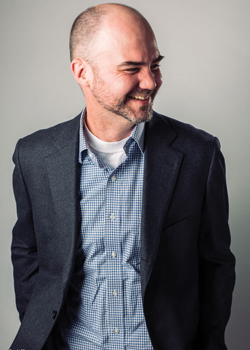
PAUL J. KUTTNER is associate director of University Neighborhood Partners at the University of Utah in Salt Lake City, supporting local educational equity and access programs. He also conducts qualitative research in partnership with youth, families, and schools, focusing on topics such as family engagement and youth organizing. He is coauthor, with Karen Mapp, of Partners in Education: A Dual Capacity Building Framework for Family-School Partnerships (SEDL & the U.S. Department of Education, 2013), he has published in a range of academic and popular venues, and he blogs at culturalorganizing.org. For a number of years, he taught theater, creative writing, and civic engagement in schools and community organizations across Chicago, and he earned his Ph.D. from the Harvard Graduate School of Education.
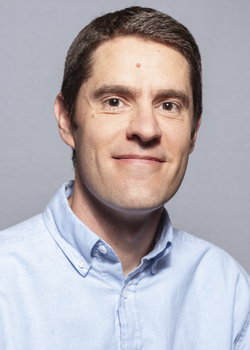
KEVIN COE is an associate professor in the Department of Communication at the University of Utah. His research and teaching focus on the interaction of political discourse, news media, and public opinion, with a particular interest in the U.S. presidency and issues of identity. He is the author of more than 50 articles and book chapters and the coauthor, with David Domke, of The God Strategy: How Religion Became a Political Weapon in America (Oxford University Press, 2007). He earned his Ph.D. from the University of Illinois.
Reference
Coe, K. & Kuttner, P.J. (2018). Education coverage in television news: A typology and analysis of 35 years of topics. AERA Open, 4 (1). http://bit.ly/CoeKuttner
ABOUT THE AUTHOR

Rafael Heller
Rafael Heller is the former editor-in-chief of Kappan magazine.